
Each year, the Adirondack Center for Loon Conservation hires two research interns in partnership with SUNY ESF Adirondack Ecological Center. These positions are funded through a grant with the US Fish and Wildlife Service on behalf of the Bouchard Barge 120 Buzzards Bay Oil Spill Trustees. Meet this year’s interns, Luna Pagan and Brooke Simko, in their own words.
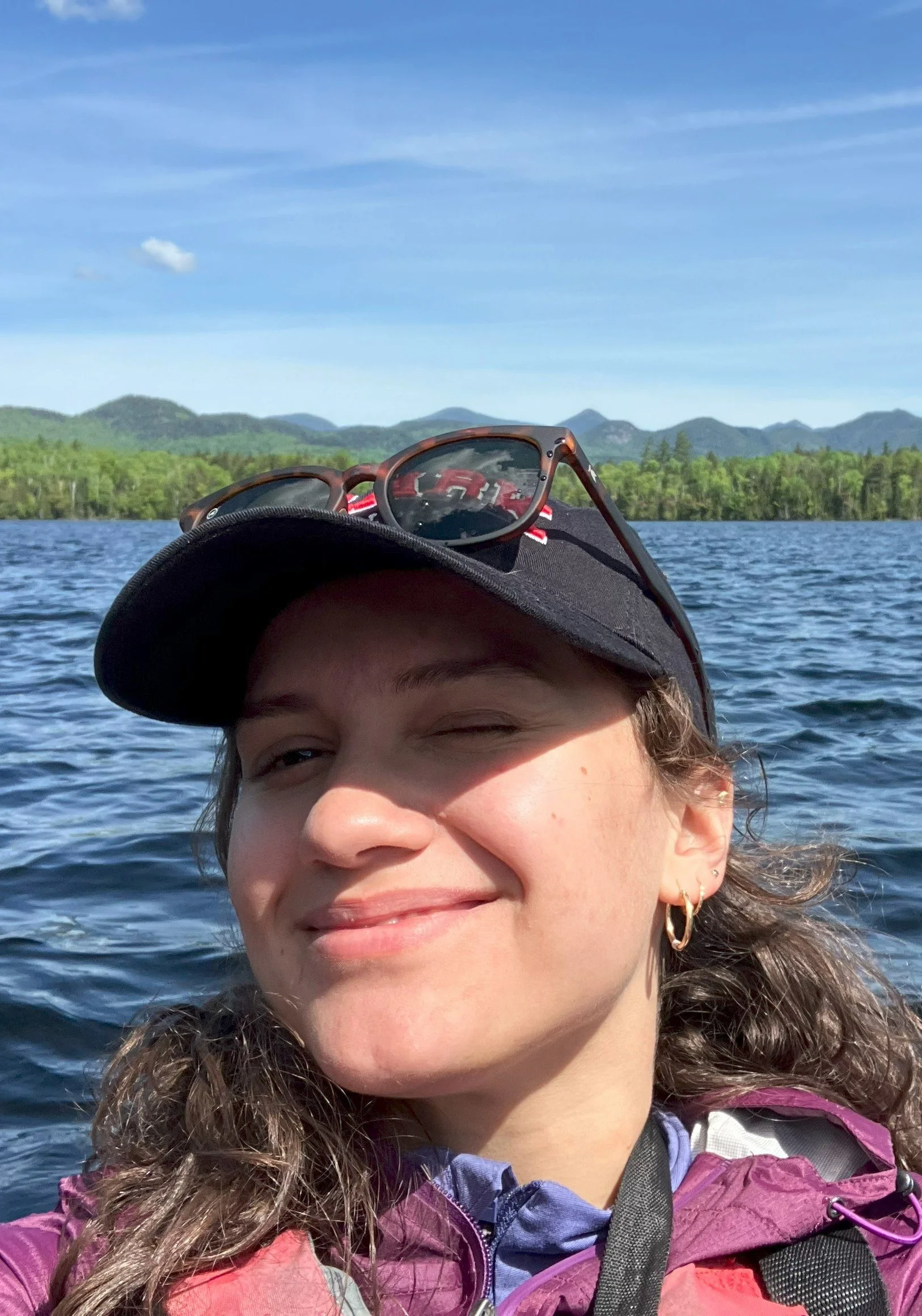
Luna Pagan in her first weeks monitoring loons for her summer internship with ACLC. Photo provided by Luna Pagan
Inspired by the Adirondacks: Luna Pagan
From a young age, I knew I wanted to work with wildlife. I grew up spending every summer in the Adirondacks, and the time I spent in this ecosystem shaped both my fascination with the natural world and my desire to protect it. Some of my fondest childhood memories are of watching the moon rise while canoe camping or hearing loons call to each other across still water at sunrise. These dense forests and pristine lakes have not only been a refuge and inspiration for me but have also taught me that every living thing is connected, and it's humbling to know that we are part of the ecosystem, just as much as the flora and fauna we share it with. The more I have learned about the human impact on the global ecosystem, the greater obligation I feel to be a part of the restoration and adaptation processes.
I am a rising senior at Clark University pursuing a B.S. as a dual major in Biology and Geography, focusing my studies on ecology and geographic information science (GIS). During my undergraduate experience, I have worked across several areas of conservation and ecological research. I spent about two years studying the behavioral ecology of a native dung beetle species (Onthophagus orpheus) in urban forests across central Massachusetts, did wildlife husbandry and public education through a zoo keeping internship focused on North American species, and learned foundational forestry skills through volunteer work in my university’s arboretum. Most recently, I served as a student GIS consultant with a graduate research team for the Wildlife Conservation Society, analyzing conservation impact across Central and South America.
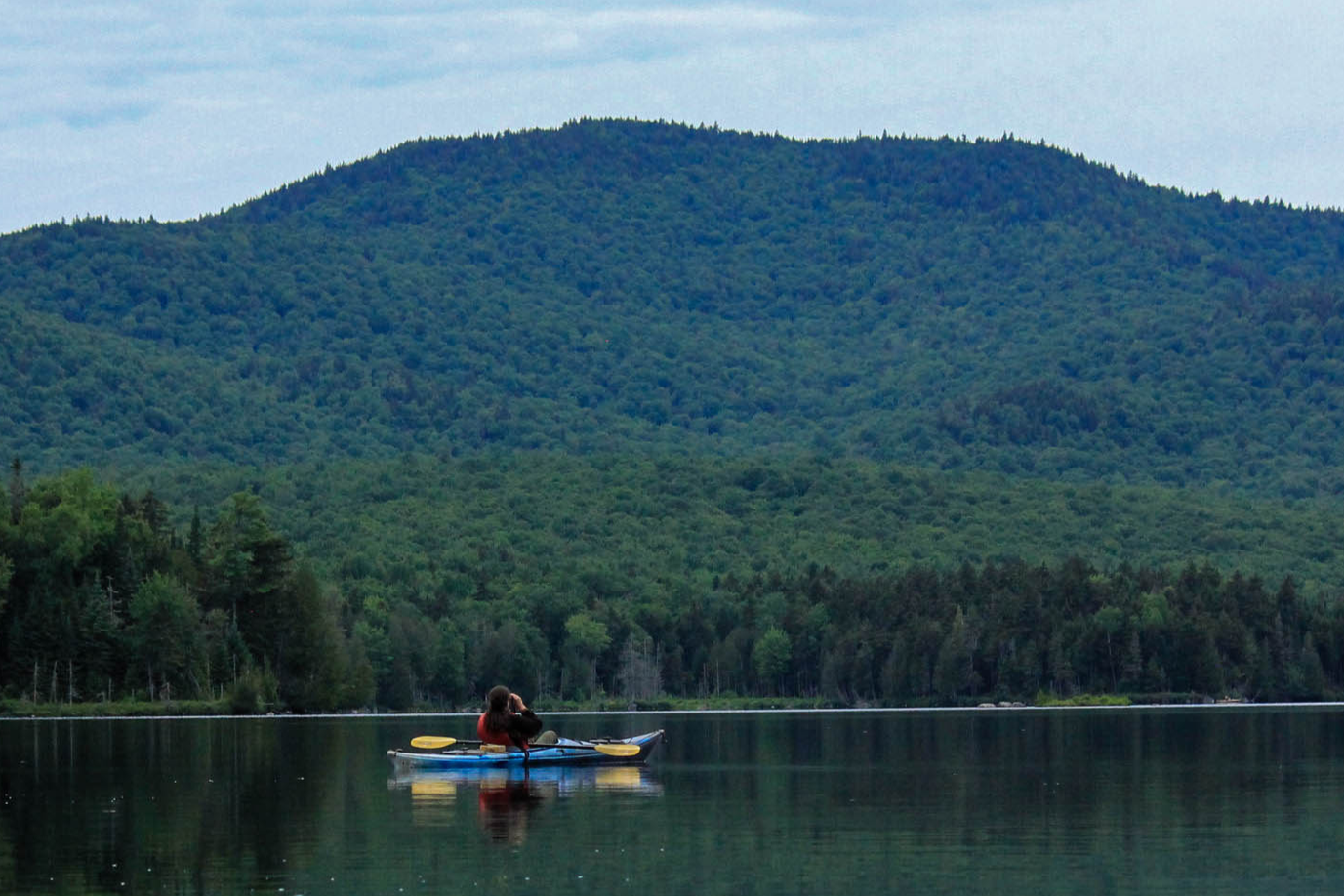
Luna Pagan looking for loons as part of her internship with ACLC. Photo provided by Luna Pagan
Across these experiences, I have learned that I am motivated by work that blends field biology, ecological research, and conservation outcomes. I am still exploring the specific ecological path I want to pursue, but each opportunity has helped me become a more well-rounded early-career ecologist and strengthened my commitment to a career in conservation.
Inspired by the Adirondack ecosystem that fostered my love of nature, I wanted to seek out conservation work in this region and feel that I have already learned so much through this wonderful experience with the ACLC. Spending nearly every day on different lakes, watching loon behavior at close range, and seeing the season unfold as new nest sites appear has been incredible. I have also enjoyed meeting people while monitoring. Many share stories about the loons on their home lakes, and their genuine interest in loon well-being and conservation is amazing to see. The more I learn about loon biology and behavior, the more fascinating they become. Their territorial defenses and abilities in the water make them fierce, regal, and majestic all at once.
Working in the Adirondacks feels like reconnecting with the landscape that first taught me what it means to care about the natural world. Each day on the lakes reinforces why I want to spend my career protecting the species and landscapes that define this region, and I am excited to continue learning from the work ahead
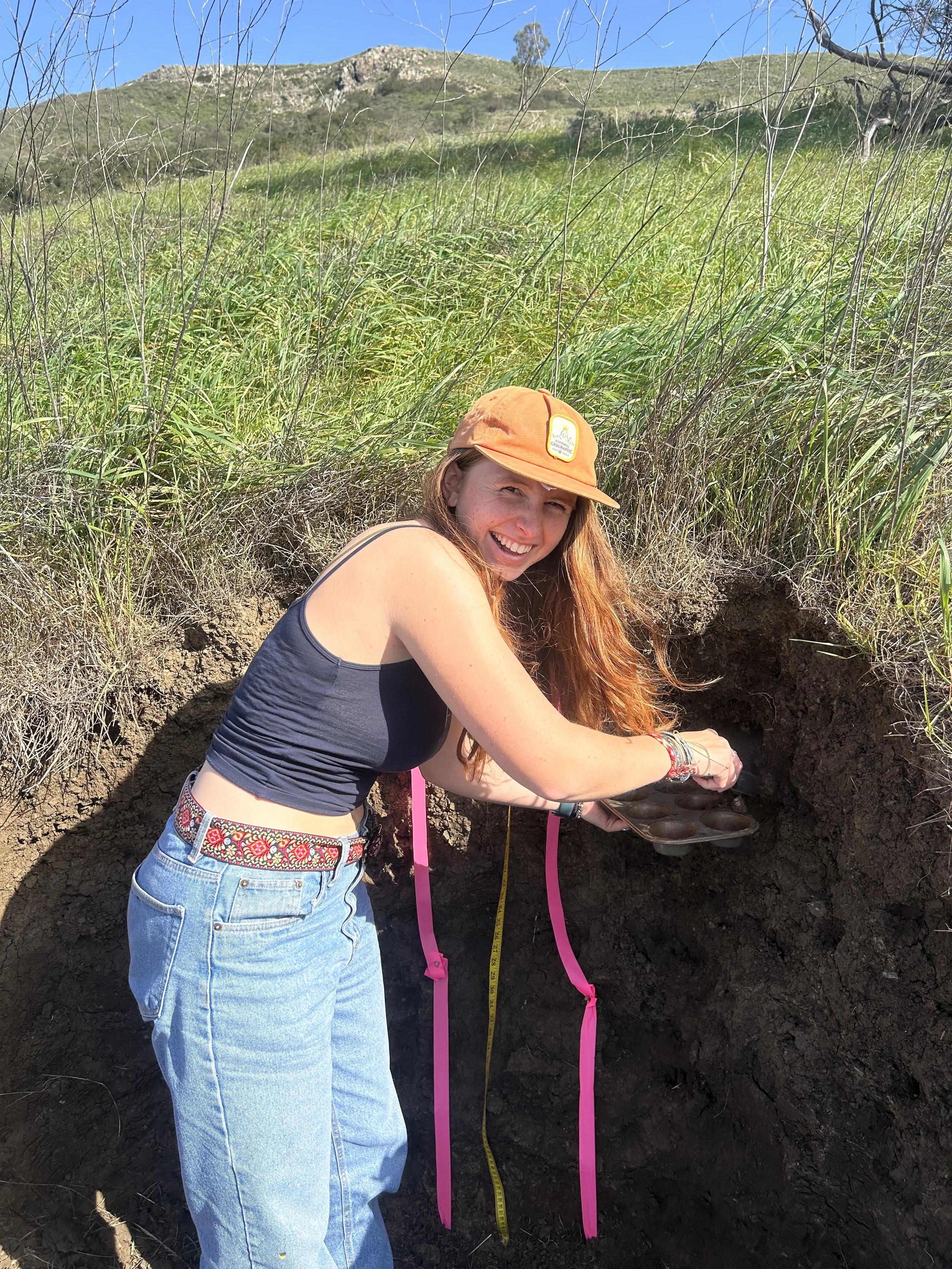
Brooke Simko collecting soil samples from Poly Canyon in California. Photo provided by Brooke Simko
Growing Up in Nature: Brooke Simko
Climbing over the final summit to Grace Peak, I looked across the rolling mountains and took a deep breath of Adirondack air. It was a breath of realization that I had just become a 46er. In 2024, surrounded by my closest friends and family, I sauntered along the summit of my last peak. I spent three summers, hundreds of miles, countless hours, and an infinite count of bug spray cans, all on becoming a 46er. But the big question people kept asking was what was next? What was the next big challenge?
I grew up in the Boston area, and spent every summer in Long Lake, 15 minutes from the Adirondack Interpretive Center. Although I spent years changing my mind on what I wanted to do in college, looking back I don’t know how I didn’t realize my life always revolved around the environment. Now, I am studying Environmental Management and Protection with a concentration in conservation science. I just completed my first year on California’s central coast at Cal Poly in San Luis Obispo. Gaining hands-on research experience, I am hoping to pursue a career in international environmental and wildlife conservation.
No matter how new and exciting the west coast is, I still find myself coming back to what raised me. On the second day of my internship, my co-worker, Luna, and I were field monitoring Forked Lake. For a moment I paused paddling and listened to the lake embrace me. Rain pattering on the surface of the water. Crickets and songbirds singing in their naturalistic orchestra. Then, the most elegant of them all, loon calls. I heard the yodels from across the North Bay territory and continued my search to find a nest. No one properly informed me of the adrenaline rush when you find your first nested loon. I will be that person now, be prepared!
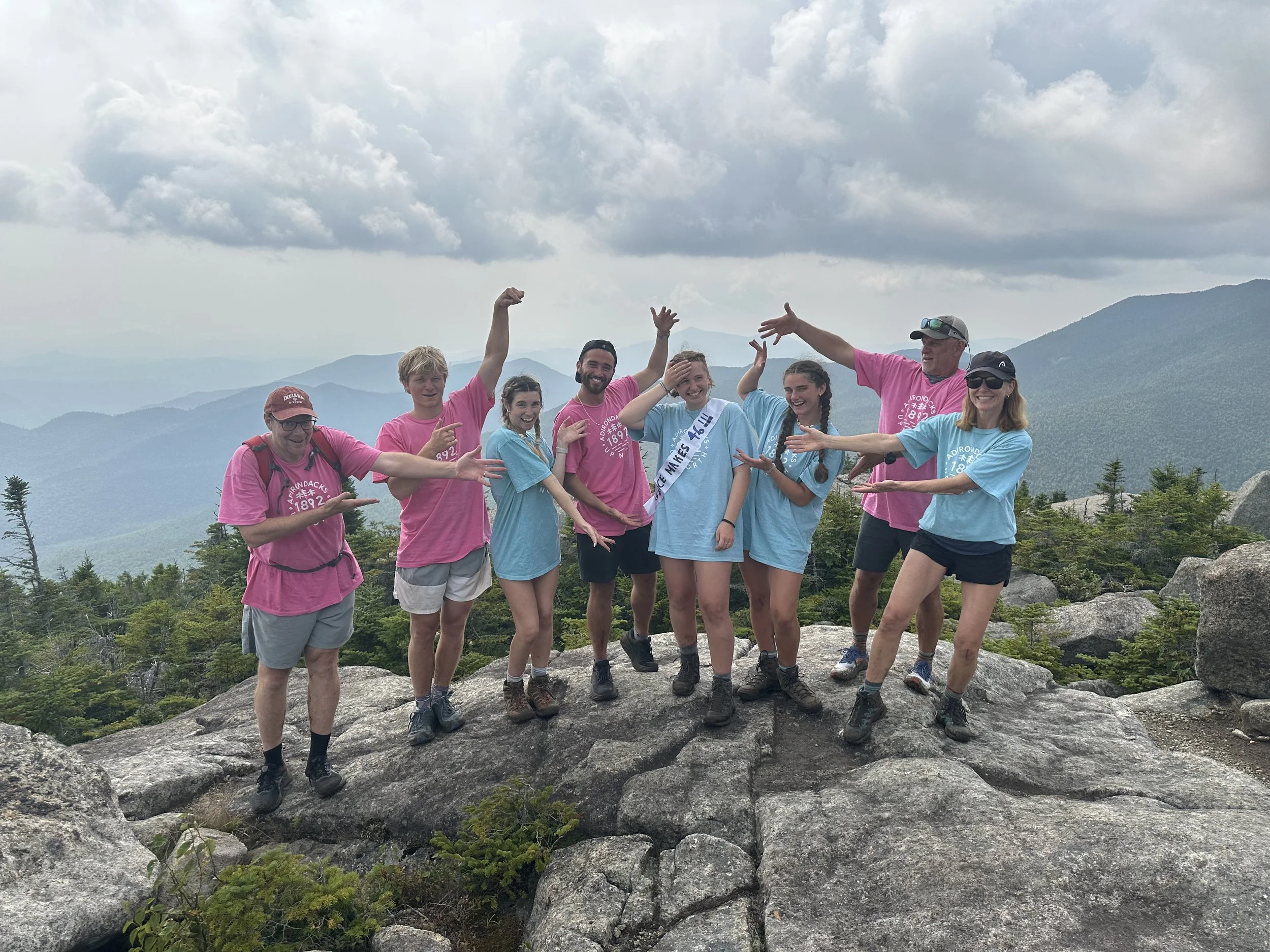
Brooke Simko surrounded by family and friends on the day she became an Adirondack 46er. Photo provided by Brooke Simko
I do not ever see myself straying too far from the Adirondacks. I am beyond grateful to grow up in nature, and my goal is to show others the intrinsic value of our ecosystems. My appreciation has manifested into a dedication to protecting the natural environment, and inspiring others to do the same. In college I have explored my academic passions in soil science, wildlife conservation biology, botany, and hope to join a lab research team in the upcoming year. My previous environmental experience includes bat monitoring, riverbed plant restoration, and invasive species management in Belize, alongside a season of soil testing in San Luis Obispo, California.
I have a personal attachment to the Adirondacks, but one of the most charming characteristics of this place is the greater community’s commitment to loons. I was in awe of the field monitor training day, where I met the team of volunteers that care so intensely about the species that they take it into their own hands to track nests weekly. The well-being of this indicator species spans far beyond me or Luna, or even the ACLC alone. We are all a part of a community that bypasses state boundaries to protect something that is a staple to many. The next challenge is continuing to foster this community for generations to come, and I hope that my role with the loon center can play a small part in the future of loon research and advocacy.