
Environmental Sentinels
of Adirondack Lake Ecosystems
Common loons are one of five species of loon, and the only one that breeds in the U.S.
As environmental sentinels, common loons help alert us to environmental threats that can impact human health. For this reason, loons are considered a Species of Special Concern in New York, and we study them to monitor environmental pollutants like mercury in freshwater sources. Loons also help us understand how climate change and human impacts affect Adirondack ecosystems.
Loon Calls
Loons have four main calls, each distinct from each other and from other birds.
The wail is a long, one, two, or three note call used in situations when loons want to move closer to one another. Parents wail to their chicks to encourage the chicks to leave the nest, approach the parents when they have food, or emerge from a hiding place.
The tremolo is often called the "laughing call" of the loon. The tremolo is actually an alarm call used in threatening situations, such as when a boat is approaching a chick or a nest too closely. It is also the “flight call,” and the call used in the "night chorus," when several loons call together during the night. Members of a pair will “duet” using tremolo calls mixed with wails.
The yodel is made exclusively by male loons when they are defending a territory or fighting with other loons. Males also yodel when a threat like an eagle is nearby or when a boat is too close.
The hoot is a soft short contact call between birds. Adults will hoot to each other, and parents will hoot to chicks, enabling them to keep in touch with the other birds. This call is only made when the bird is calm.
Adapted to Life on the Water
All five species of loon belong to the Gaviidae family. Modern loons can be found in the fossil record as early as 35 million years ago. Like all species of loon, the common loon (Gavia immer) has adapted to life in the water.
Loon bodies are streamlined and their legs are laterally flattened, helping them move through the water with less resistance. Large webbed feet are used for propulsion and making quick turns underwater. Their legs are also positioned far back on their bodies in an ideal position for swimming, but makes it nearly impossible for them to walk on land.
Loon bones are very dense, which helps them dive and stay underwater. Because of their heavy bodies, loons need a long runway of open water - up to a quarter-mile - to take off and land. To compensate for the added weight of extra dense bones, loons must flap their wings continuously when flying to remain airborne. They are unable to soar like many other birds, such as eagles.
Another adaption to help them stay underwater - loons can compress their feathers to squeeze out any air and to help them descend underwater quicker. How long can a loon stay underwater? Most loons seem to stay underwater for two to three minutes, but it is possible for them to stay underwater for as much as five to six minutes.
Loon Life Cycle
Common loons are migratory birds that nest on freshwater lakes in the Northern Hemisphere and spend their winters on the ocean. Their nesting territory extends from the northern-most United States and much of Canada.
Spring
Loons molt into their black and white breeding plumage and they migrate back to their freshwater breeding grounds within days of the ice breaking up. Males often return first to establish their territories or to find new ones.
Summer
Common loons do not mate for life, but they often mate long-term. They both help build their nests on the edge of the lake, and they both take turns incubating the eggs. Eggs are laid asynchronously and hatch in the order they were laid, about 28 days later. Parents will spend 11-12 weeks caring for their chicks and are fiercely protective of them, battling predators and intruding loons alike to protect their territory and young.
Fall
Once the chicks have fledged, adults will leave to begin socializing with other loons on larger lakes. They will begin to molt, losing their black and white feathers and growing in their gray and silver winter plumage. Groups of 20, 30, 40 adult loons can be seen congregating before migration.
Winter
Loons migrate to the ocean, anywhere along the Atlantic coast from Maine to Florida. Researchers aren’t sure how loons choose where to migrate to, but once they have a wintering location, they return to the same one each year. They experience a full-body molt in the winter, which means they lose their flight feathers and are flightless for about one month. Some loons have been known to winter on large freshwater lakes instead of the ocean.
Plumage: Changing with the Seasons
Winter Plumage
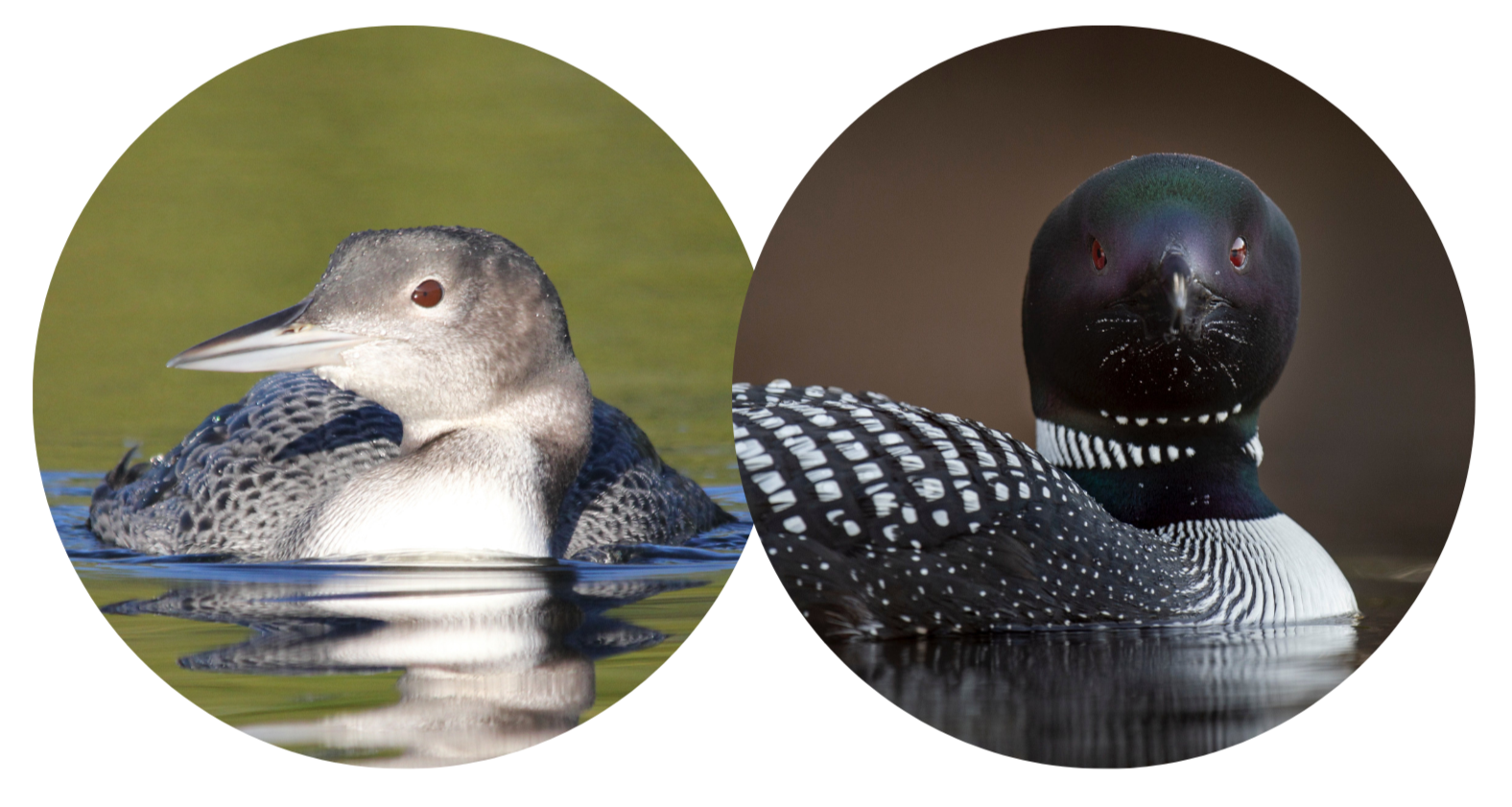
Between roughly October and March, adult loons molt into their winter plumage, which features gray feathers. Juvenile loons are also gray, and remain gray until they reach breeding age at around three to four years. This makes it difficult to distinguish between adult loons in winter and juvenile loons.
Summer Plumage
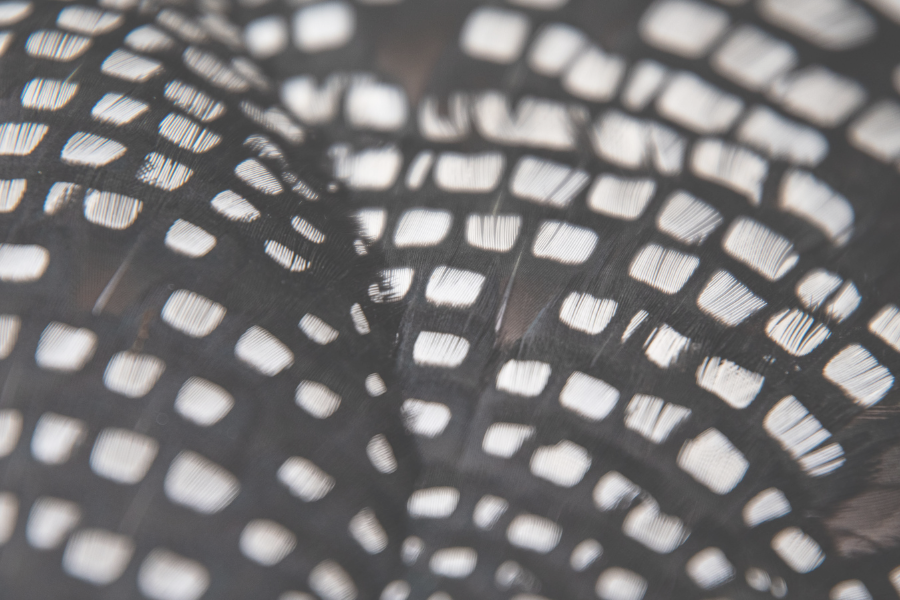
Once loons are of breeding age, they molt into their breeding plumage each March before they migrate back to their freshwater breeding territories. The summer plumage is what most people recognize: it is the brilliant black and white checkerboard pattern with the necklace of vertical white stripes on a collar that looks dark green or purple in the sunlight.
Loon Behaviors
Understanding common loon behaviors can help you enjoy observing loons more deeply and can help you interpret when loons may be feeling stress - sometimes due to human presence. Below are descriptions of behaviors we see often, but it’s always important to remember that animals are individuals who sometimes behave in ways we can’t predict. If you observe some interesting behavior, we’d love to hear about it!
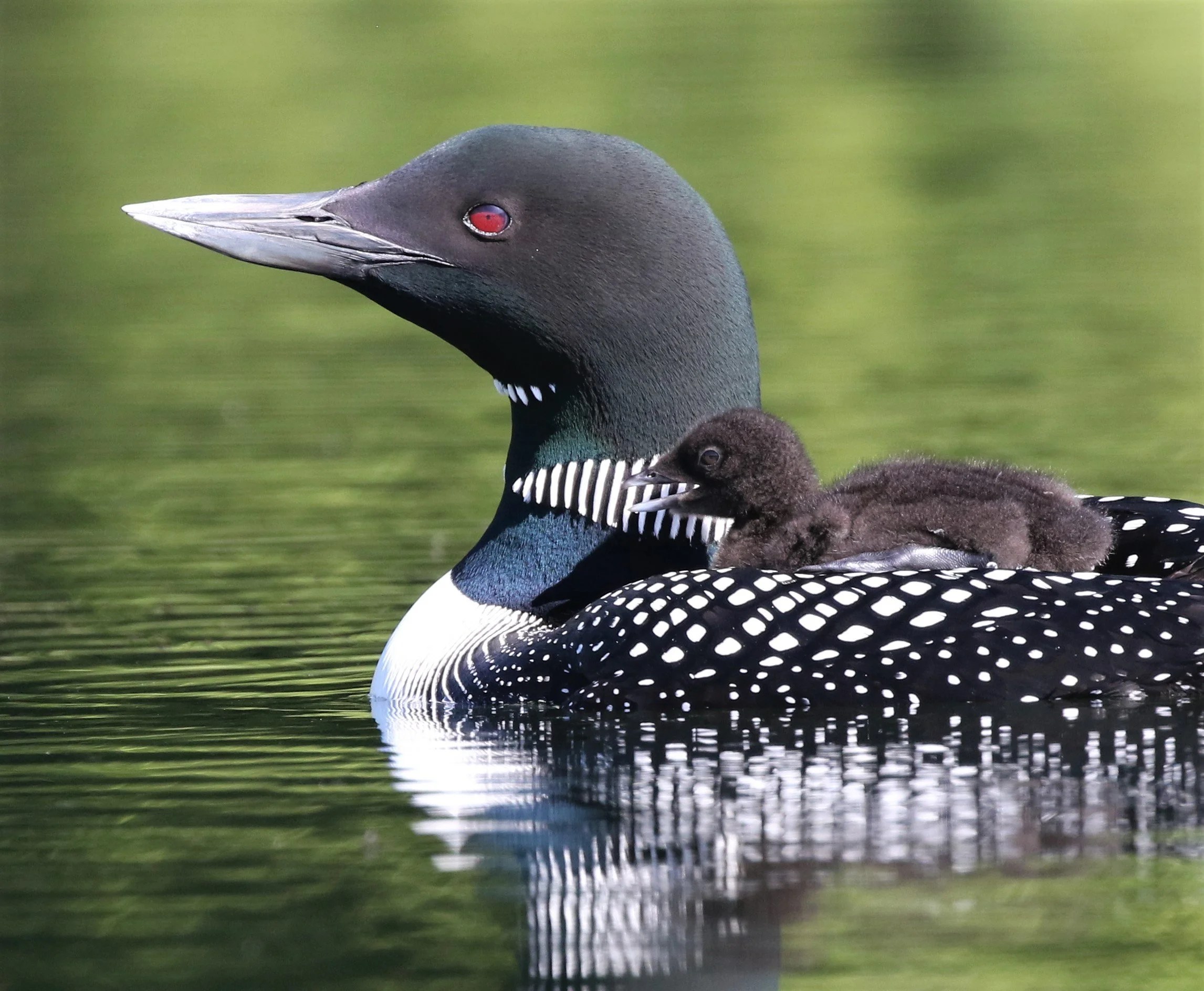
Backriding
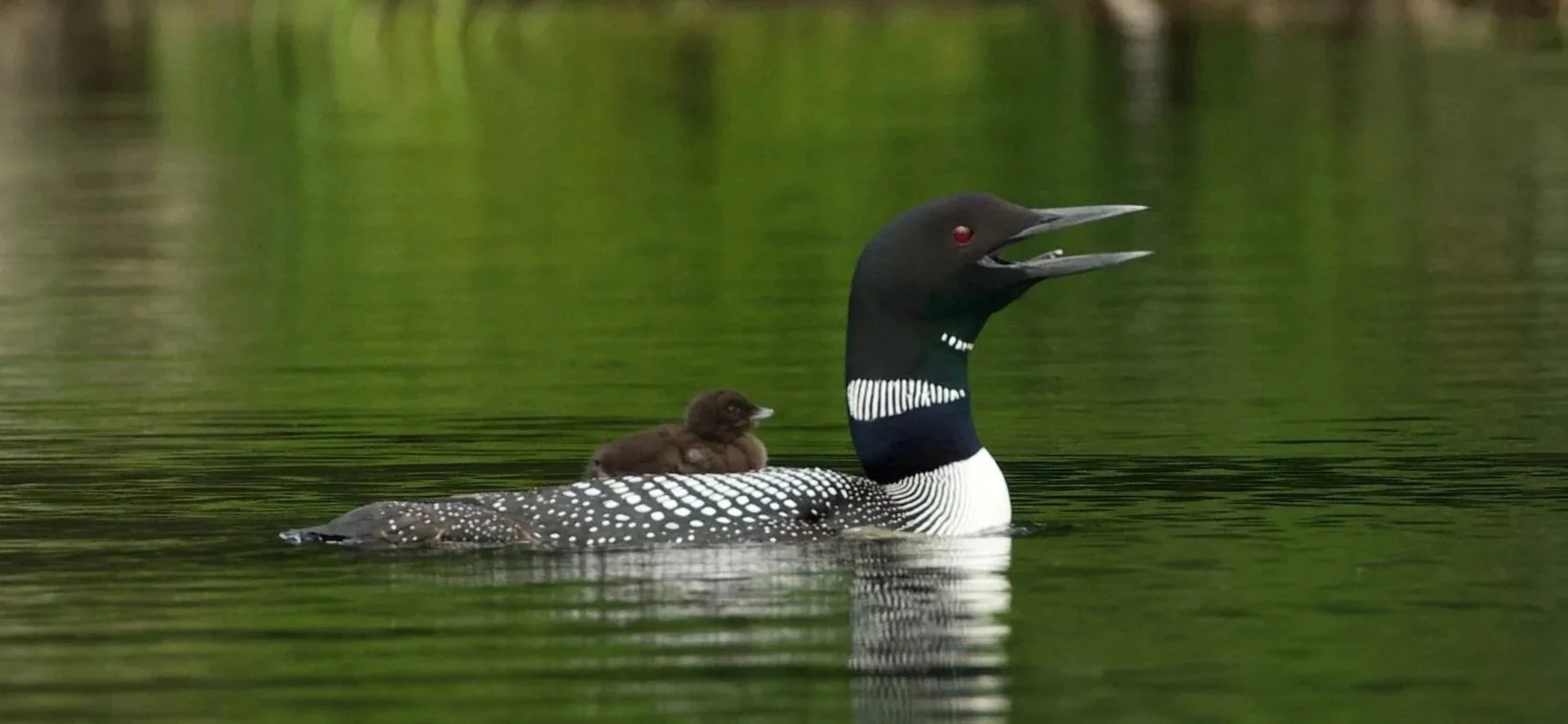
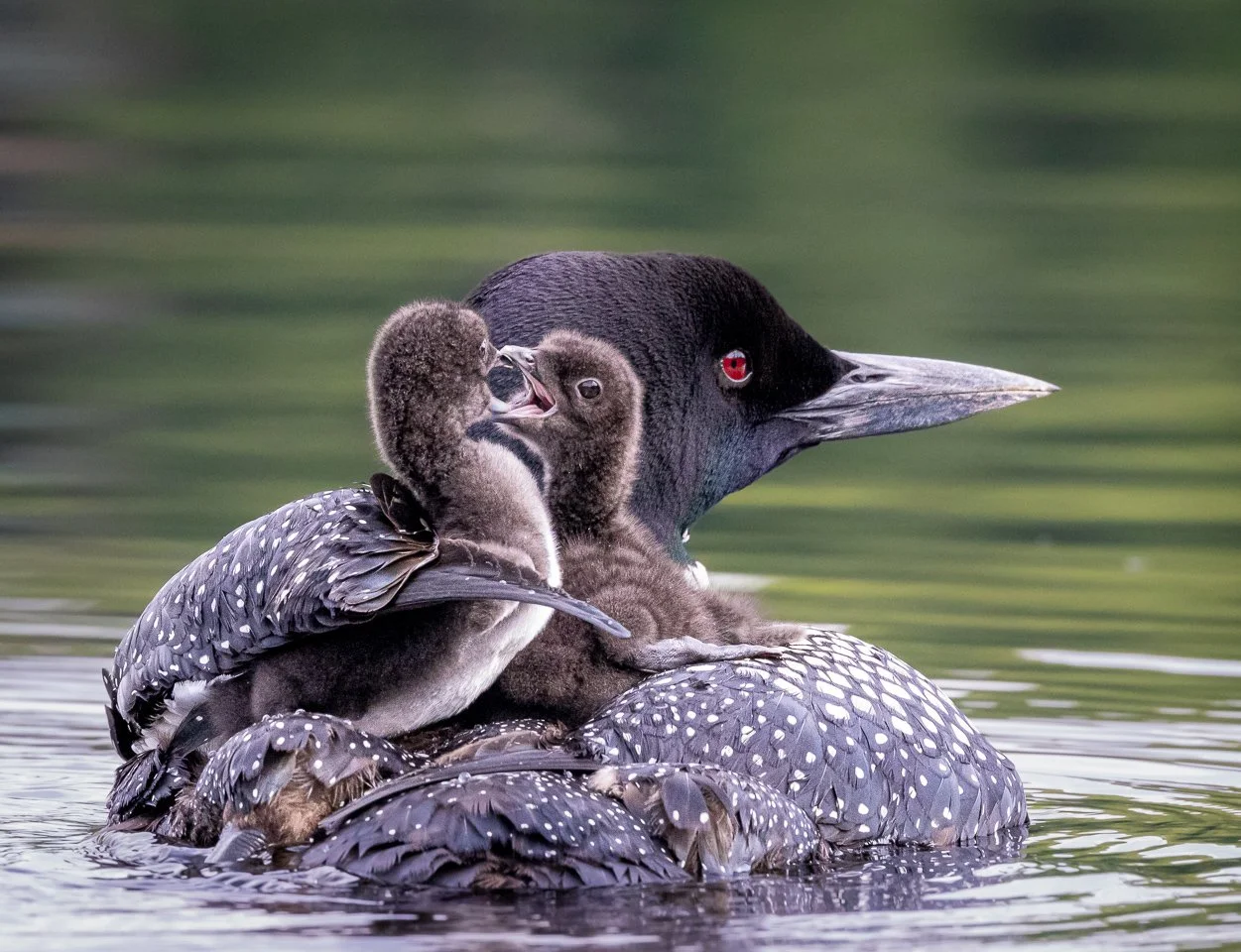
Adult loons carry young chicks on their backs to keep them warm and safe from predators (large fish will swallow a loon chick!). The chicks snuggle into the thick soft down under the parents’ wings to stay warm. By the time a chick is three weeks old, it is getting too big to be carried.
When you observe loons with chicks, please give them extra space so you don’t stress and disturb them. If they are constantly moving away from you, that is an indication that you are disturbing them, especially if they are also vocalizing with tremolos.
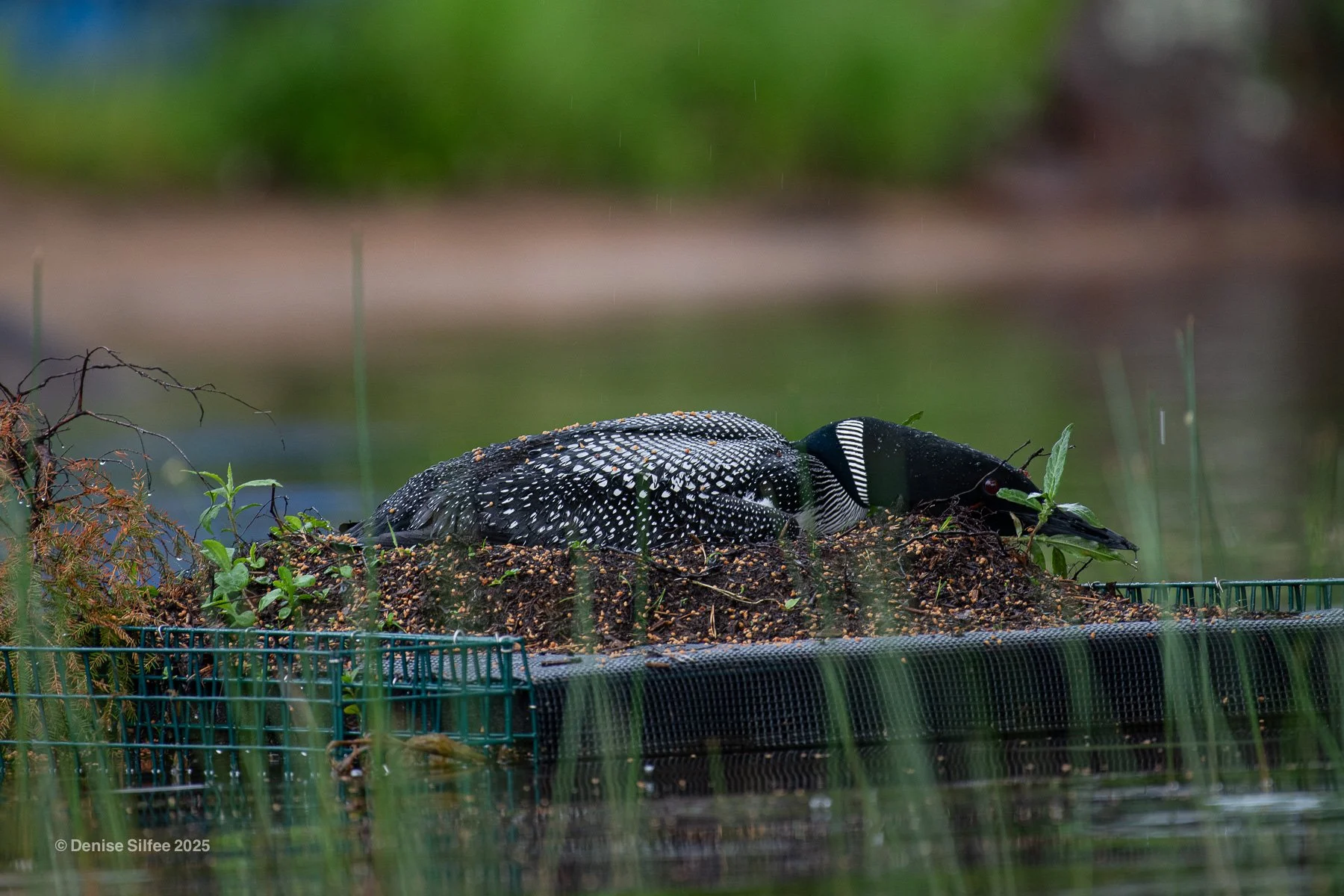
Hangover Position
This is a defensive behavior that a nesting loon does when a threat is coming too close to its nest. This loon is attempting to hide and, if necessary, to flee the nest. If a loon is flushed of its nest repeatedly during incubation, it could cause the loons to permanently abandon the nest. When you see a loon in hangover position, you should immediately move away from the nest and maintain a greater distance. Loons will resume an upright posture when they no longer feel threatened on the nest.
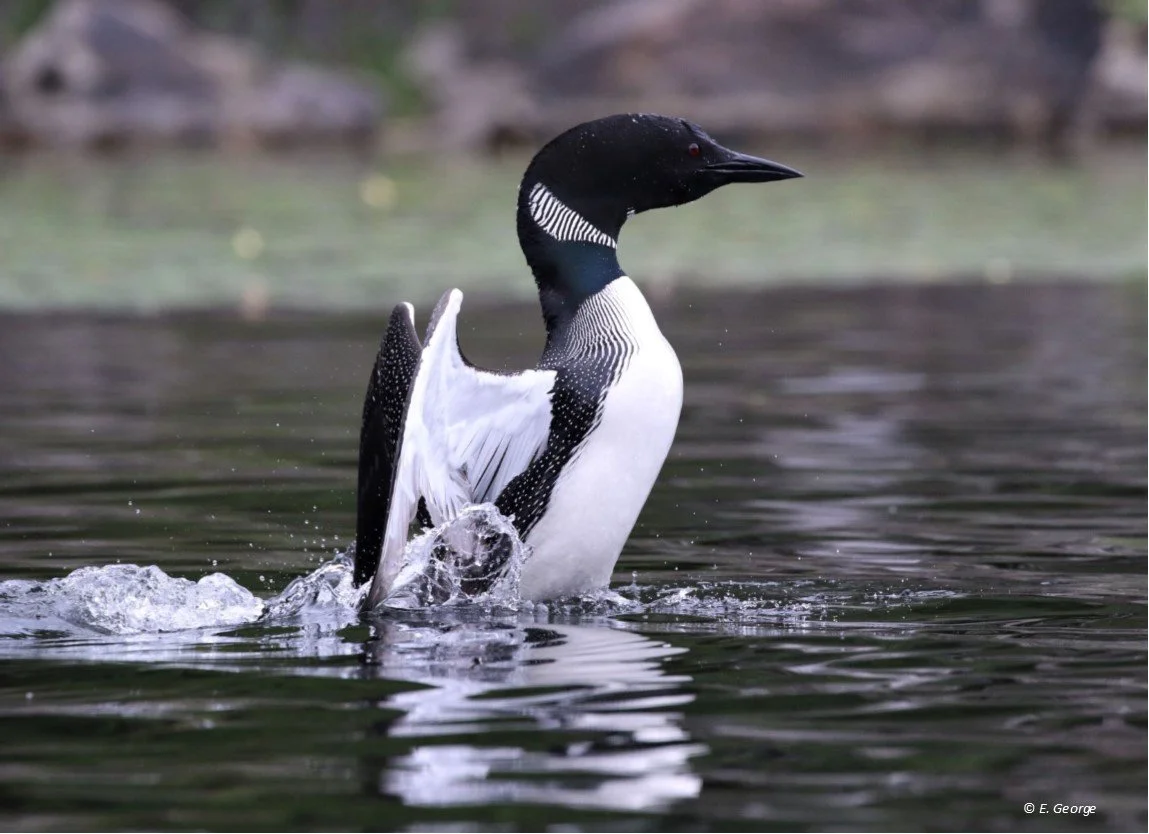
Penguin Dance
This is an aggressive display, usually done by the male, to defend its territory or chicks from another loon, a predator, or a boat. This display is energy intensive, and the bird may do it repeatedly until the threat moves away. Loons often yodel (males only) and tremolo when penguin dancing. In early summer, you may see territorial battles with the resident loons penguin dancing at intruding loons to chase them from their territories.
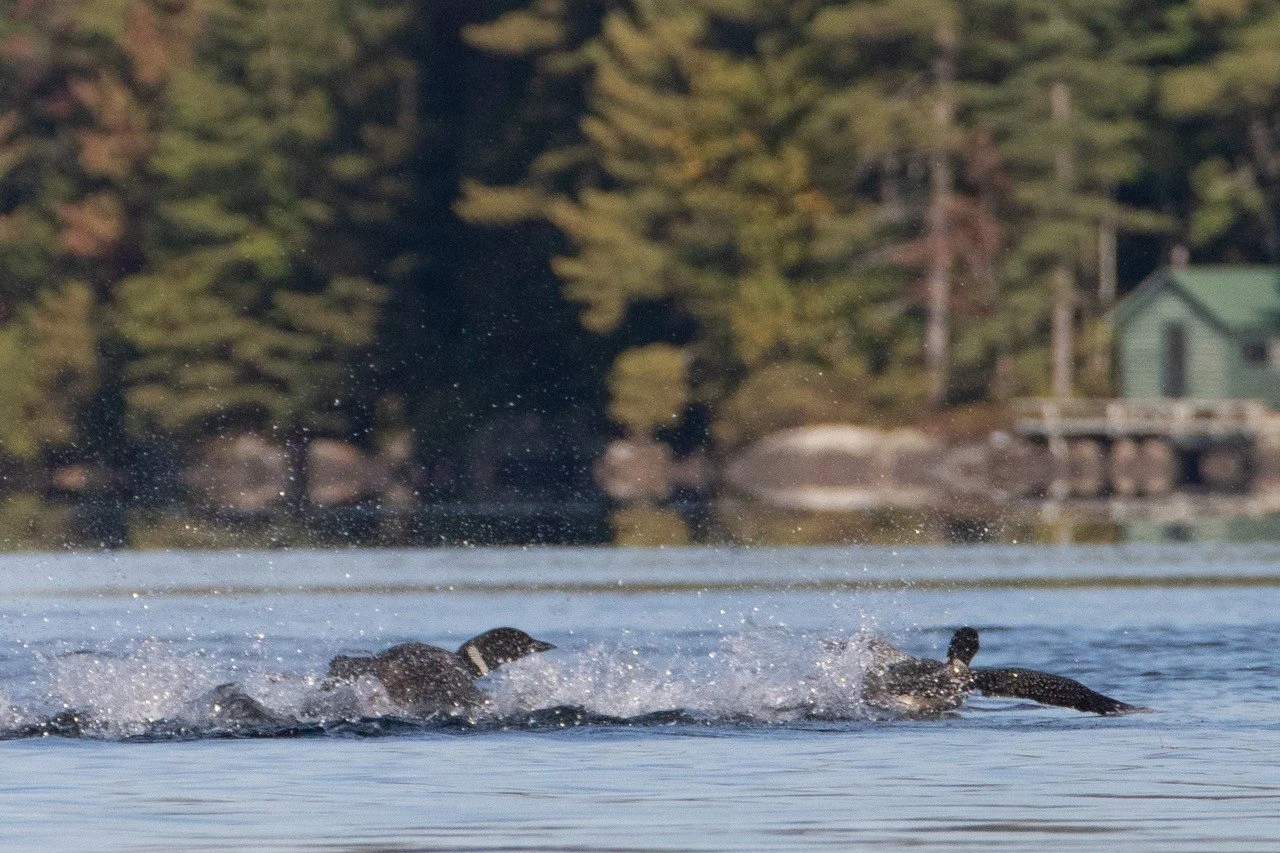
Wing Rowing
Loons wing row to move quickly from one part of a lake to another by propelling themselves with their wings across the water. In territorial interactions, the loon being driven away will commonly wing row far away from the defender. Sometimes, the defender will chase the intruder away by wing rowing as well. During such a fight, there are also usually loud tremolos, yodels, and splashing.
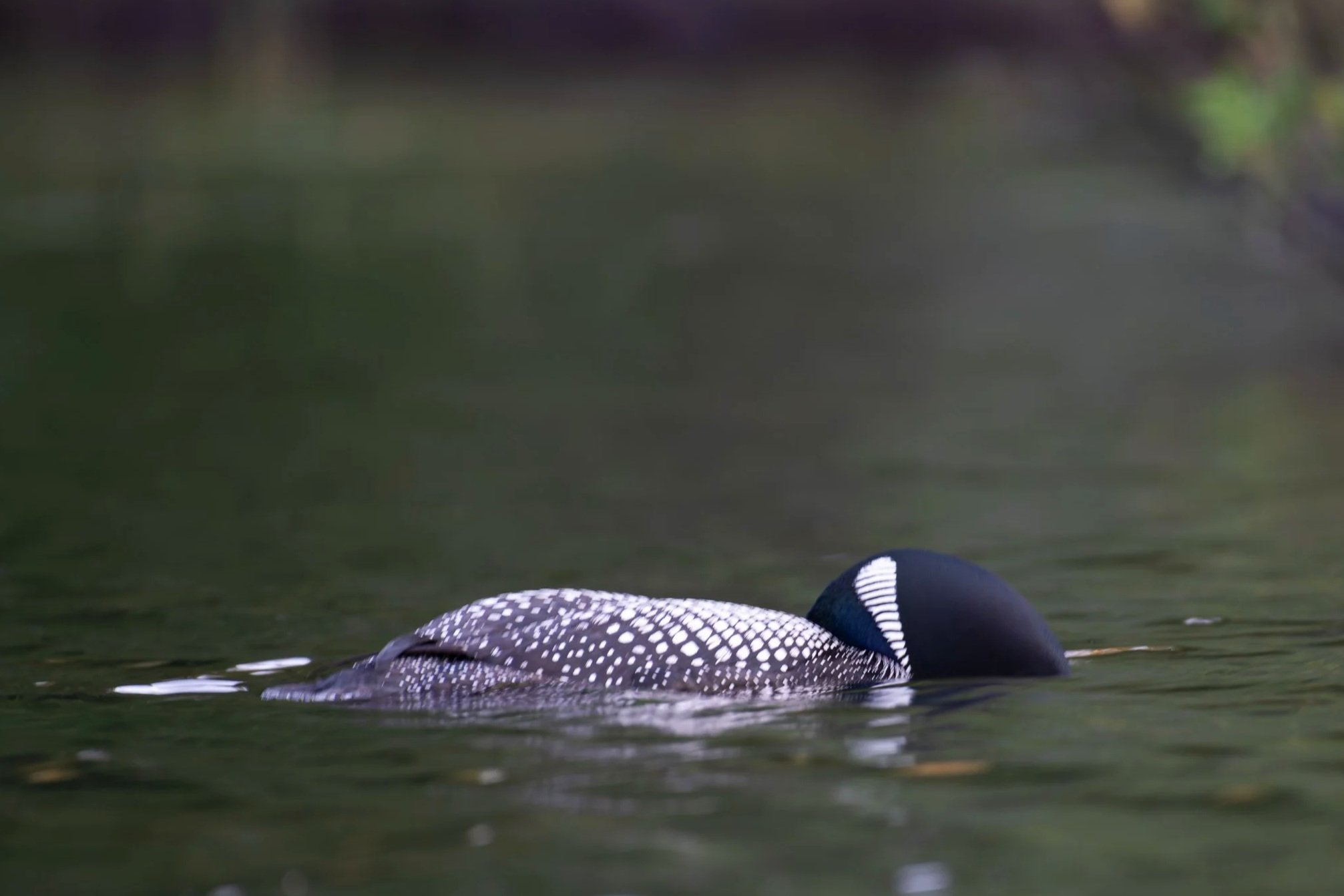
Peering
Loons "peer" underwater to search for fish or to see what other loons are doing. Chicks will also peer to watch their parents catch fish.
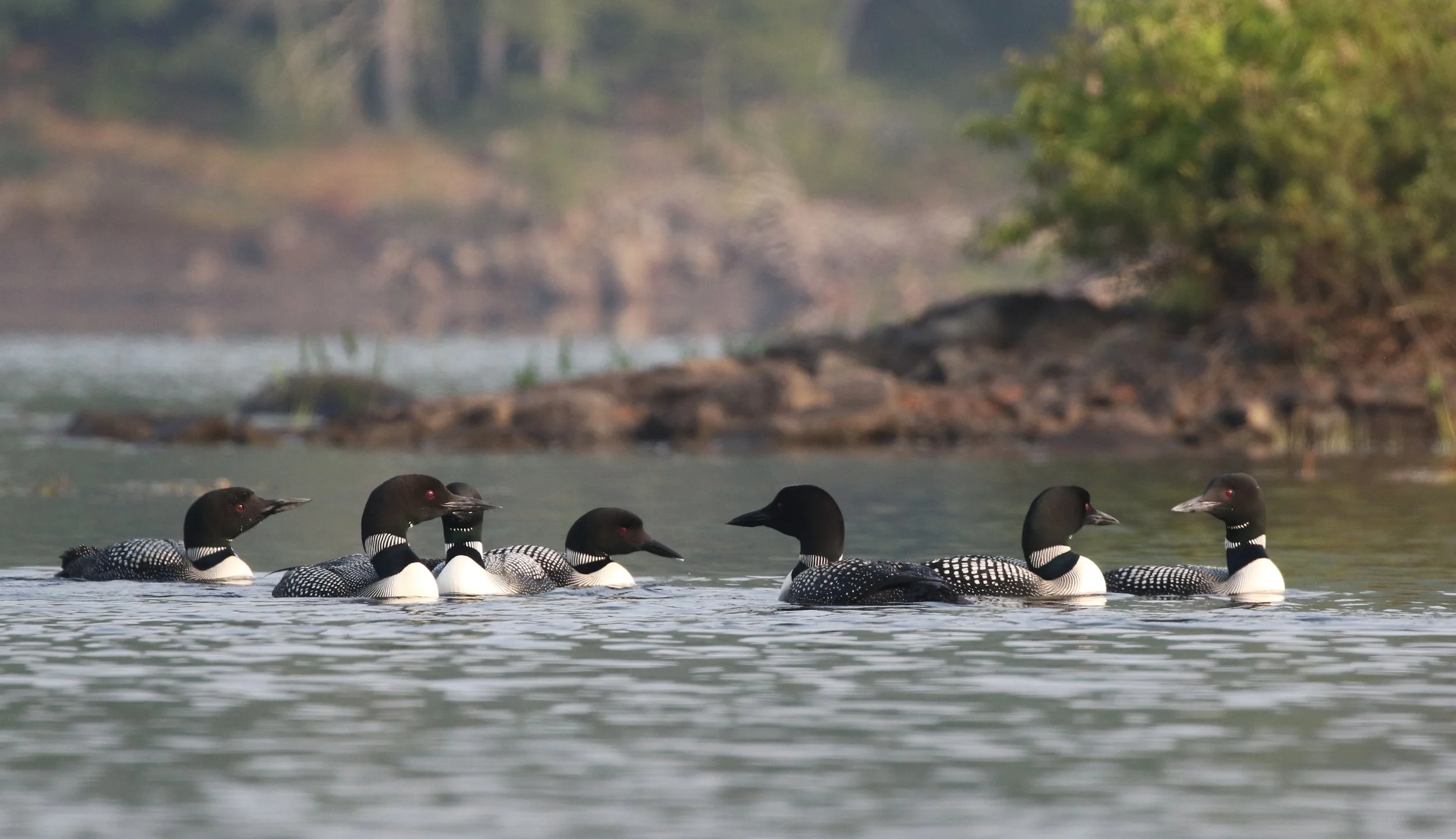
Gathering and Circle Dancing
During the breeding and chick-raising season, loons are incredibly territorial and will fight each other to the death. Once chicks are raised, however, loons become very social and will gather together in social groups to feed, especially late in the summer and fall. Sometimes they form a circle and take turns diving quickly, possibly chasing food. They hoot a lot during this “dance” and do many shallow dives.
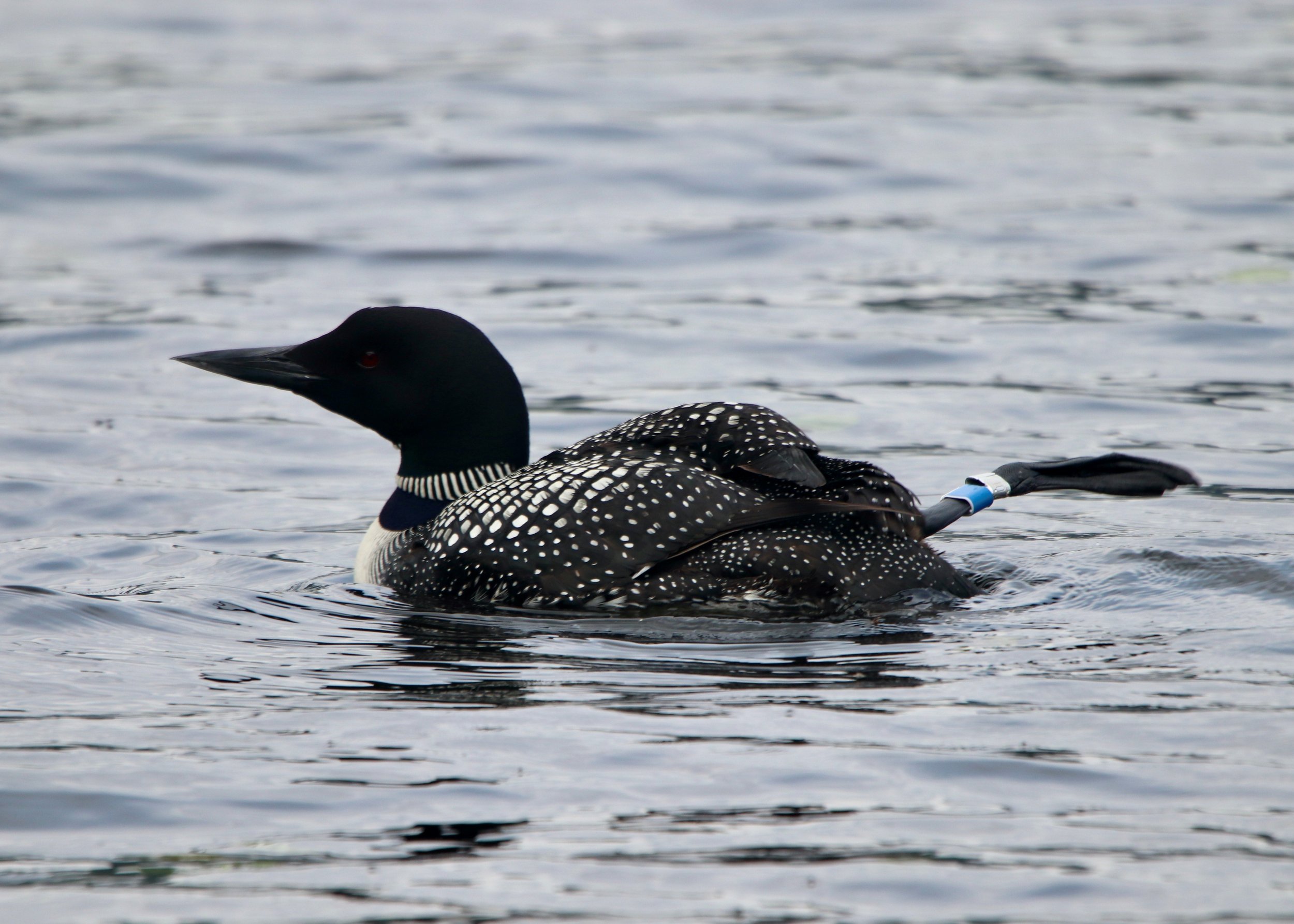
Foot Wagging
Occasionally, loons hold a foot above the surface of the water, especially when preening their white belly. They also “foot wag” to stretch their legs, regulate their body temperature, or just when they are relaxed and resting. If a loon is banded, it is easy to see the bands when it does a foot wag.
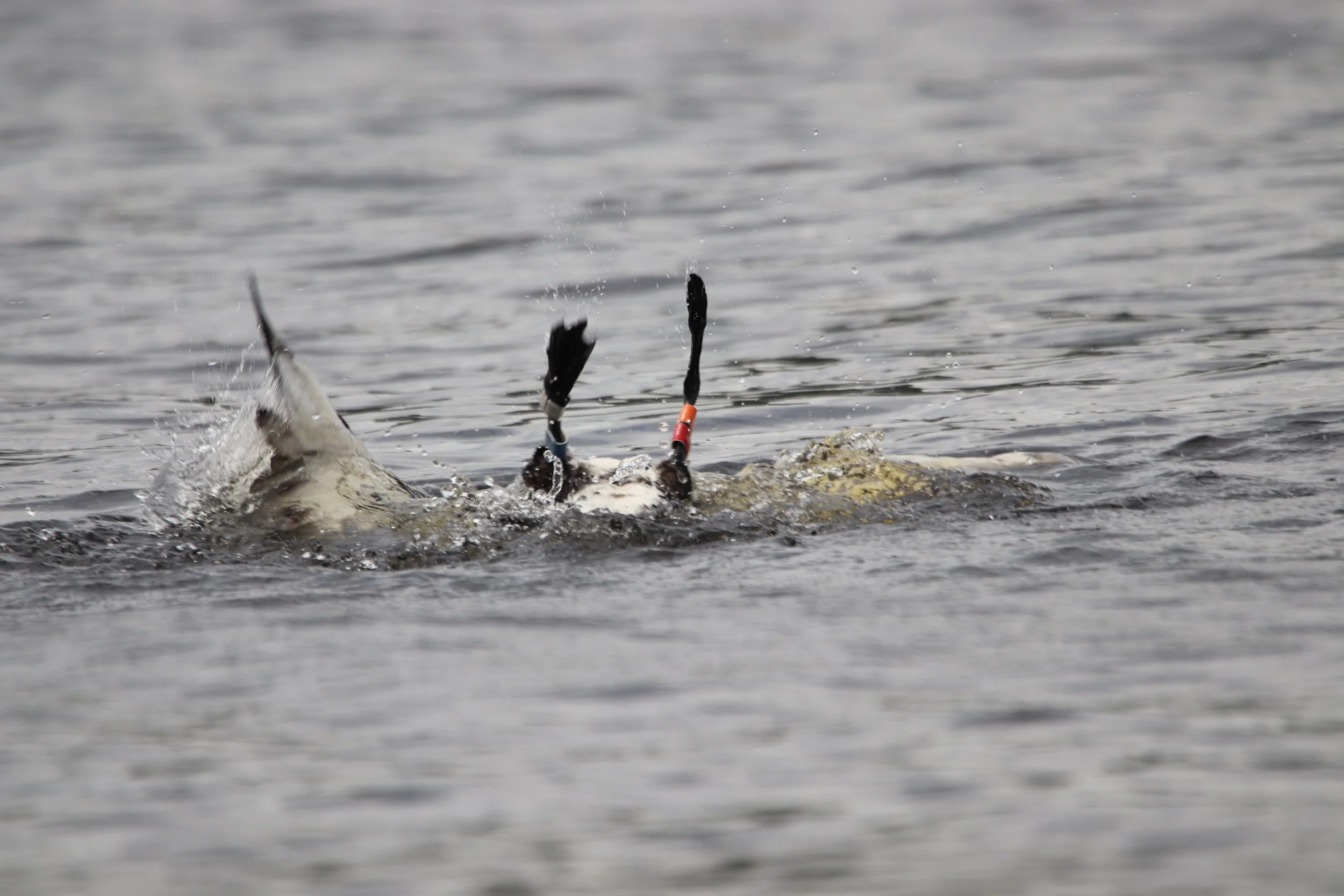
Bathing and Preening
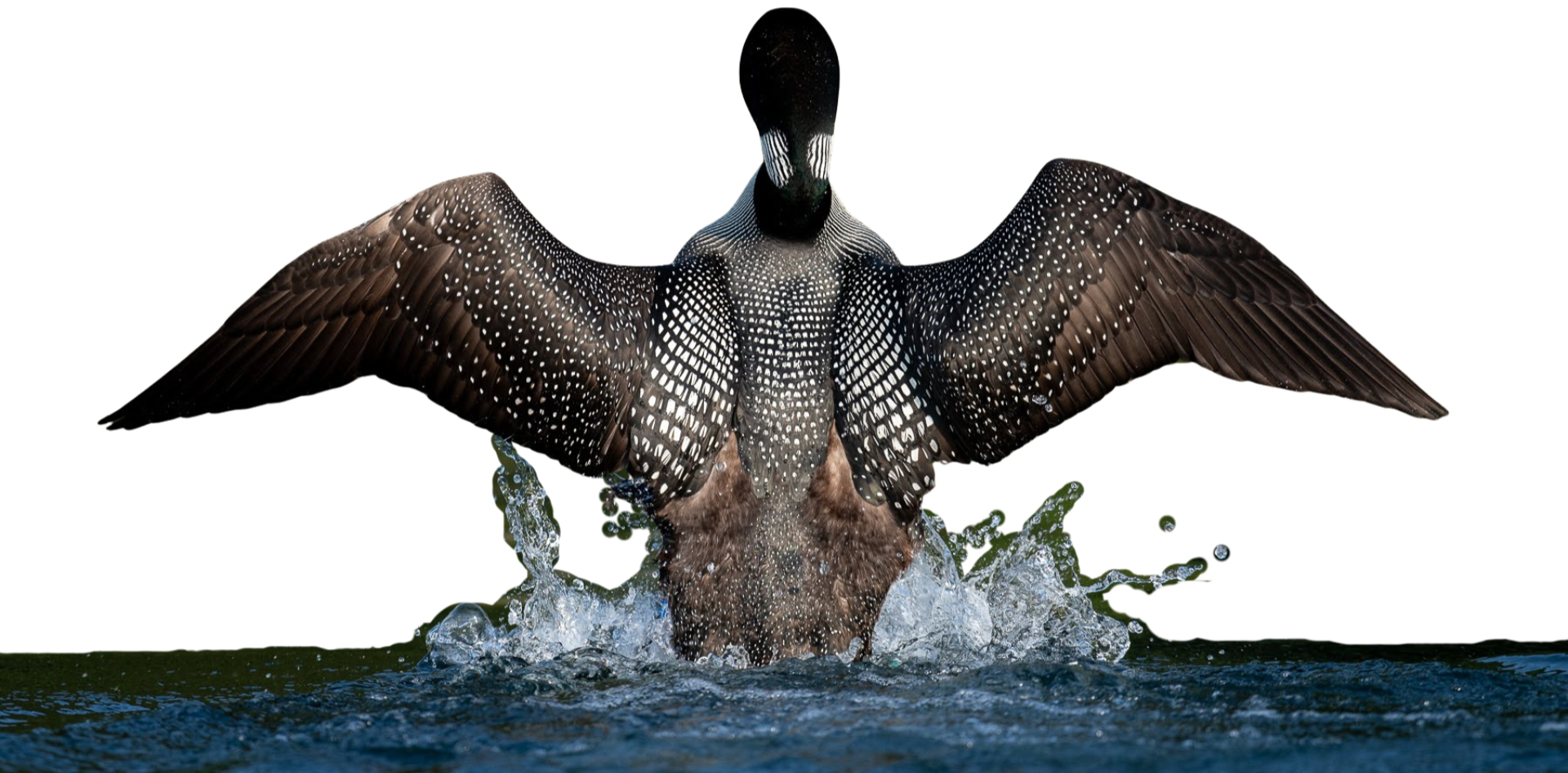
Loons take baths and preen regularly to keep their feathers clean and waterproof. While bathing, loons roll, flip upside down, splash water, and wing flap repeatedly, which can be mistaken for a bird in distress. Baths can last a half-hour or more before the bird settles down and begins to preen in earnest.
Loons preen their feathers to keep them properly aligned for flight and waterproof for swimming and diving. A small gland, the uropygial gland, is located near the tail. This gland produces oil that the loon rubs on the surface of its feathers to keep them waterproof. Loons squeeze a bit of oil from the gland, then then spread it to feathers all over their body.
Chick Development
-
1-2 Days
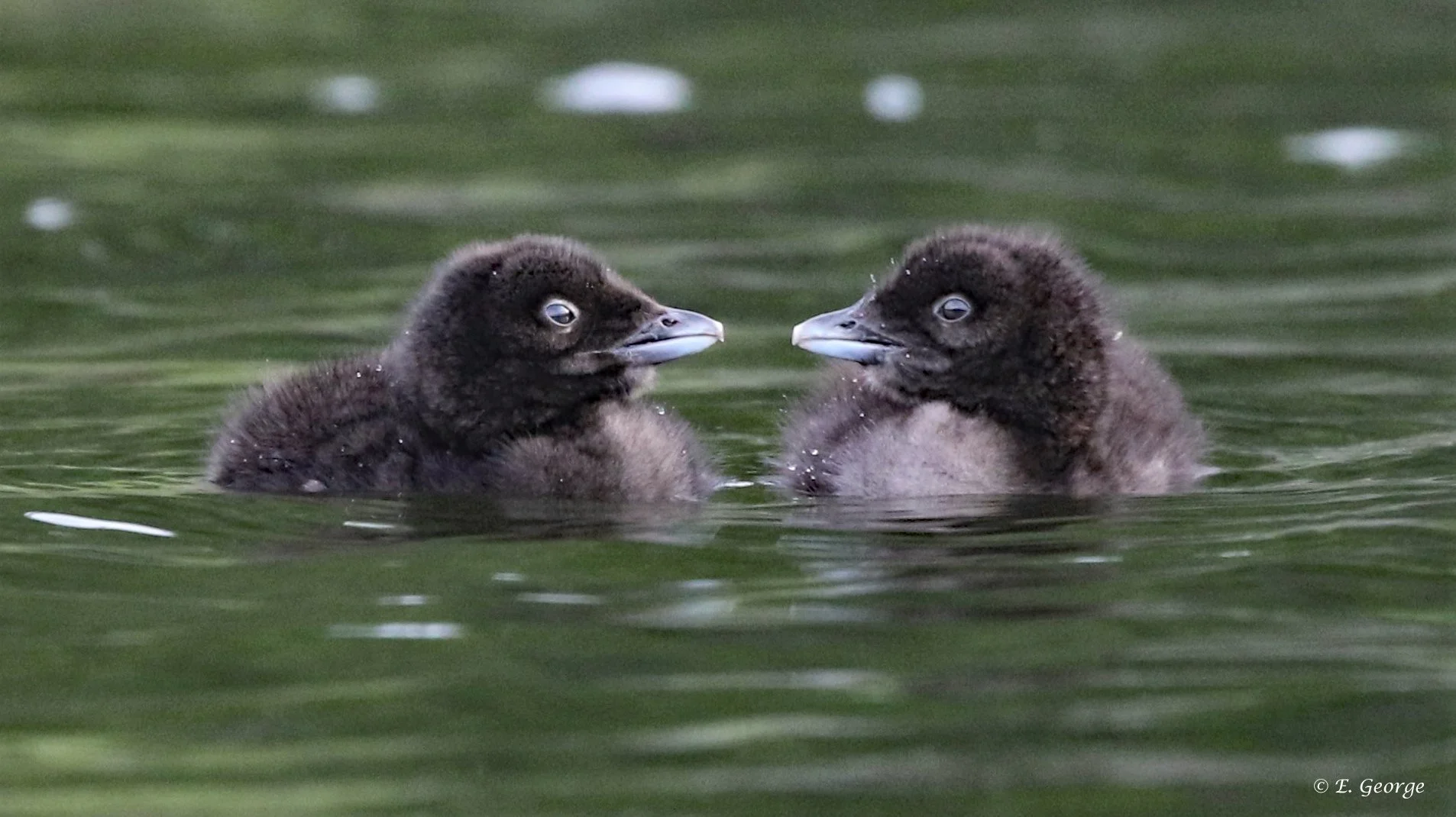
Chicks are small with black, downy feathers. The first egg laid hatches first, and that chick is a little bigger than the second chick. Within a day or so of hatching, the parents will leave the nest area and take the chicks to a nursery, somewhere with shoreline protection and good prey sources.
-
1-2 Weeks
Chicks ride on their parents’ backs during the first two weeks of their lives. This protects them from underwater predators and helps them regulate body temperature. Chicks also establish a hierarchy by fighting with each other, with the larger chick often getting fed first by the parents. Occasionally the younger or smaller chick dies because it is not getting enough food or care.
-
3-4 Weeks
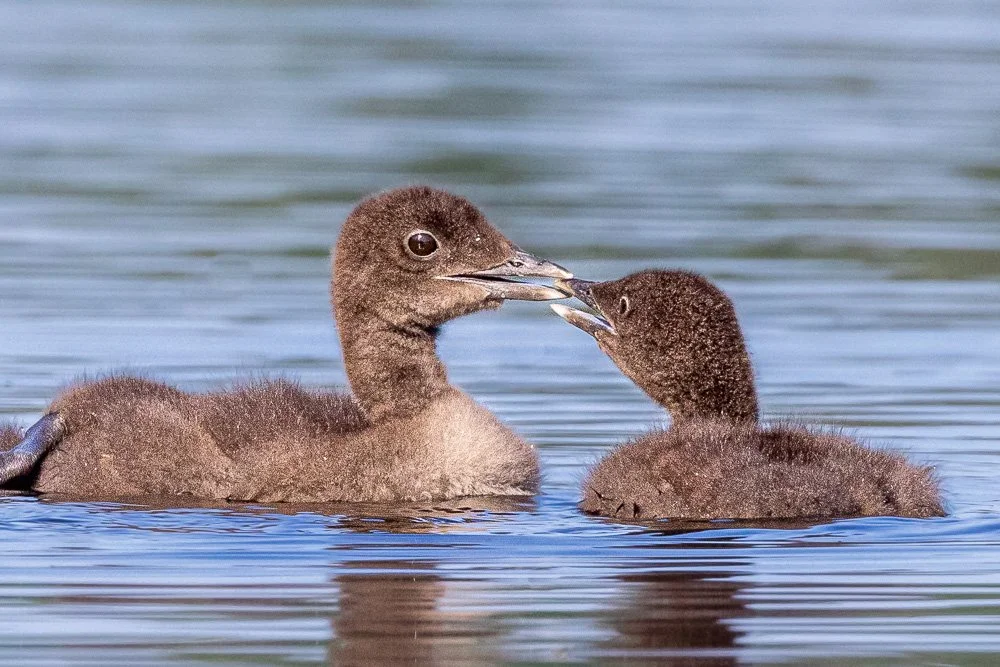
Chicks molt into a lighter brown downy plumage. Their bodies begin to elongate, and as their physical attributes continue to develop, they lose the ability to walk on land. Chicks become too large to back-ride, although they may still attempt to.
-
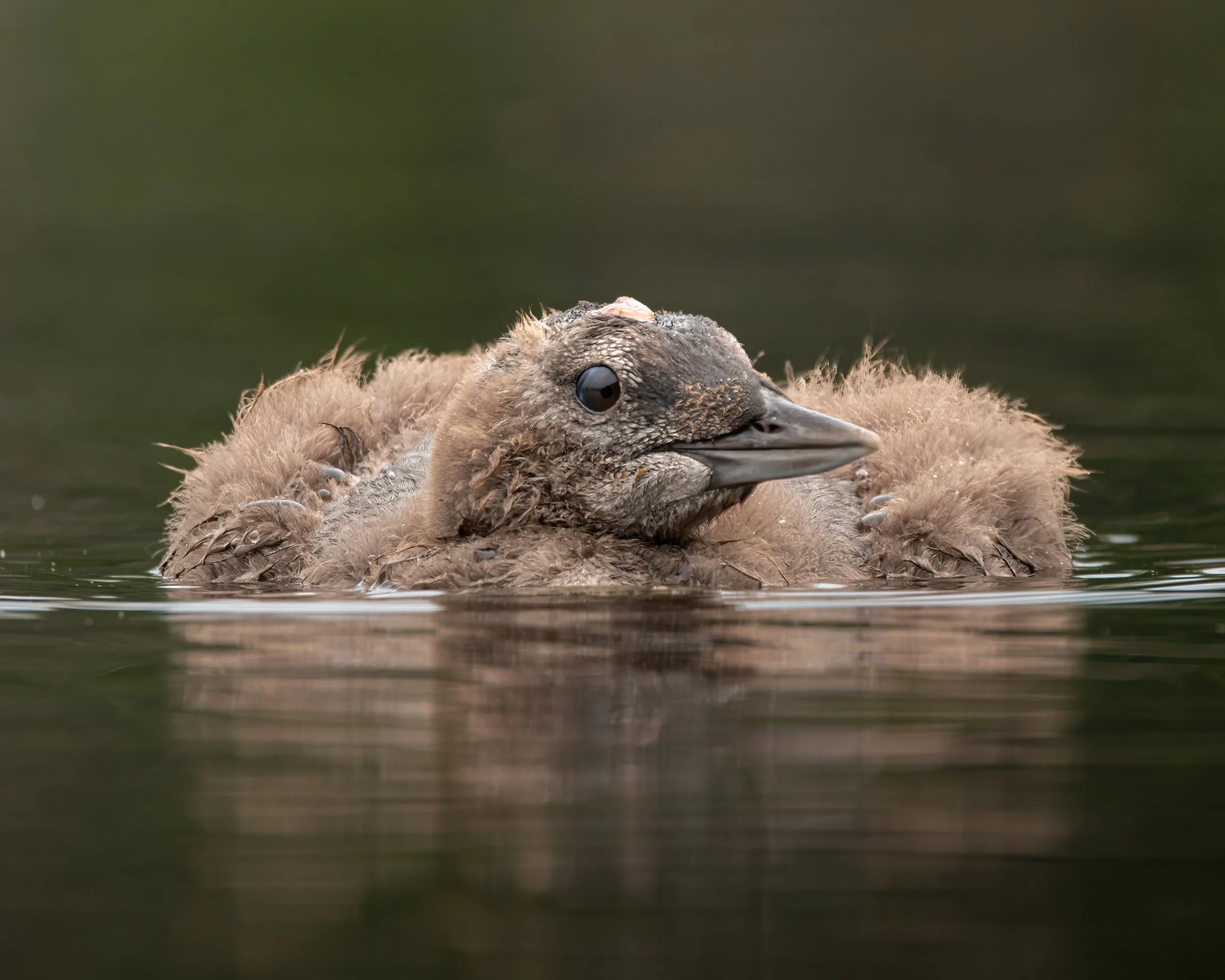
5-6 Weeks
The chicks are able to catch their own meals, although they still rely on their parents for supplemental feedings. Juvenile feathers begin to emerge. Adults leave the chicks for longer periods of time to fish.
-
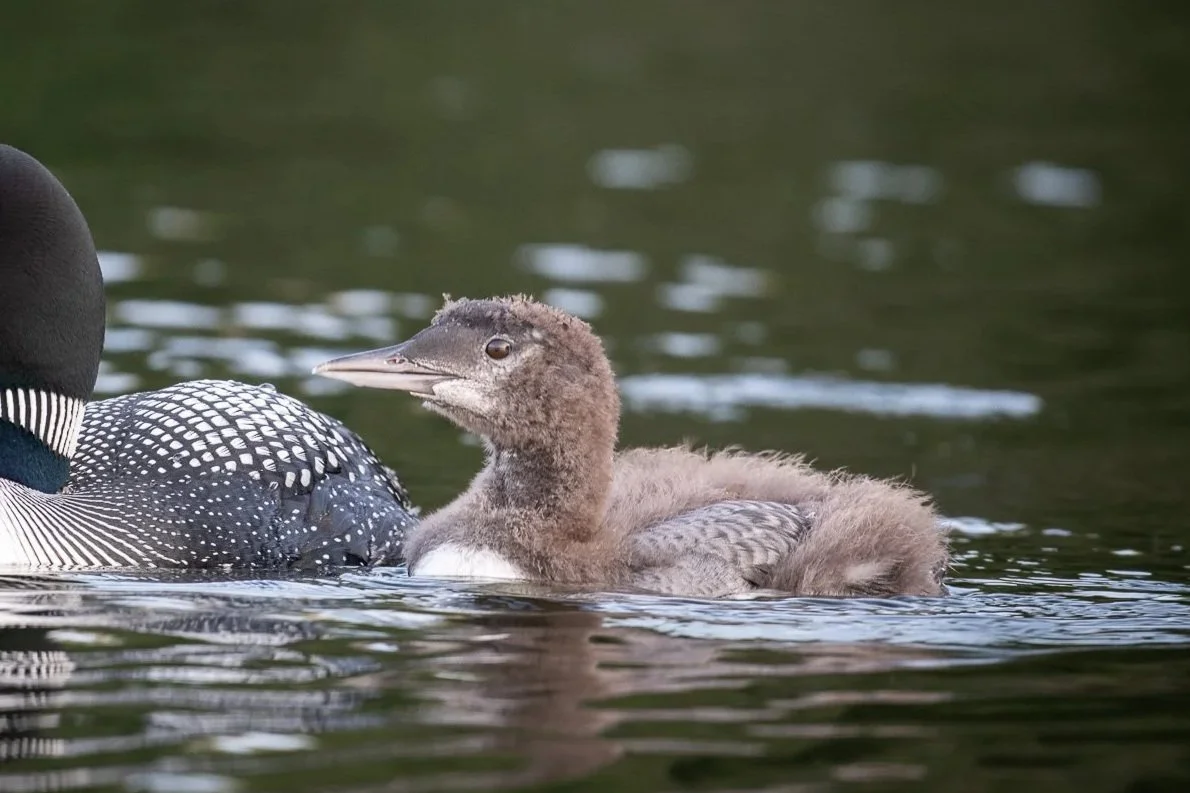
7-8 Weeks
Growth begins to slow. Juvenile plumage becomes fully developed, and they begin exercising their wings in preparation for flight.
-
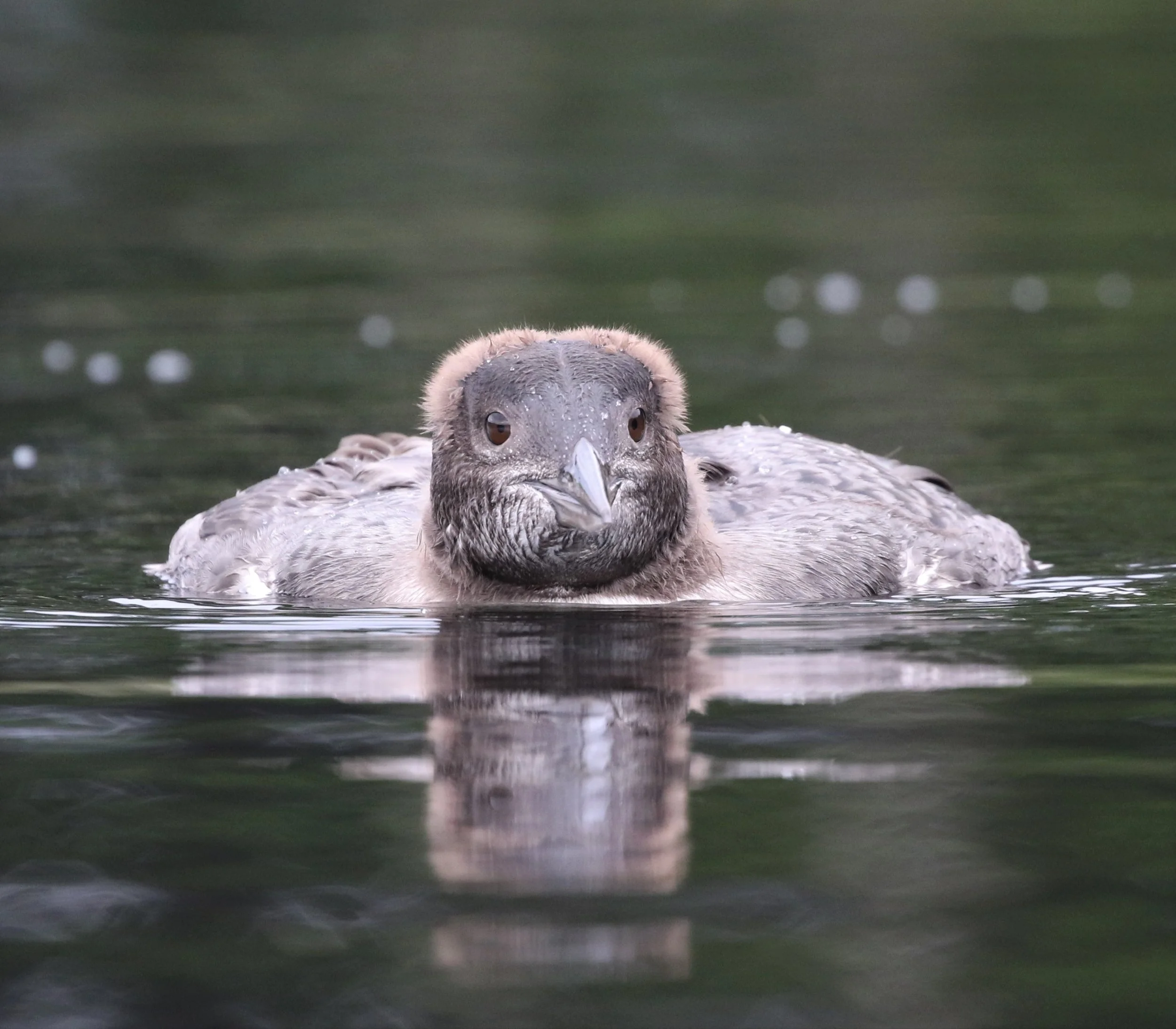
9-10 Weeks
Chicks begin to test their flight abilities as their primary flight feathers are finally developed. At this point, chicks can feed themselves, although they will still beg for food.
-
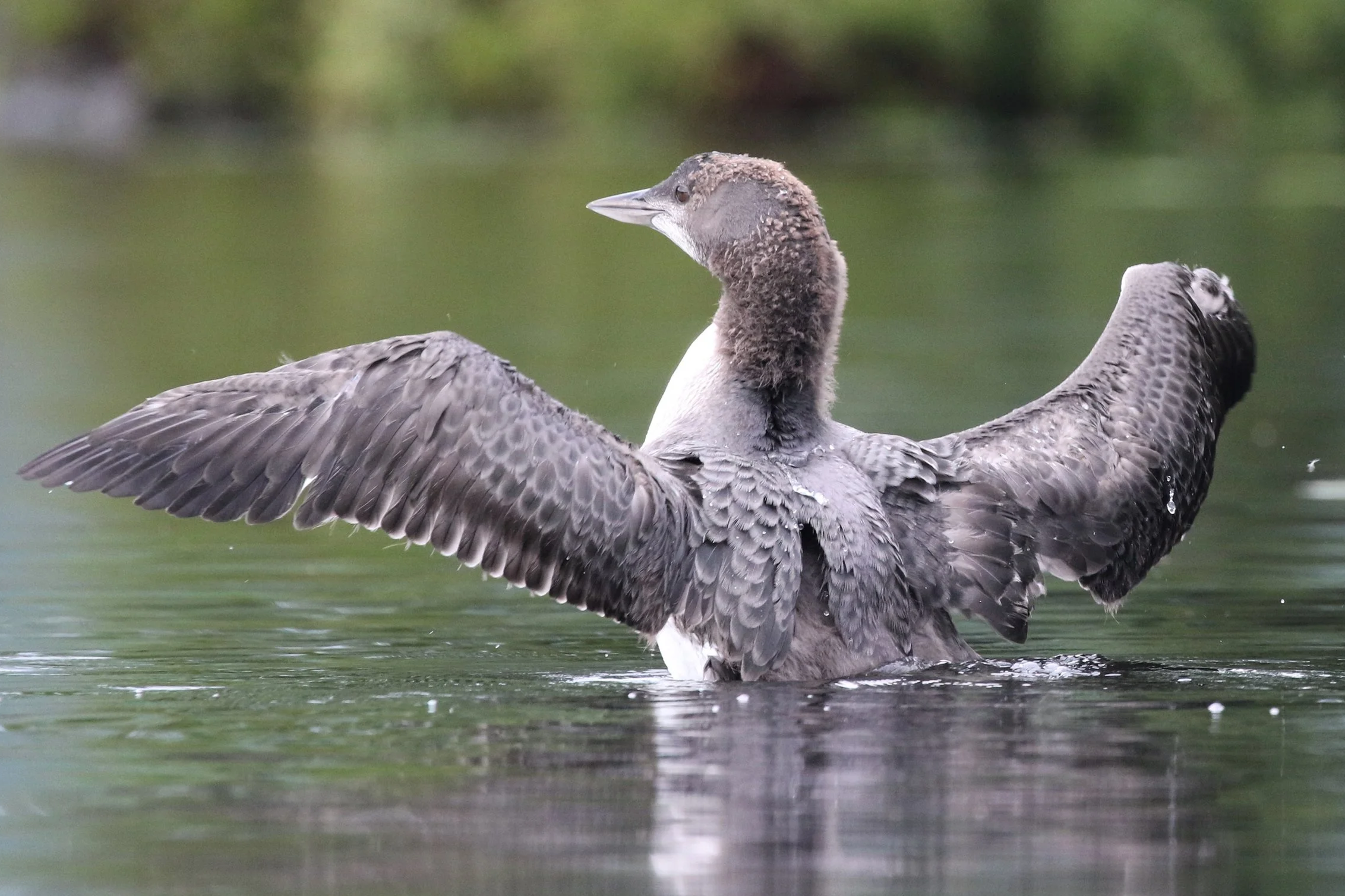
11-12 Weeks
Loon chicks reach fledgling age. Their primary flight feathers are last to develop, and, although they are the size of adults, the chicks are not able to fly until they are 11 to 12 weeks of age. They usually leave their natal lake after their parents, migrating to the coast for the winter, where they will spend the next two to four years before returning to the breeding grounds.
-
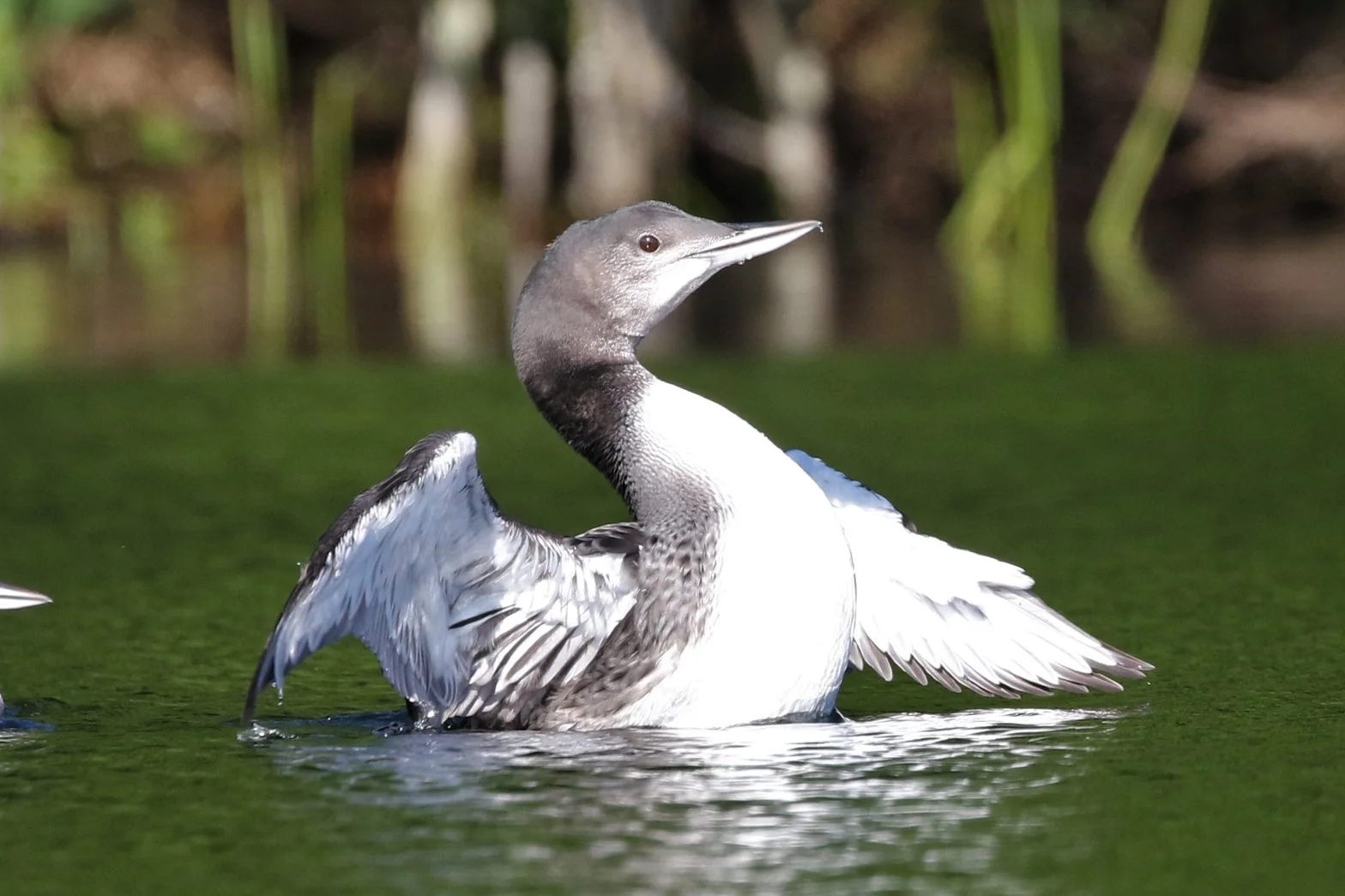
First Migration
Once chicks are fledged, or capable of flight, the chicks may spend weeks or months alone on the lakes where they were born. Migration is a learned behavior, but it isn’t entirely clear how they learn. They may leave their lake with another loon or two, and often go to other lakes before finding their way to the coast.
Threats to Loons
The common loons that breed in the Adirondacks represent the southern edge of their range. While loons are fairly tolerant of living in close proximity to humans, there are some threats that may affect their ability to thrive long-term.
Threats from Predators
A thriving ecosystem includes both predator and prey species. Adult loons have few predators, though any predator will take an opportunity to prey on an injured or otherwise compromised adult loon.
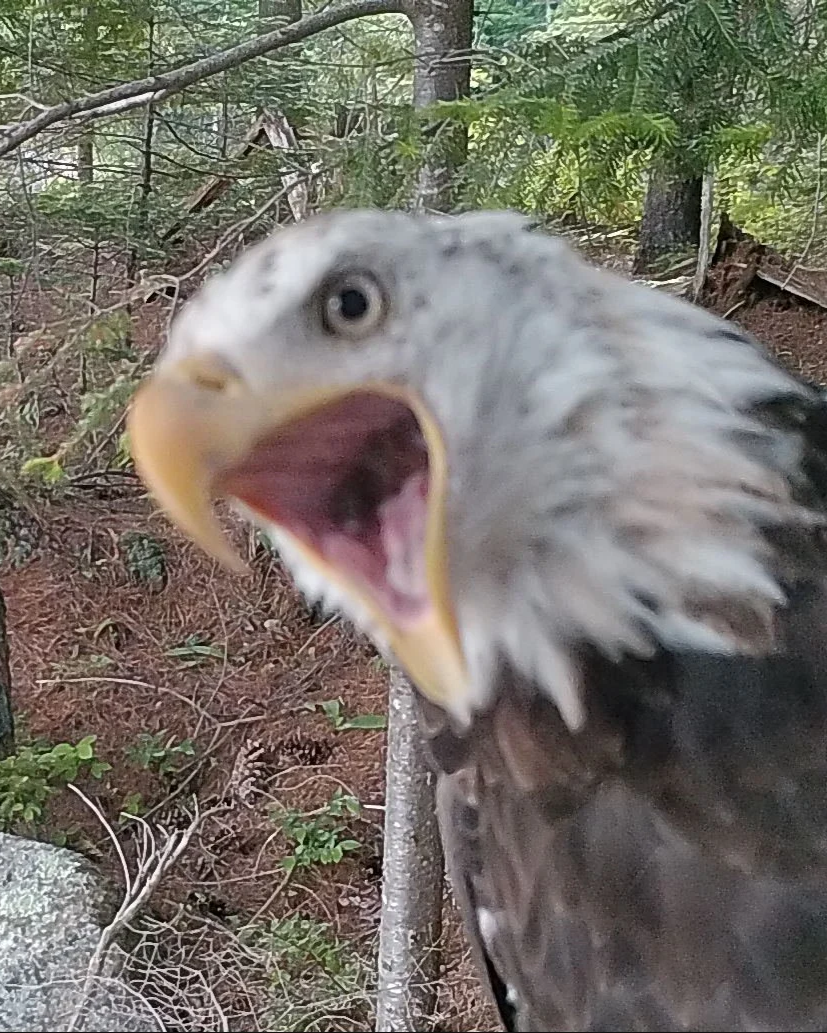
Loon eggs and loon chicks do have predators. Scavenging predators will predate a loon nest, and many predatory fish, mammals and other birds will prey on loon chicks, especially in the first weeks of life when they are at their smallest and most vulnerable. Large mouth bass, fishers and bald eagles are all common predators of loon chicks. It may be a surprise to many, but snapping turtles are not considered major predatory threats to loon chicks.
While predatory behavior may be hard to watch as a bystander, it is a healthy and natural part of a properly functioning ecosystem. ACLC does not advocate for intervening with this healthy cycle by chasing away predators or harming them. It is important to remember that loons evolved alongside these species and rely on them to maintain healthy populations.
Human behavior can influence predator behavior, however. Creating user trails to the edges of lakes can create pathways for opportunistic predators like black bears to stumble on a loon nest, and the presence of trash can bring more scavenging species like gulls, raccoons and opossums to an area where loons are nesting. Stick to established trails and practice Leave No Trace principles.
Climate Change
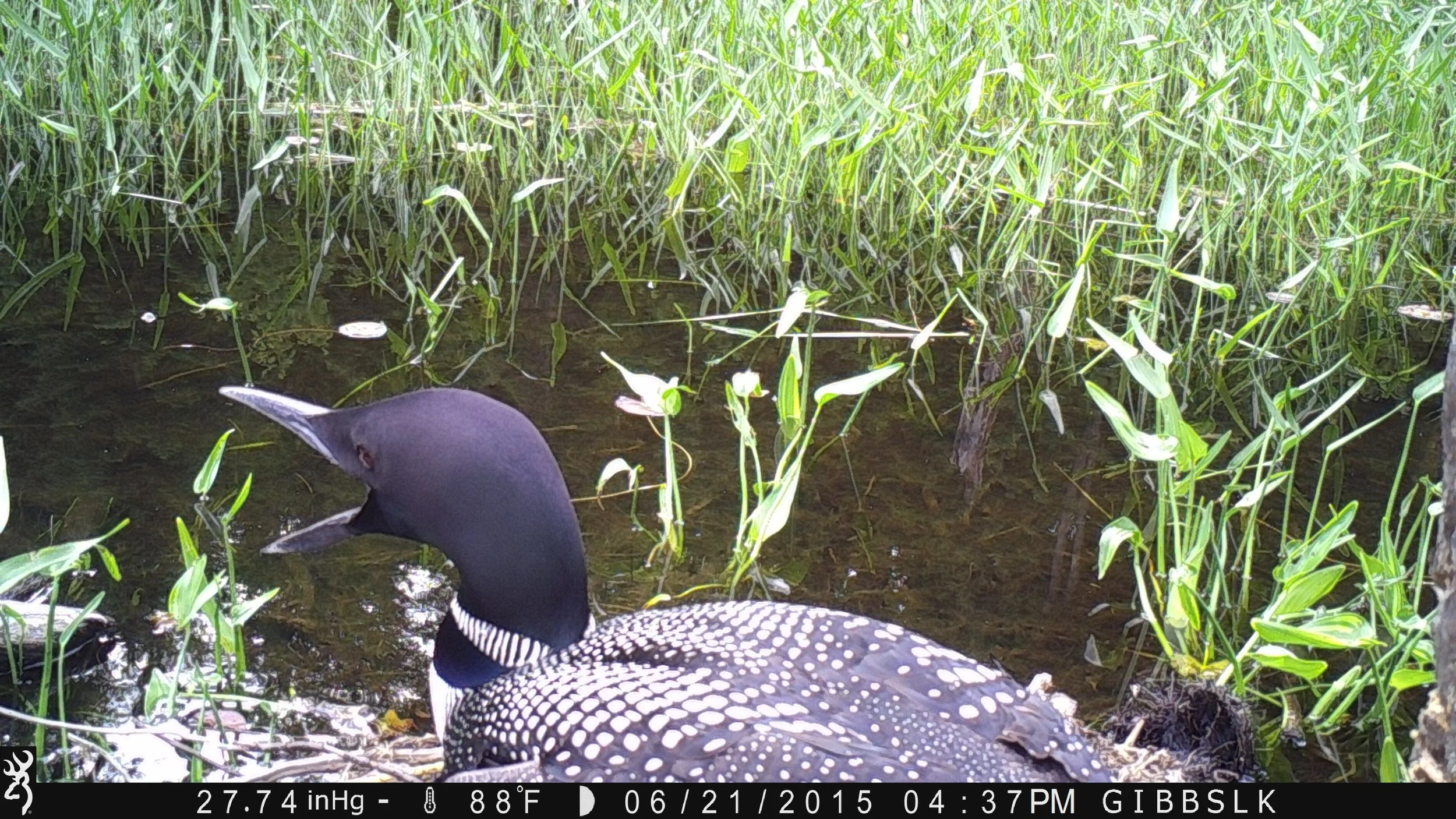
As winter temperatures continue to rise and precipitation patterns change, loons face an uncertain future in the Adirondacks. Increased summer temperatures can cause heat stress in nesting loons and heavier and more frequent rain events can easily flood loons nests. After careful review of each situation, ACLC may decide to deploy a nest raft to help nesting loons that face chronically flooded nests. ACLC researchers also observe loons experiencing heat stress, which can make it more challenging to properly incubate a nest. ACLC has seen a decline in the number of chicks hatched per nesting pair in annual census data, and believes a contributing factor to be the effects of climate change.
Lead Fishing Tackle
A leading cause of death for common loons everywhere, including the Adirondacks, is lead poisoning from lead fishing tackle. An adult loon will die within two to four weeks of ingesting even less than a half-ounce of lead. The primary way that loons ingest lead is by swallowing fish that still have lead tackle attached. Jig head hooks - both painted and unpainted - are the main culprit in this case. Learn more about the threat of lead poisoning to loons and other wildlife, and how you can help, on our Fish Lead-Free page.
Fishing Line Entanglement
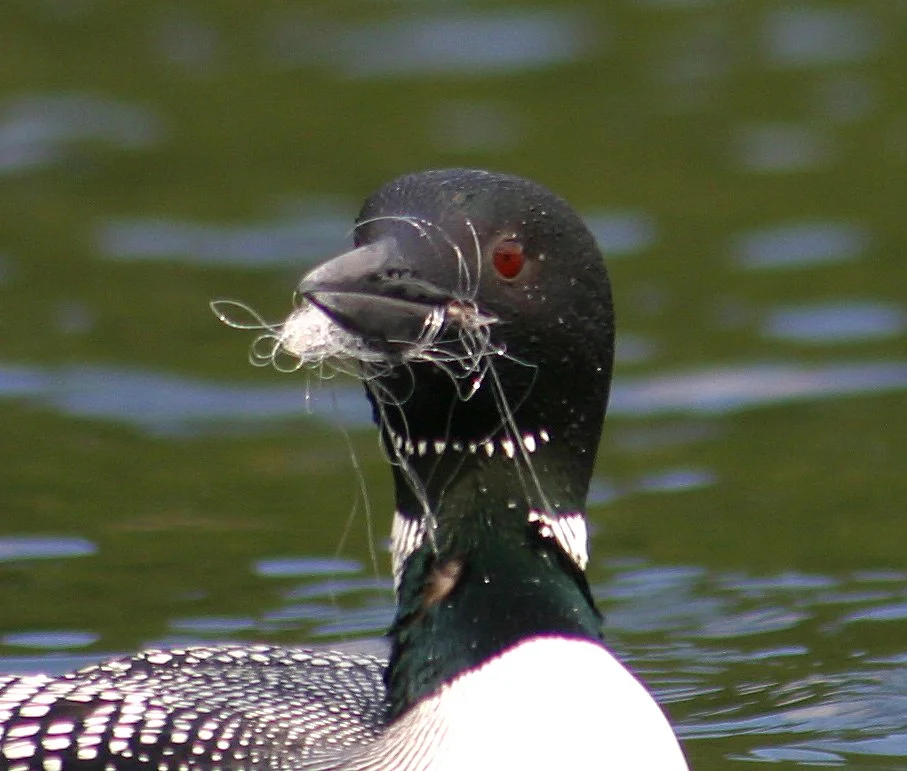
Another fishing-related threat to loons is entanglement in discarded fishing line. Line that is left behind because it becomes snagged and is cut or broken, or line that is still attached to a fish, can easily become tangled around a loon’s body parts in ways that make it difficult or impossible to swim, dive, feed, defend themselves or their chicks or incubate a nest. The easiest way to protect animals from fishing line entanglement is to not leave line behind. ACLC provides fishing line recycling containers to be installed at boat launches and access areas to help encourage anglers to properly dispose of fishing line. If you find line along shorelines or in the water and can safely retrieve it, you can throw it away at home if there is no recycling container available. If throwing it away at home, please wrap the line in a ball and cut into pieces (less than 4”) to avoid entanglement by animals that can come into contact with it in landfills.
Human Disturbance
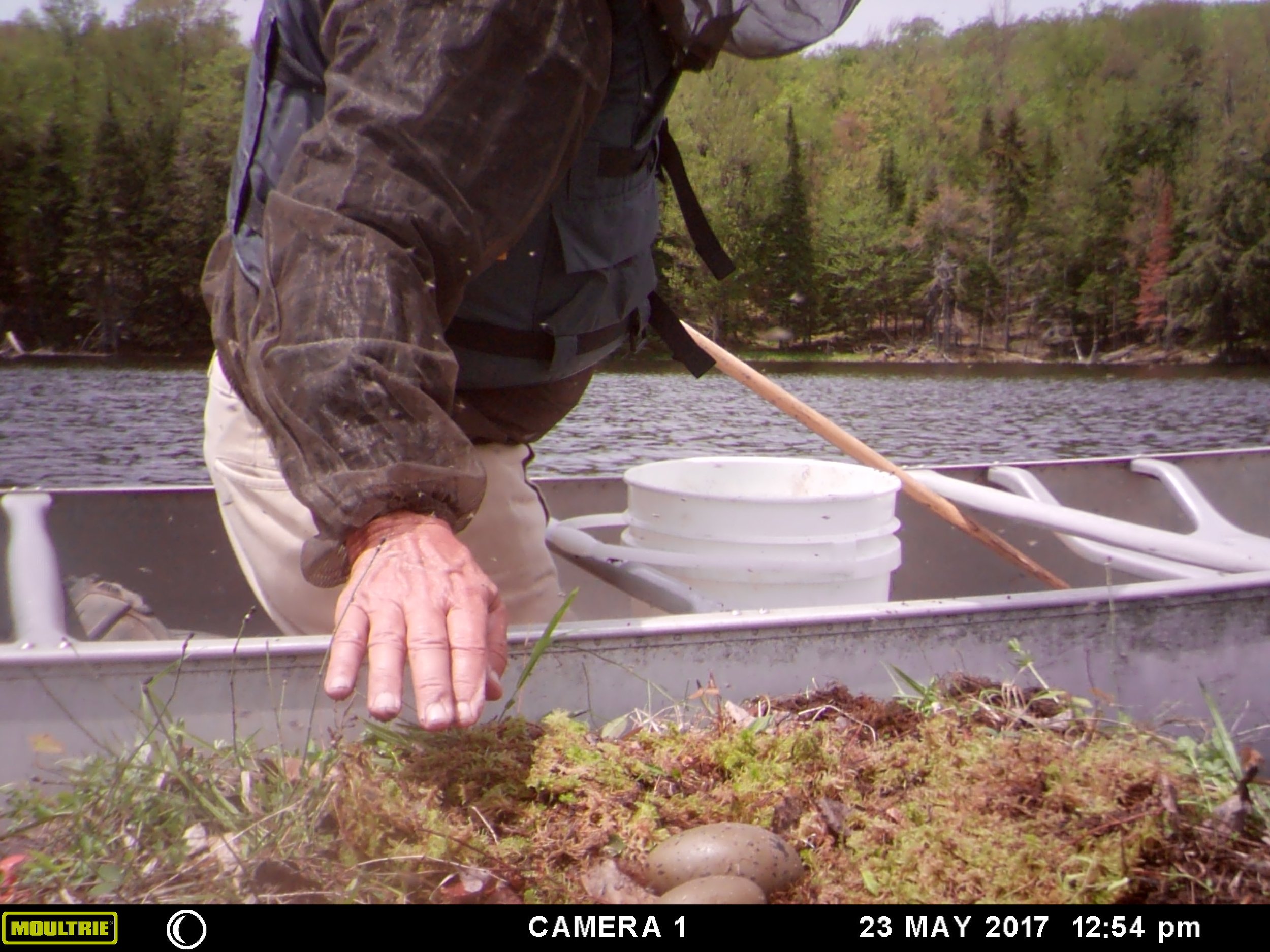
Loons tolerate living in close proximity to humans fairly well, however, when boaters get too close or when people disturb loon nests, there is a high chance that eggs will not hatch or loon chicks will not survive. When boating near loons, we recommend staying 100-150 feet away, and we ask boaters to never chase loons, especially loons with chicks. While adult loons can dive to get away from boaters, loon chicks, especially young ones, cannot. If your presence is causing a loon (or any animal) to change its behavior (to stop feeding, for example, or be on alert instead of resting, or to move to get away from you), then you are too close! Loons will often go about their daily lives with boaters nearby if you sit quietly and watch from a distance. Often, loons will approach you on their own terms to check you out. If they do, enjoy the moment! But please give loons space, and please never touch loon eggs or loon nests!