
Dispatch from Loon Cove: To See a Place
Words and images by Chris Peirce, ACLC Environmental Storytelling Intern
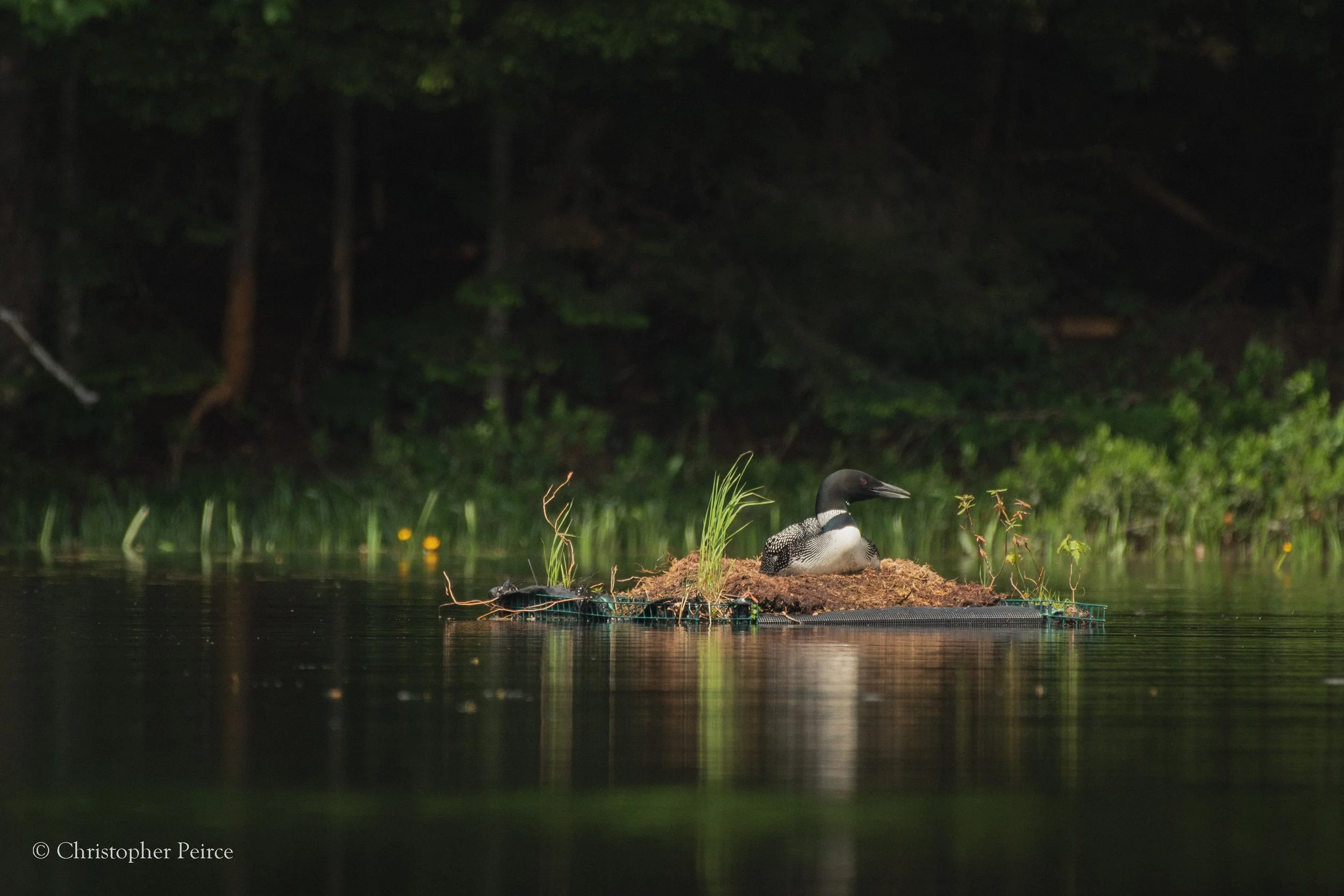
A loon at “Loon Cove” incubates eggs on a nest raft. Photo by Chris Peirce
Loon Cove, as I've come to call it, is not an isolated, hidden corner of water situated miles from settlements or roads. There are no physical barriers protecting Loon Cove. No fences, no walls, and no safeguards except human forbearance. It's an otherwise unassuming inlet, accessible via an easy paddle, not remarkably further than a few football fields from a public beach. And yet, tucked away, protected from the wind, the clear water and undeveloped shoreline represent a tiny refuge.
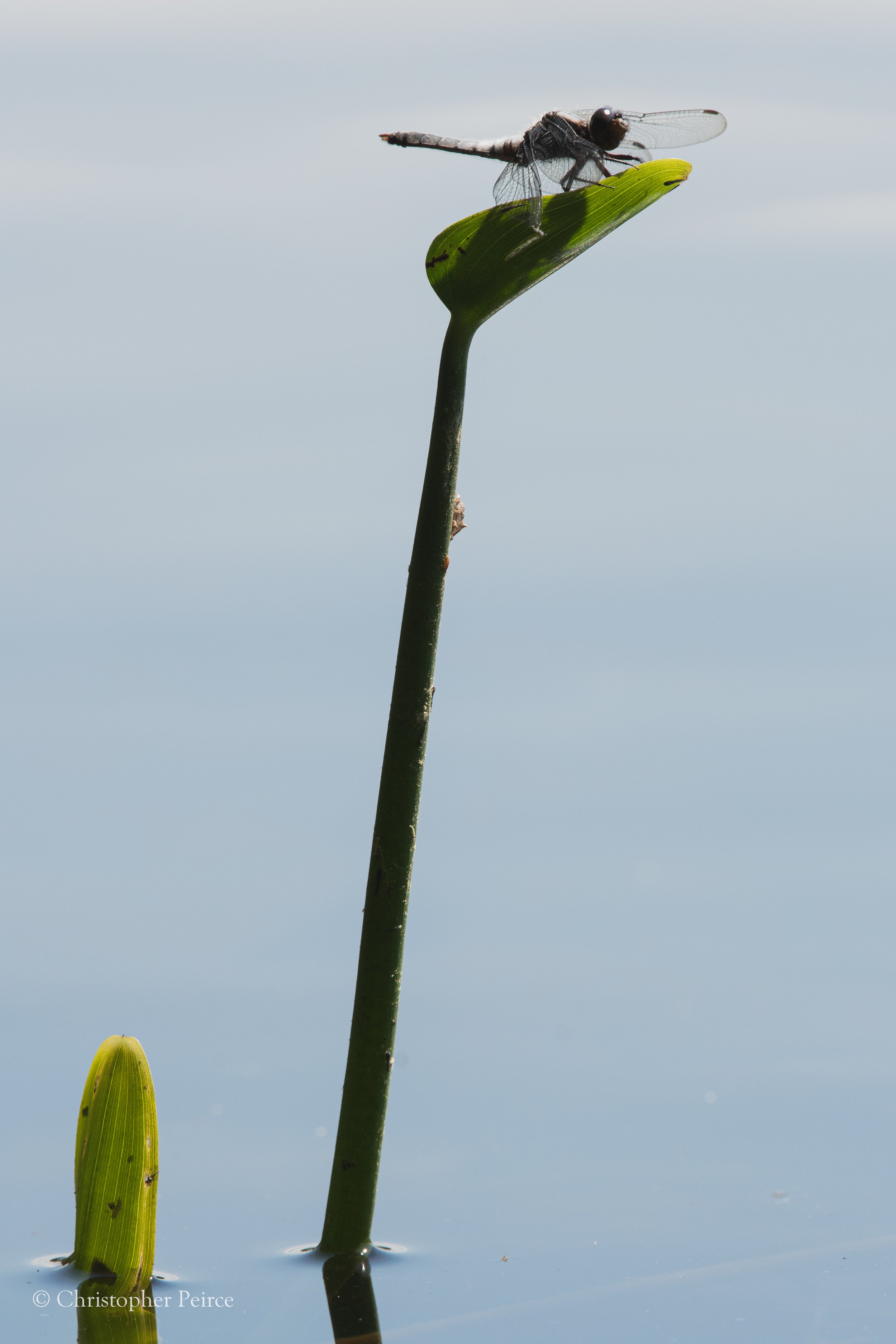
Environmental Storytelling intern Chris Peirce revels in the still and silent moments at “Loon Cove.” Photo by Chris Peirce
A loon pair makes their home in the cove, the first to use the Adirondack Center for Loon Conservation’s (ACLC) new nest raft floating offshore. As I paddle there in the early morning, it's easy to circle the nest, navigating wide around, and situating myself against the bank. Two downed trees form a diagonal V in the shallows, cradling the stern of my kayak and preventing me from drifting. There is a hermit thrush somewhere behind in the underbrush, and the lilting call of a white-throated sparrow floats in from further away. The spot is shaded in the hemlocks with a perfect view of the nest. From this position, with patience, I can disappear.
It's a place of moments, sometimes fleeting, sometimes stretching into timelessness. I find it easy to forget the sun's passage across the sky. For my loon pair, the appeal is clear. Sloped banks, deep water, protection from the wind, limited boat traffic, a thriving fish population, and ample space. The density of the brush and distance from the main road conceal the normally present automobile noise as well. Even so, it has taken me several visits to Loon Cove to see its true personality.
Ecosystems don't always communicate the depths of their complexity using a language that is easy to understand. In his essay, The Language of Animals nature writer Barry Lopez says that "To know a physical place you must become intimate with it. You must open yourself to its textures, its colors, in varying day and night lights, its sonic dimensions. You must in some way become vulnerable to it." Before making pictures in this place, I take a moment to reach out and touch the water-scoured driftwood to my left and right. I close my eyes and listen to the stillness. In time, I drape my bare feet over the gunwales on each side of the kayak and allow them to settle into the cool water.
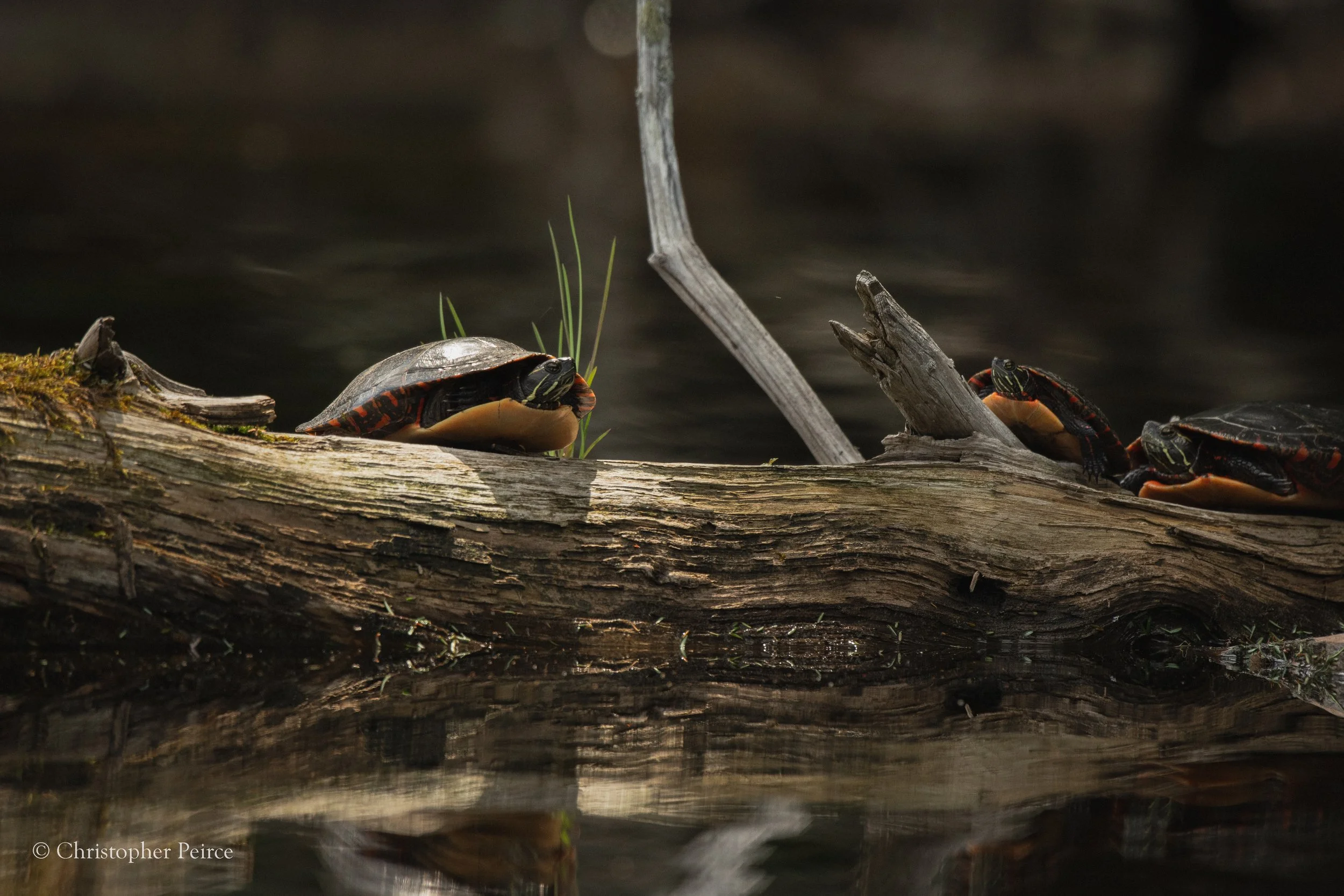
Painted turtles sun themselves while Environmental Storytelling intern Chris Peirce floats quietly nearby. Photo by Chris Peirce
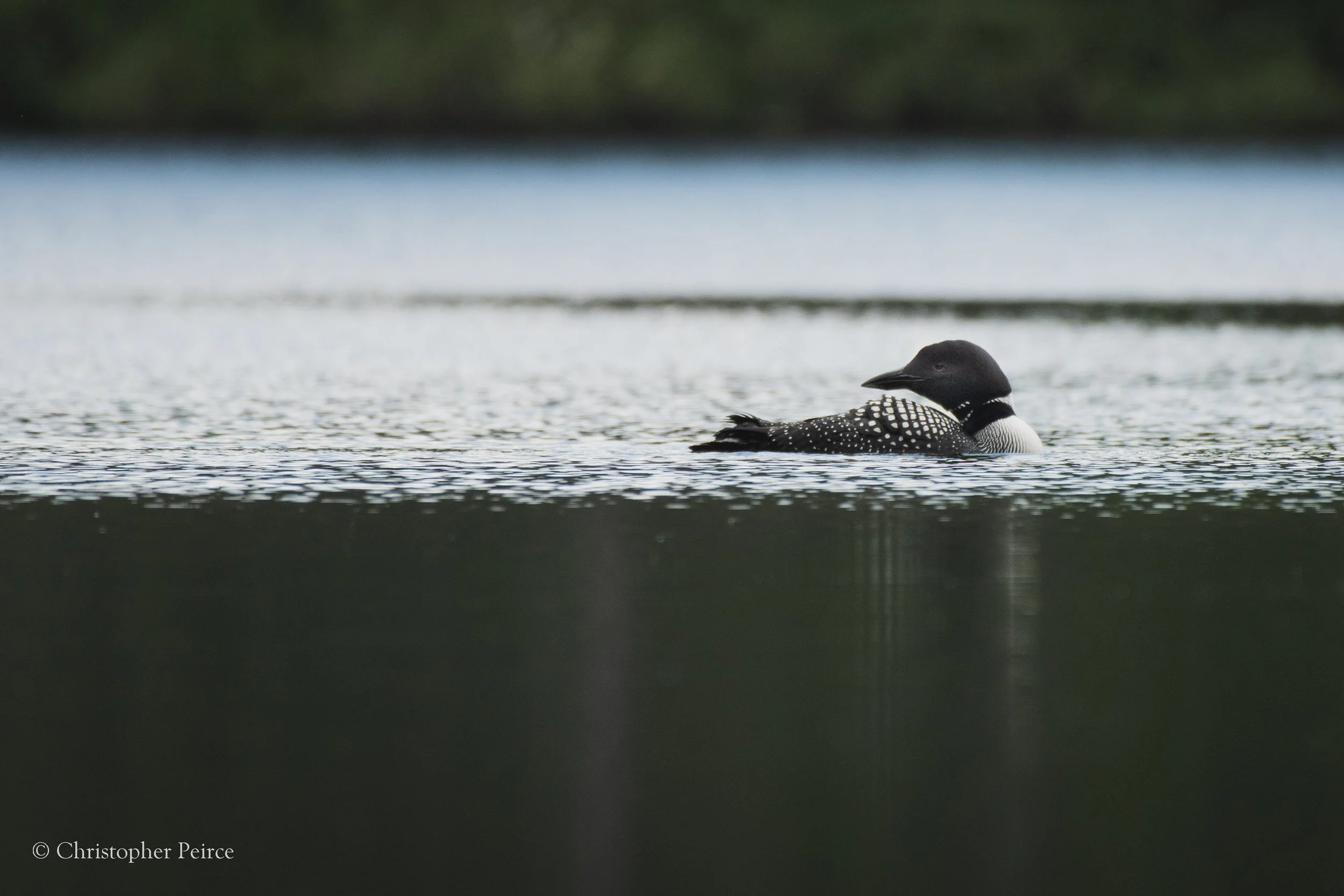
One of the loon parents in “Loon Cove” keeps an eye on an eagle in the area. Photo by Chris Peirce
The water clarity and angle of the sun is such that I can observe a bass guarding its underwater nest 25 feet away. When the painted turtles return to their basking positions on the log a short distance to my left, I take out my camera. I notice the fish beginning to dance again in the water near my toes, and I flip the power switch on. When a dragonfly lands on my left shoulder, I zoom in and begin watching the loon through my viewfinder.
I don't photograph yet. The female loon tending the nest shifts position, scans the area around her. The longer I sit, the less interest in my presence she displays. I don't want to press the shutter yet, almost fearing that the muted click of the camera would betray the serenity of my surroundings. As the sun climbs into the sky, the mother loon on the nest calls occasionally back and forth with the male making his return. I begin photographing.
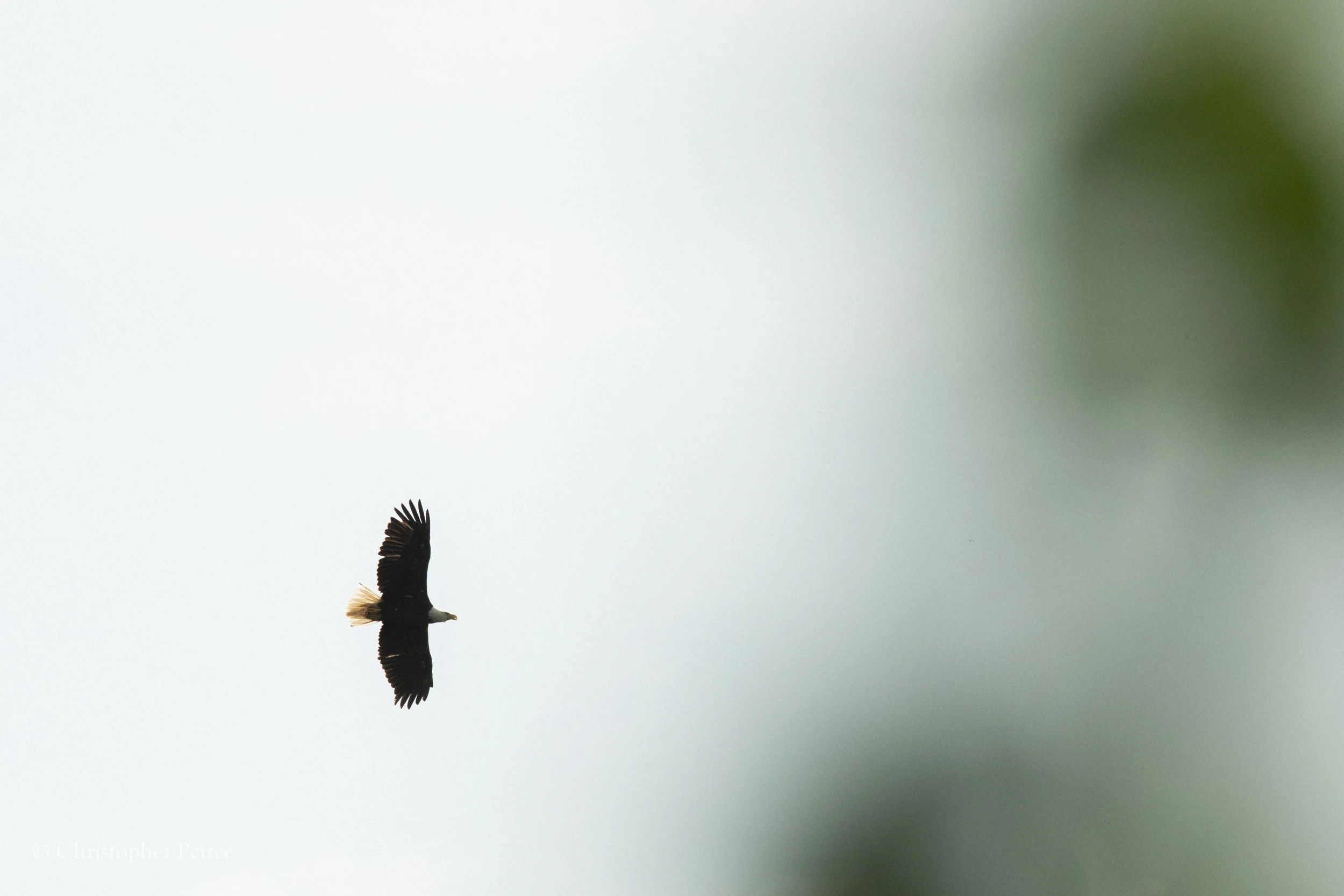
An eagle circles overhead, disrupting the silence in “Loon Cove” for a moment. Photo by Chris Peirce
Soon they'll change places. He'll take his time incubating the eggs, and she will fulfill the necessities of cooling herself in the water and catching fish to eat. The pair wail back and forth a few times more, as if confirming their mutual agreement. Then the male's call changes. The lingering wail becomes a nervous yodel. Seeking the source of his disturbance, I glimpse brown and white plumage landing in the upper boughs of an overlooking pine. The eagle watches, pensively. The male stops calling for a moment, then resumes as the eagle takes flight, circling the cove. It's as if the entire inlet holds its breath. The turtles slip back into the water; the thrush and the sparrow both fall silent. We all regard the scene together as the eagle circles again.
The standoff continues for a few tense moments before the eagle concedes. The large bird slowly dwindles into the distance as the loons begin changing places on the nest. I hear the hermit thrush call again, and the first of three turtles returns to its seat on the log.
The cove breathes again.
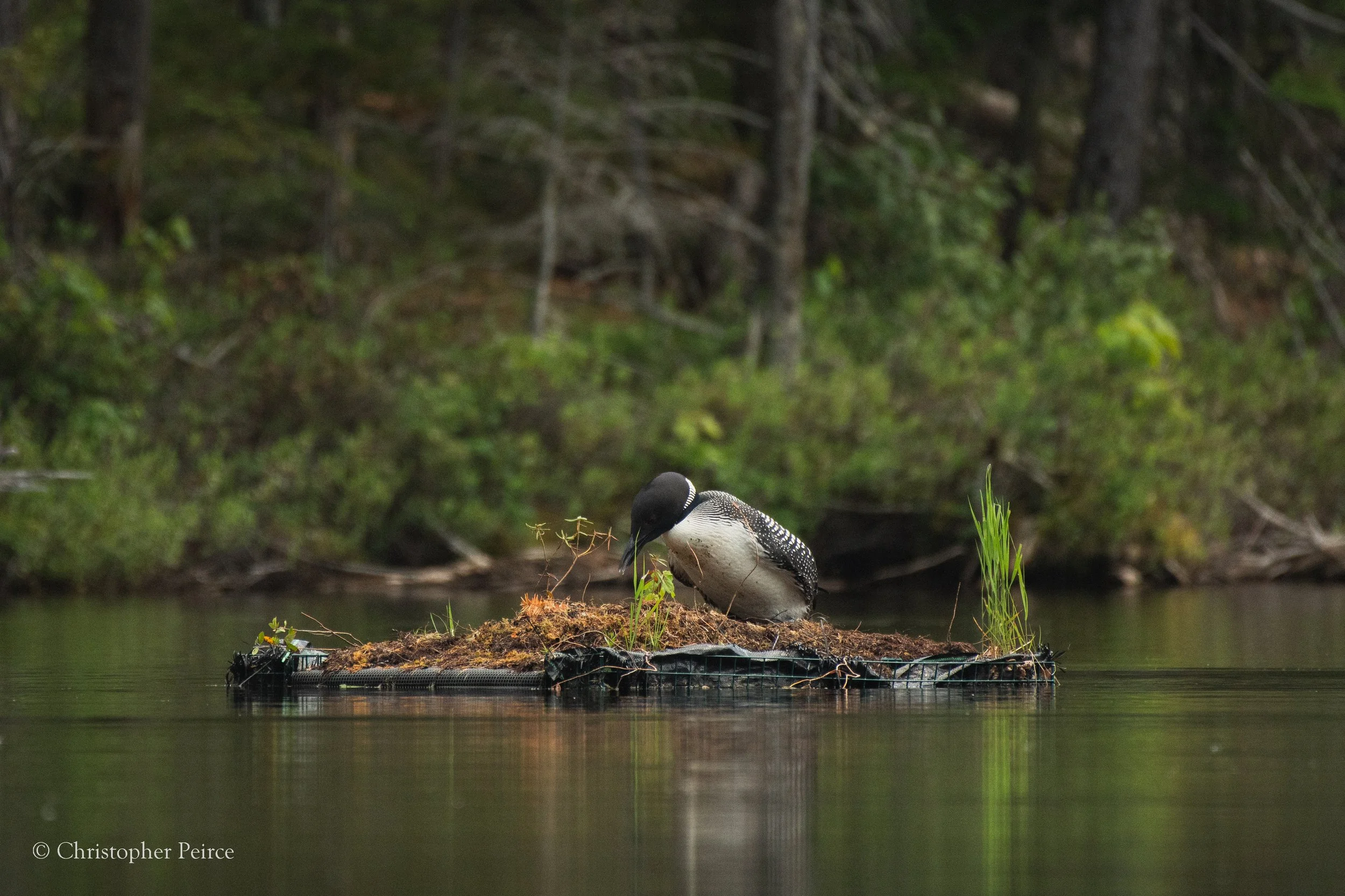
After switching places, a loon parent gets comfortable incubating the eggs in “Loon Cove.” Photo by Chris Peirce