
New Intern to Tell Loon Stories
Words by Chris Peirce, ACLC Environmental Storytelling Intern
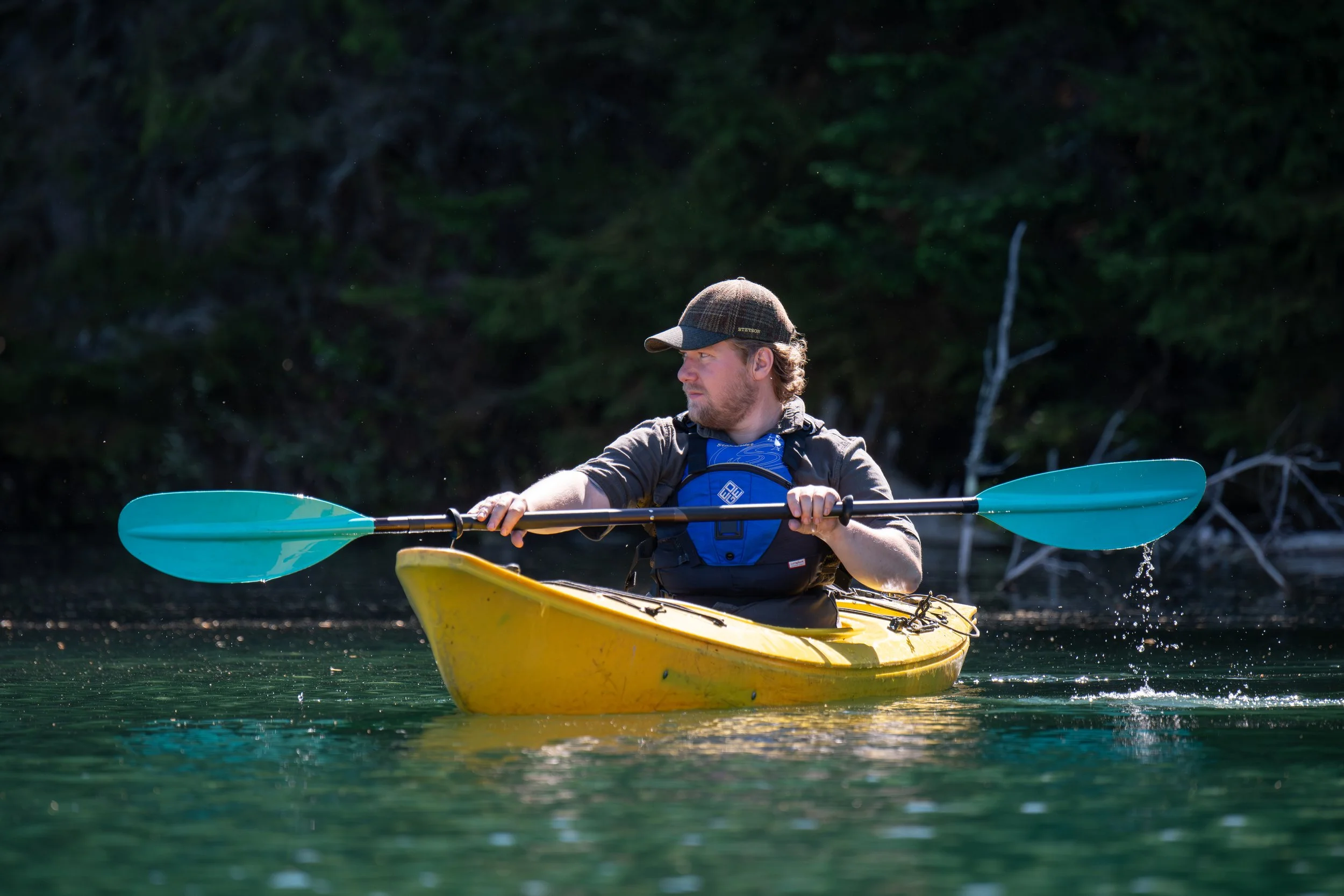
Environmental Storytelling Intern, Chris Peirce, during lake monitor training on his first day in Saranac Lake. Photo by Denise Silfee
My arrival in the Adirondacks two weeks ago was less than opportune.
The moving process was plagued with rainstorms, equipment breakdowns, and flat trailer tires. I arrived in Saranac Lake at 3 am the morning I was set to begin working. At 5:30 am I set up my camper and off-loaded my bags, and at 8 am my summer as the Adirondack Center for Loon Conservation’s Environmental Storytelling intern officially began. I received a crash course on loon biology and lake monitoring. By 2 pm, my camera and I were in a kayak surrounded by like-minded people participating in summer lake monitor training and loon center staff. It could not have been a warmer welcome.
Being here feels a little like traveling back in time, reconnecting with wilderness. I’m originally from the New Hampshire lakes region, but I’ve been living in Washington DC for the past two years in the crucible of photojournalism school and the noise of national politics. Saranac Lake and the surrounding lakes, streams, and mountains are a welcome reprieve. Despite this being my first time in the Adirondacks, something about the water, air, and people here already feel like a kind of homecoming.
The northeast is where the stories that are closest to my heart can be found. Growing up, I spent most of my time outdoors walking barefoot among the trees, fishing in the rivers, and disappearing into the mountains. Over time these experiences fostered a need to understand the intrinsic connection and conflict between the patterns of the natural world and the needs of human communities.
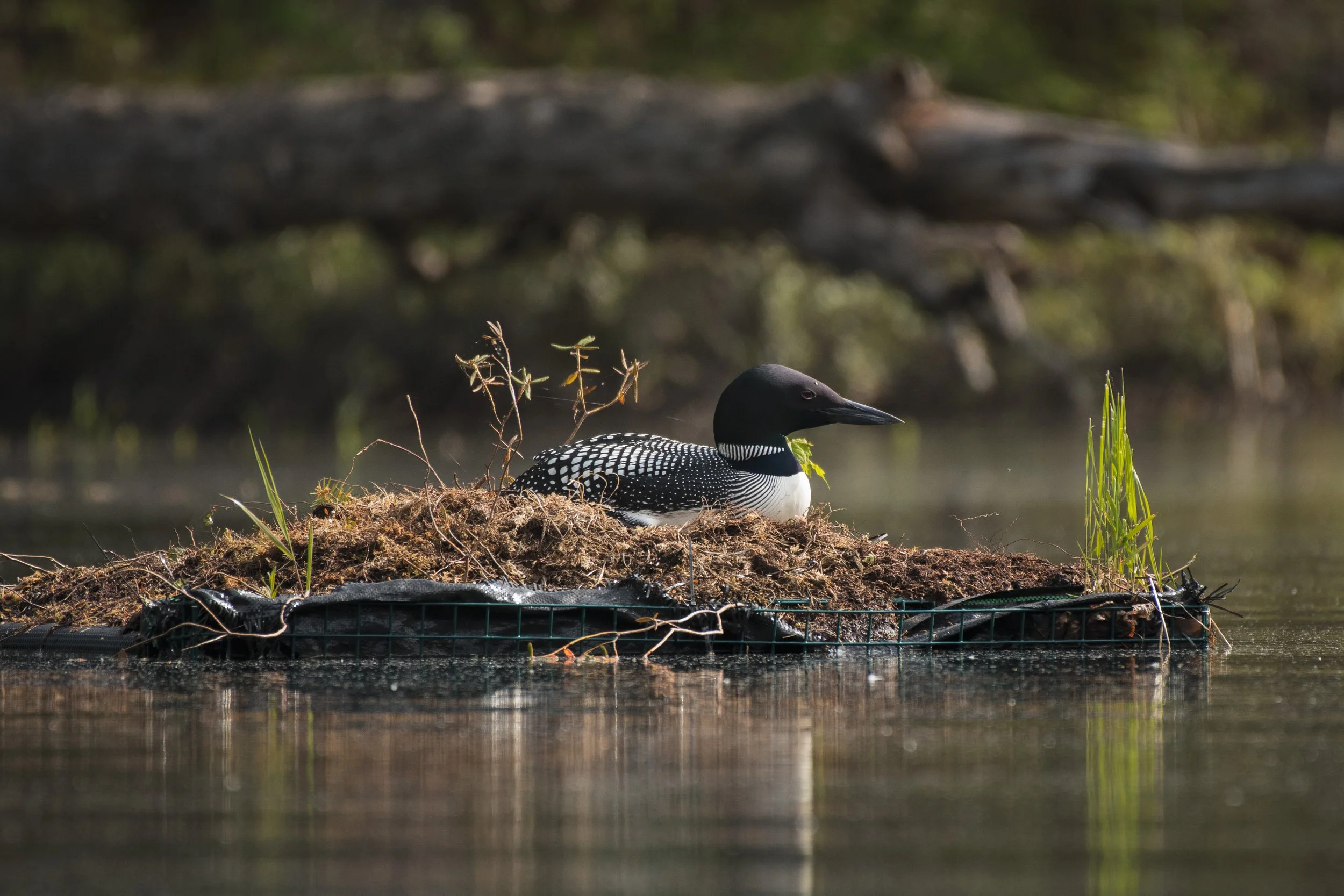
A loon using a floating nest raft. Photo by Chris Peirce
The pursuit of conservation journalism was the inevitable result of this upbringing. Specifically, I’m interested in stories about freshwater ecosystems, the way they interact with rural communities, and the way in which scientific research on indicator species informs those interactions. Adirondack loons exemplify the power of indicator species to advance scientific understanding of ecosystem health. As a top predator, reliant on the Adirondack lakes, they are impacted by everything in their environment. As an indicator species in a freshwater ecosystem, their health has far-reaching implications.
I believe my role as a journalist, photographer, and storyteller is to communicate in a way that links human identity back to finding harmony with the lands and waters we call home. I can’t think of a better place to start than the Adirondacks, or a better animal to start with than the loon. I am beyond excited to spend the summer with the Loon Center pursuing this work.