
Words by Denise Silfee, ACLC Director of Programs and Communications
*This article contains images of a loon that died from fishing line entanglement.
The Adirondack Center for Loon Conservation (ACLC) was notified of a deceased loon on Paradox Lake on August 18. Loon naturalist and wildlife advocate Ellie George recovered the loon, which was a juvenile hatched this year, and documented the sad but informative scene in photographs.
The juvenile loon was tangled in discarded fishing line that appears to have limited the bird’s movements and ultimately led to its death. Attached to the line was a lead jig-head hook that had not been ingested but that represents another major threat to loons: poisoning from lead fishing tackle.
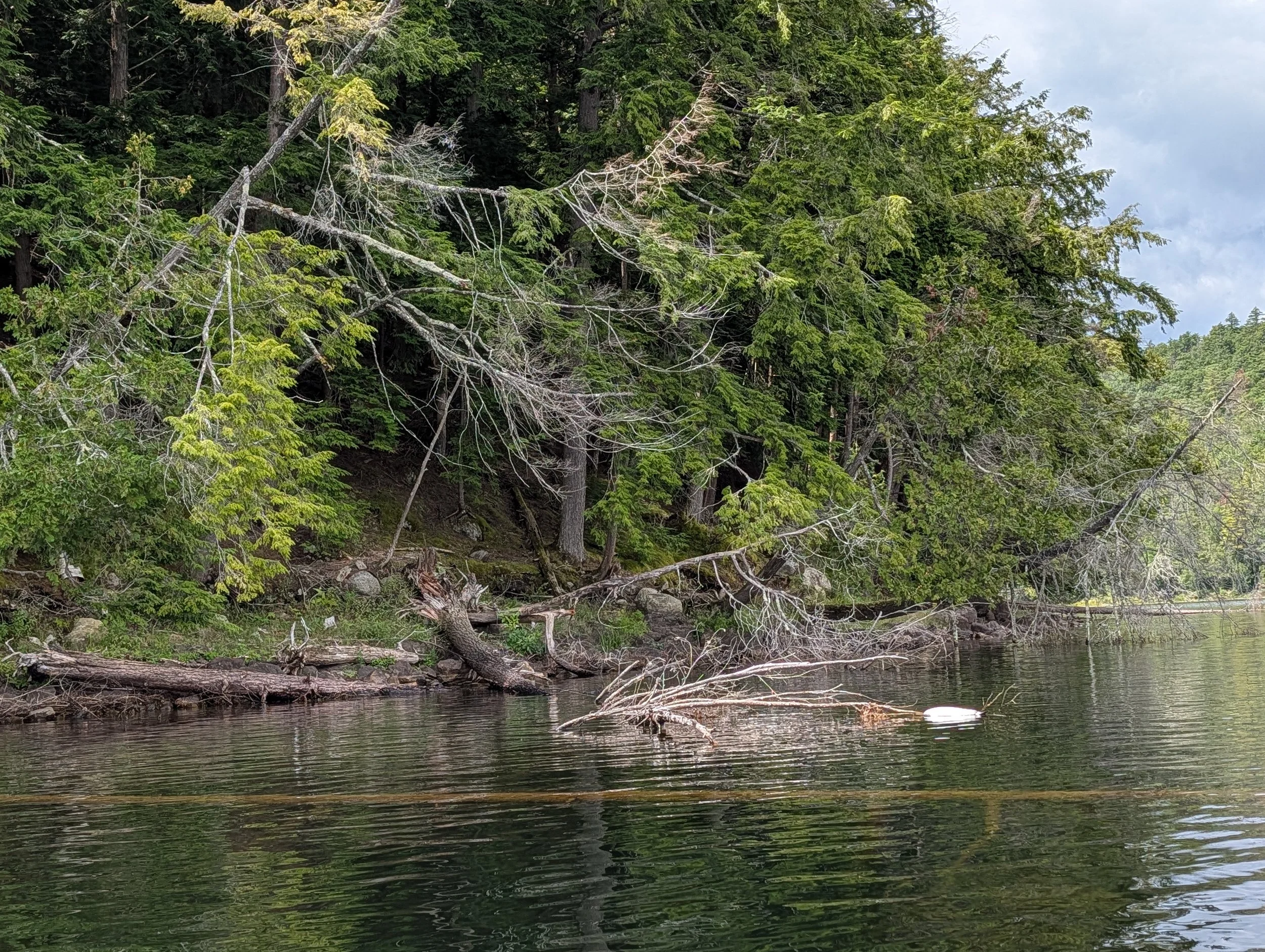
Ellie George recovered a deceased juvenile loon on Paradox Lake on August 18. Photo by Ellie George
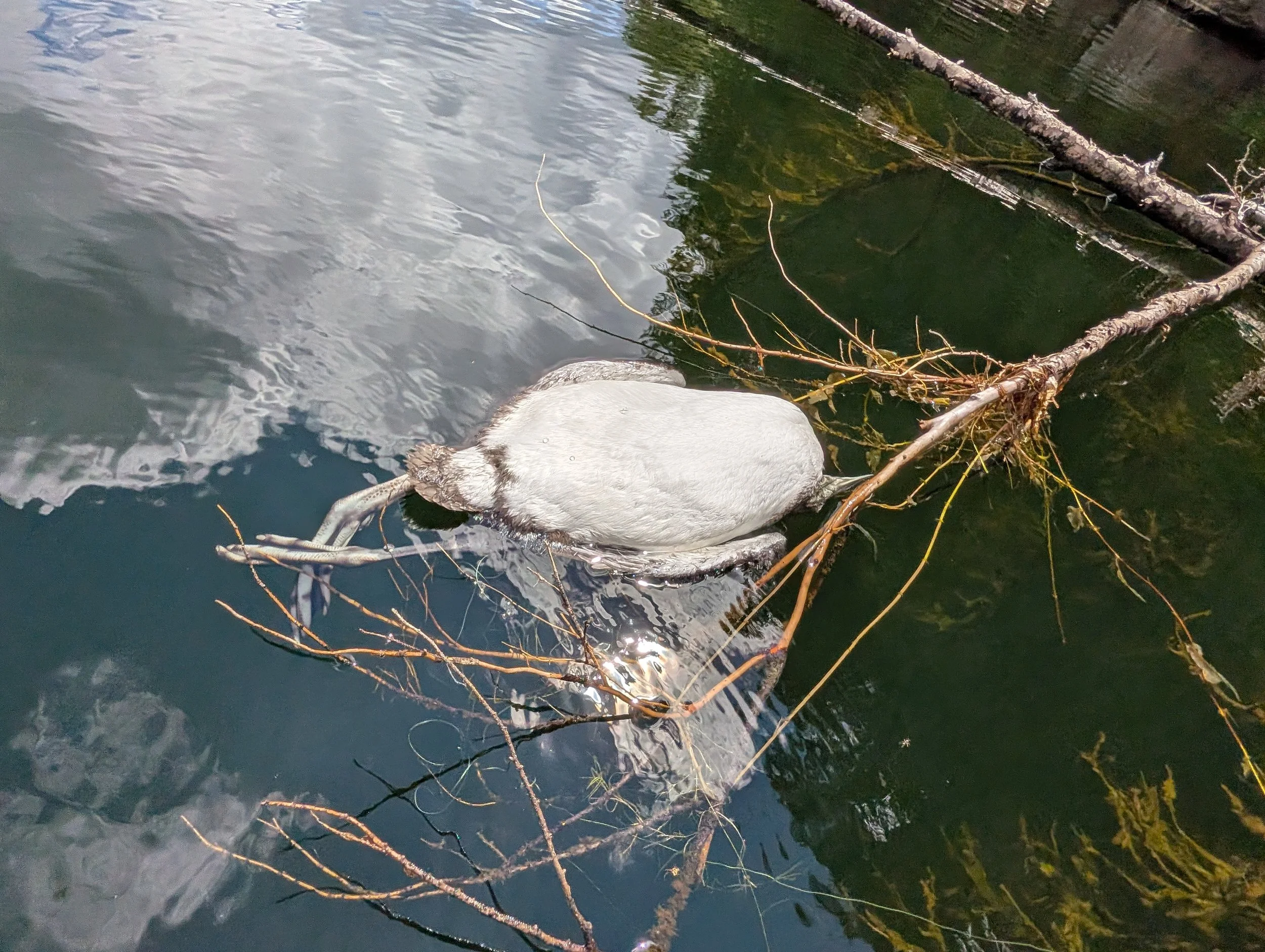
The deceased juvenile loon was tangled in improperly discarded fishing line. Photo by Ellie George
What makes this death more heartbreaking is knowing how preventable it could be: recovering broken fishing line and properly disposing of used line keeps it out of waterways, tree branches and shoreline plants where unsuspecting wildlife, particularly birds, can stumble into it and become ensnared. Death from fishing line entanglement is likely drawn out and painful - line can become embedded in the animal’s flesh as it struggles to free itself, causing lacerations, and can hinder movement to the point that the animal cannot feed itself or keep its head above water. Unlike other human-caused threats to loons, like changes to the climate from human activities or the environmental pollutants from emissions, preventing deaths from fishing line entanglement comes down to individual choices to collect and dispose of line rather than leaving it behind.
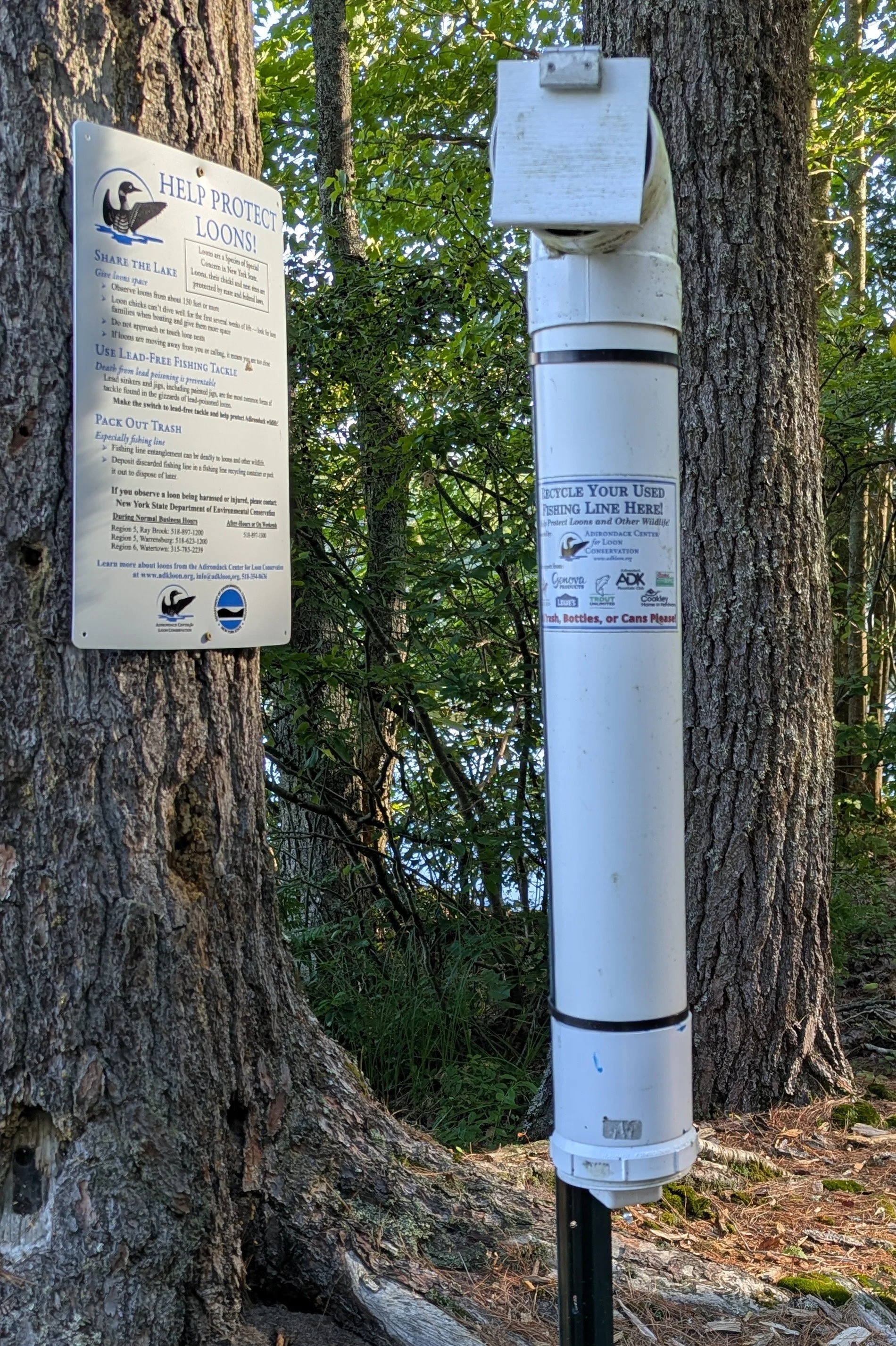
Anglers can look for fishing line recycling containers at boat launches and access points throughout the Adirondack Park and beyond. Photo from ACLC
Each year, ACLC receives several reports of loons tangled in fishing line. When possible, ACLC staff and volunteers capture the loon and work with local wildlife rehabilitators and veterinarians to free the bird, treat wounds or infections, and return it to its lake to recover and continue its life cycle.
A simple way to prevent fishing line entanglement is to collect and properly discard of used fishing line. Taking used or broken line home to throw in the trash can is the simplest way to make sure it stays out of waterways. Anglers can also look for fishing line recycling containers at boat launches and access points and deposit line there. Volunteers will come by to collect deposited line to be sorted and sent for recycling.
It is difficult to track how many birds (or other animals) die from fishing line entanglement each year because many of the deceased animals are never recovered. National Audubon Society estimates that over one million shorebirds die of fishing line and fishing net entanglement each year, with over 300,000 of those deaths attributed to discarded line and hooks. International Bird Rescue estimates that a minimum of 400,000 birds per year are killed just by gillnets.
Researchers from across the globe have been noting a decline in bird populations generally for the past 50 years. Habitat loss, from human development or climate change, is a major driver of these declines, along with environmental pollutants, pesticide use and domesticated cats. Fishing line - and lead poisoning from lead fishing tackle - is another major human-caused hurdle for bird species to navigate, alongside all of the natural challenges to survival.
It can be hard to inspire others to care when we talk about "nearly three billion birds gone” - these numbers are staggering and impossible to visualize. But when we look at images of a single juvenile loon that died in its first summer from improperly discarded fishing line, we hope it makes an impression. This juvenile loon was expected to live into its 20s, and it had the potential to live to 30 to 40 years. If it successfully bred for 24 of those years, it likely would have only produced three chicks that themselves survived to breeding age. The loss of a juvenile loon to something preventable is, therefore, a big hit for the future of loons in the Adirondacks.
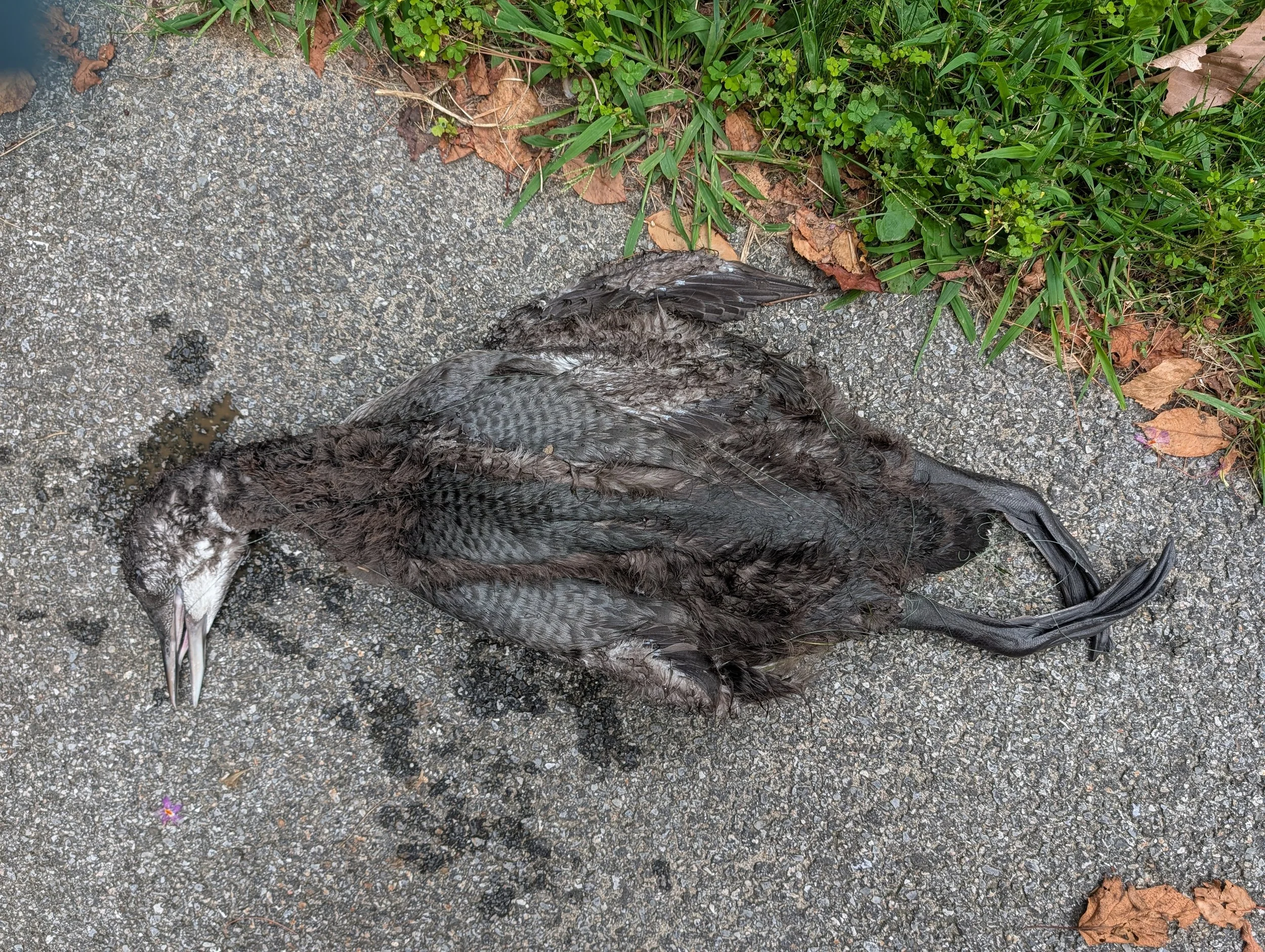
The deceased juvenile loon after being removed from the water. Photo by Ellie George