
Loon Chick Rescued on Road
Words by Eden Wondra, ACLC Wildlife Technician
Images by Chris Peirce, ACLC Environmental Storytelling Intern
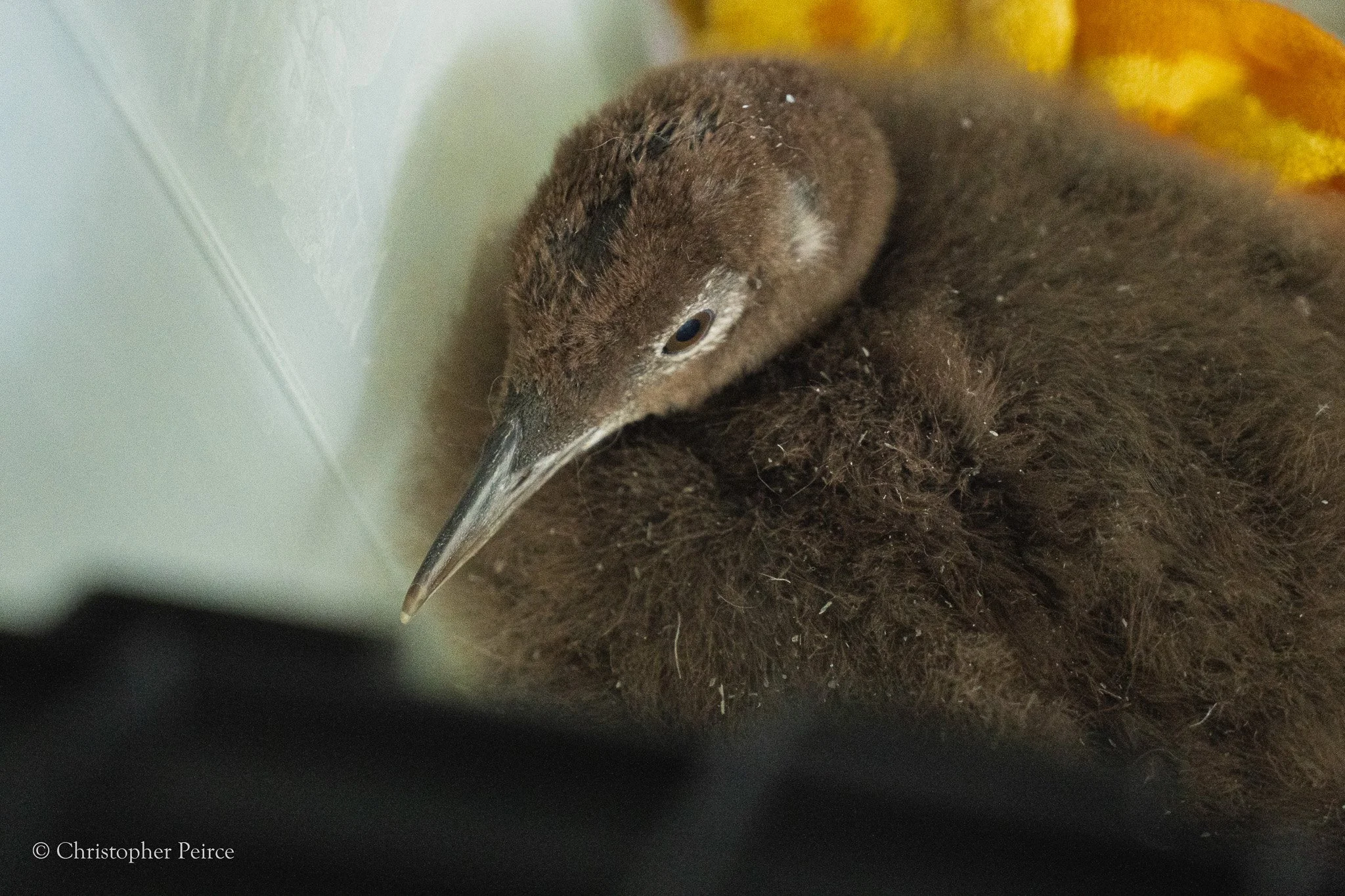
Residents in Loon Lake, Franklin Co., were surprised to discover a loon chick on a road on August 6. The chick was collected by volunteers and secured in a bin until ACLC staff could arrive to assess the situation.
On August 6, 2026, the Adirondack Center for Loon Conservation (ACLC) received a call about a loon chick on a road near Duck Pond in Franklin County.
Stephanie Demers of Loon Lake in Franklin County had been driving north of Loon Lake when she saw something lying in the middle of the road. Fortunately, after doing a double take, she noticed it was alive and then recognized it as a loon in time to avoid hitting the bird. Soon enough, other Loon Lake community members happened by, including long-time ACLC volunteer George Stowers. Together, Stephanie, George and other bystanders decided to carefully collect the loon chick and put it in a bin while they contacted ACLC for further instructions.
ACLC Wildlife Technician Eden Wondra, Field Biologist Izzie McGinley Myers and Environmental Storytelling intern Chris Peirce were sent to assess the situation and found the chick in good shape, with no signs of injury or harm, and guessed it to be about four weeks old.
The big question was: How did a loon chick end up on the road?
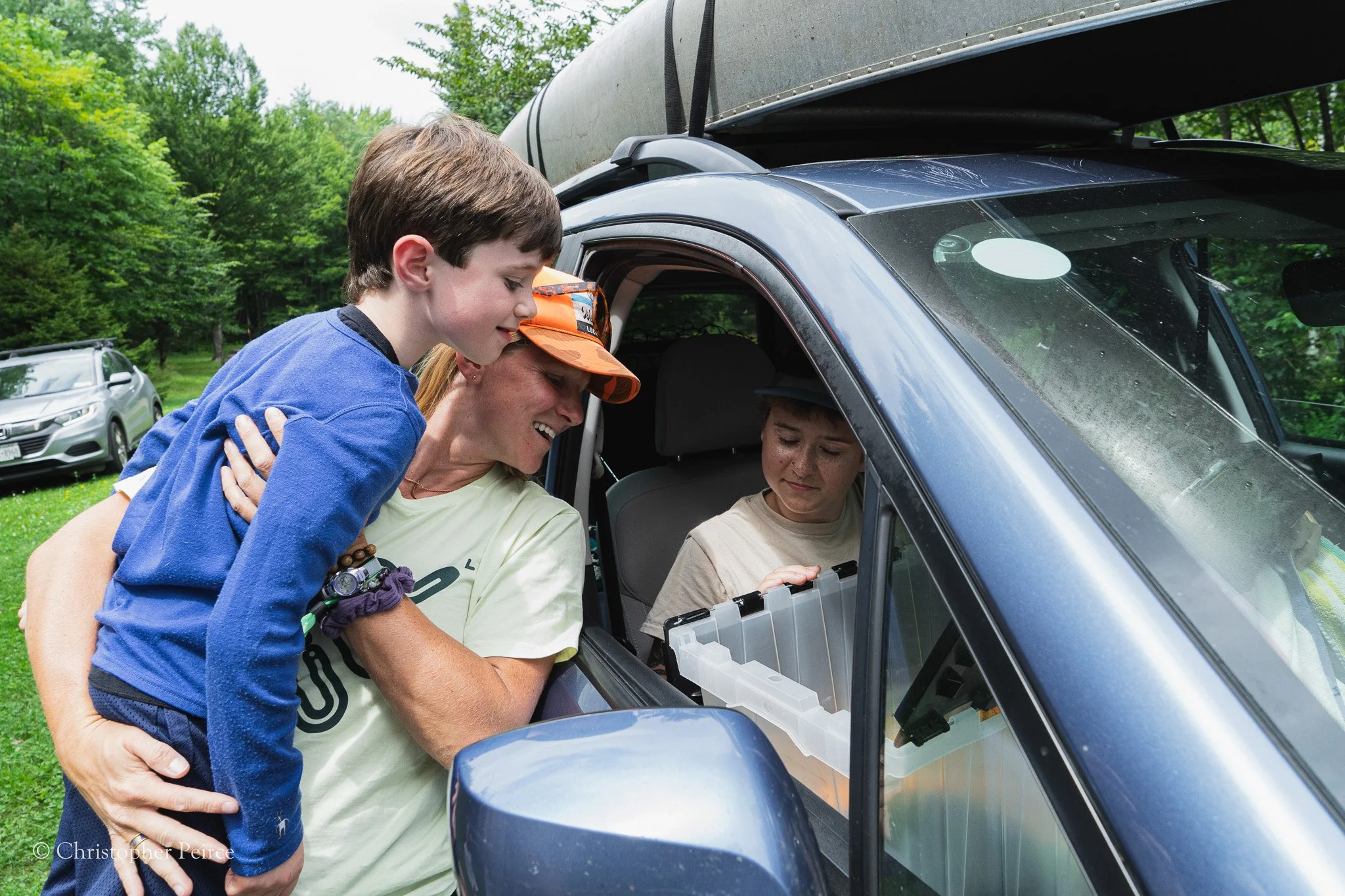
ACLC Wildlife Tech Eden Wondra helps a bystander get a peek at the loon chick.
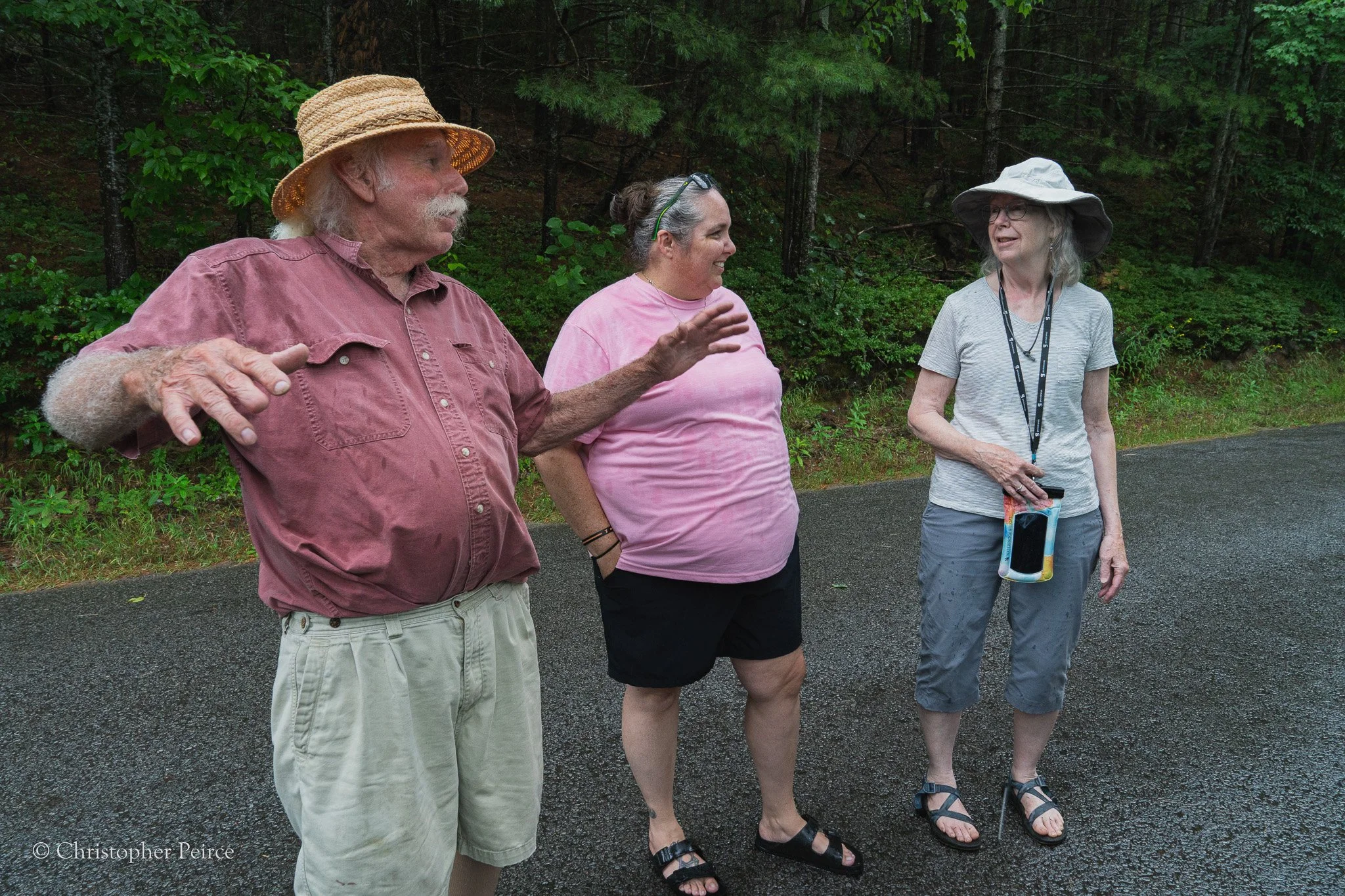
Loon Lake residents Leonard Spinner, Stephanie Demers and Anne Stowers assisted with the rescue and came to watch the chick be returned to the water.
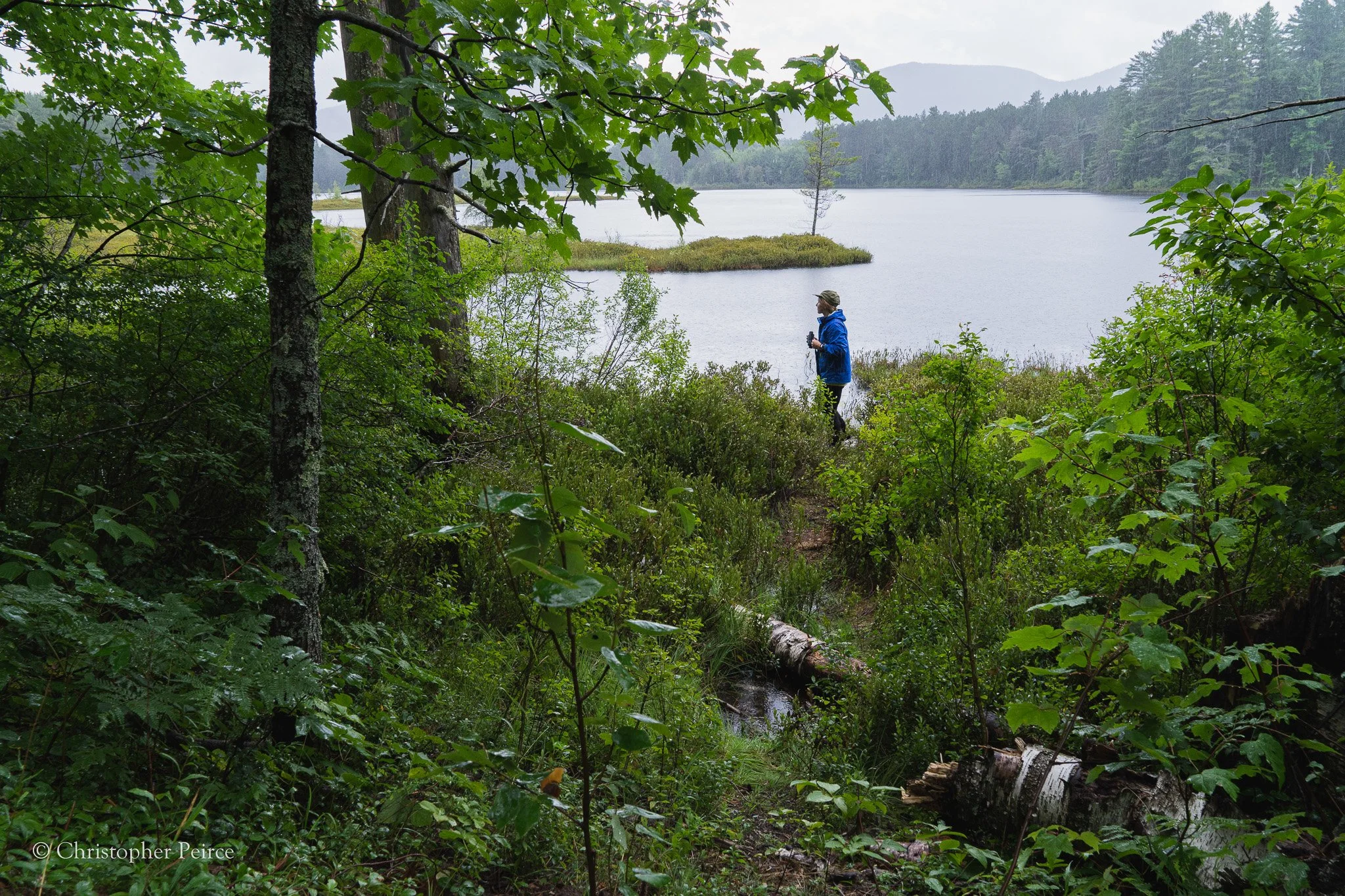
ACLC Wildlife Tech Eden Wondra scouts Duck Pond to determine if this is likely where the loon chick came from.
According to ACLC Research Biologist Griffin Archambault, a loon chick that have been ostracized from its family by a dominate chick can sometimes leave the body of water where it hatched, possibly in search of a new home for itself.
Loon chicks hatch asynchronously, meaning one chick will hatch a day or two before the other. This often means the first chick hatched is larger and stronger than the second chick, which leads to the larger, stronger chick becoming the dominate chick. This can create a sibling rivalry where the dominate chick outcompetes its sibling for food and attention from the parent loons. In some cases, the dominate chick may even attack, injure or kill the subordinate chick, ensuring that all of its parents’ energy and attention goes to supporting its own survival.
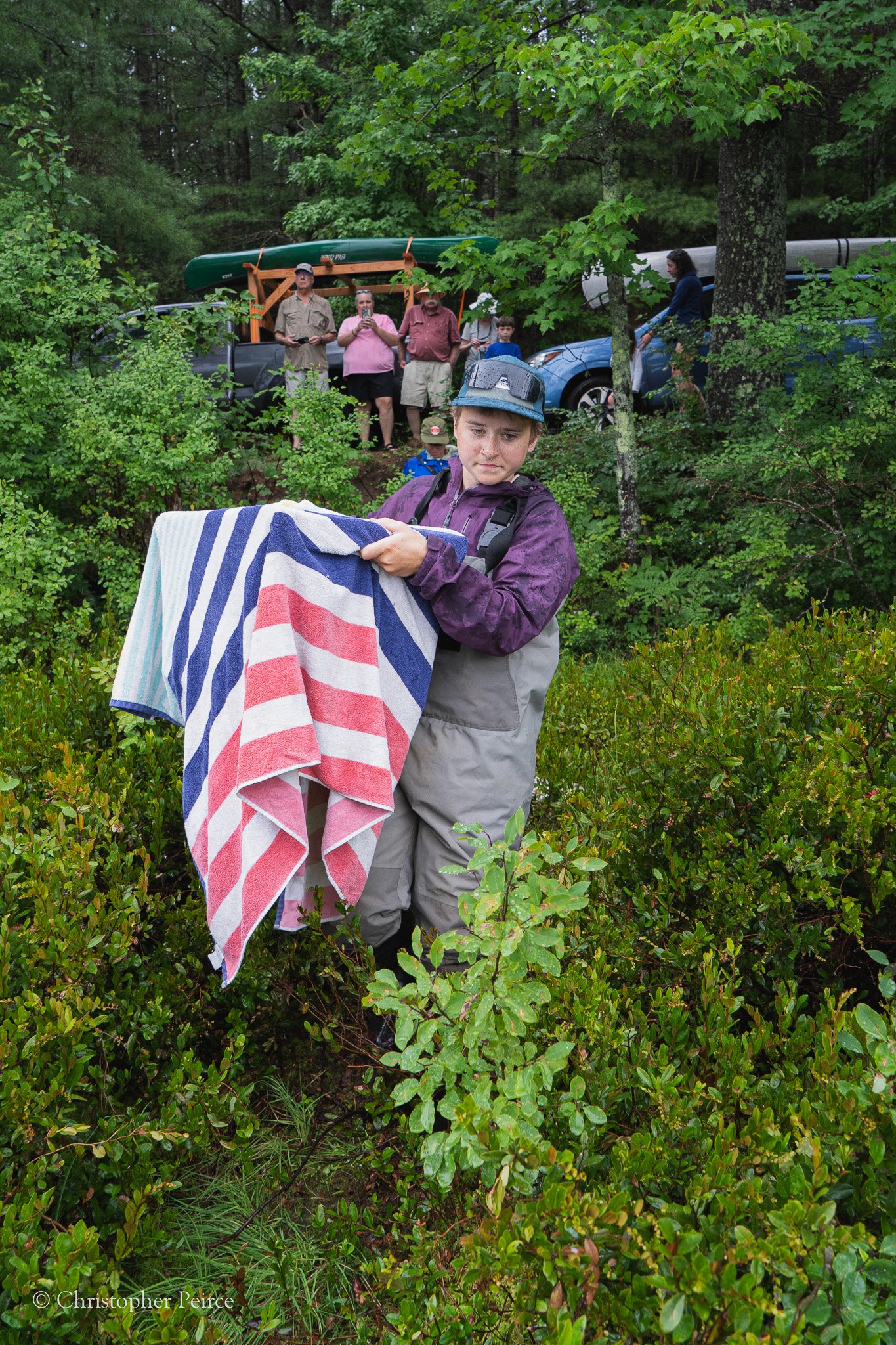
ACLC Field Biologist Izzie McGinley Myers carries the loon chick to Duck Pond while volunteers and community members observe from the road.
This behavior may be difficult for human observers to watch or know about, however it is common in many bird species, including egrets, eagles, Nazca boobies, herons, pelicans and osprey. For birds that produce fewer young yet invest more time and energy into raising them, it is a better survival bet to devote all of their energy to the strongest chick that is most likely to survive. Other bird species, like ducks and mergansers, apply a different reproduction strategy: they produce many young to increase the odds that at least some will survive.
This seemed to be the case with the loon chick on the road. The closest body of water was Duck Pond, and Eden, ACLC’s seasonal wildlife technician, was able to spot one adult and one chick on the pond through binoculars. The rescued chick had been found on the road near a creek coming from that pond, so it is likely the chick followed the stream to a point it where it could hop up onto the road. While it is impossible to know what really happened, this seemed to be a logical conclusion.
Deciding what to do with the chick came down to choosing the best of a few not great options: If the chick was returned to a body of water with resident loons, it would likely be attacked by those loons. If the loon was returned to its family and had been forced out of the lake by its sibling, the same ostracizing behavior would likely occur. Returning the loon to a body of water without other loons could prevent the loon from being attacked by other loons, but it would also likely struggle to care for itself due to its age. Taking the chick into captivity was not an option, as loons that are reared by people tend to die or fail to thrive in a way that allows them to return to the wild.
These kinds of rescue calls are challenging. Since sibling rivalry is a natural behavior that ultimately ensures the strongest loon chicks with the best chance of surviving until adulthood are receiving the most parental energy, it is best to let nature take its course. Since this chick somehow ended up in a road where people saw it and where it could be struck by a car, ACLC researchers felt that some intervention was warranted.
It was decided to return the chick to the closest body of water, Duck Pond, which had at least one adult and one chick and was likely the chick’s family.
A group of local residents gathered by the time a decision was made, including the original rescuers and some of their family members. Everyone held their breath as Izzie, ACLC’s seasonal field biologist, released the chick back into the water. It immediately dove and swam towards the other loons on the far end of the lake, a good sign of its strength and familiarity with the area. The adult loon began swimming towards the chick as well, and when the two met the greeting was tender rather than aggressive, which allowed everyone to exhale a sigh of relief.
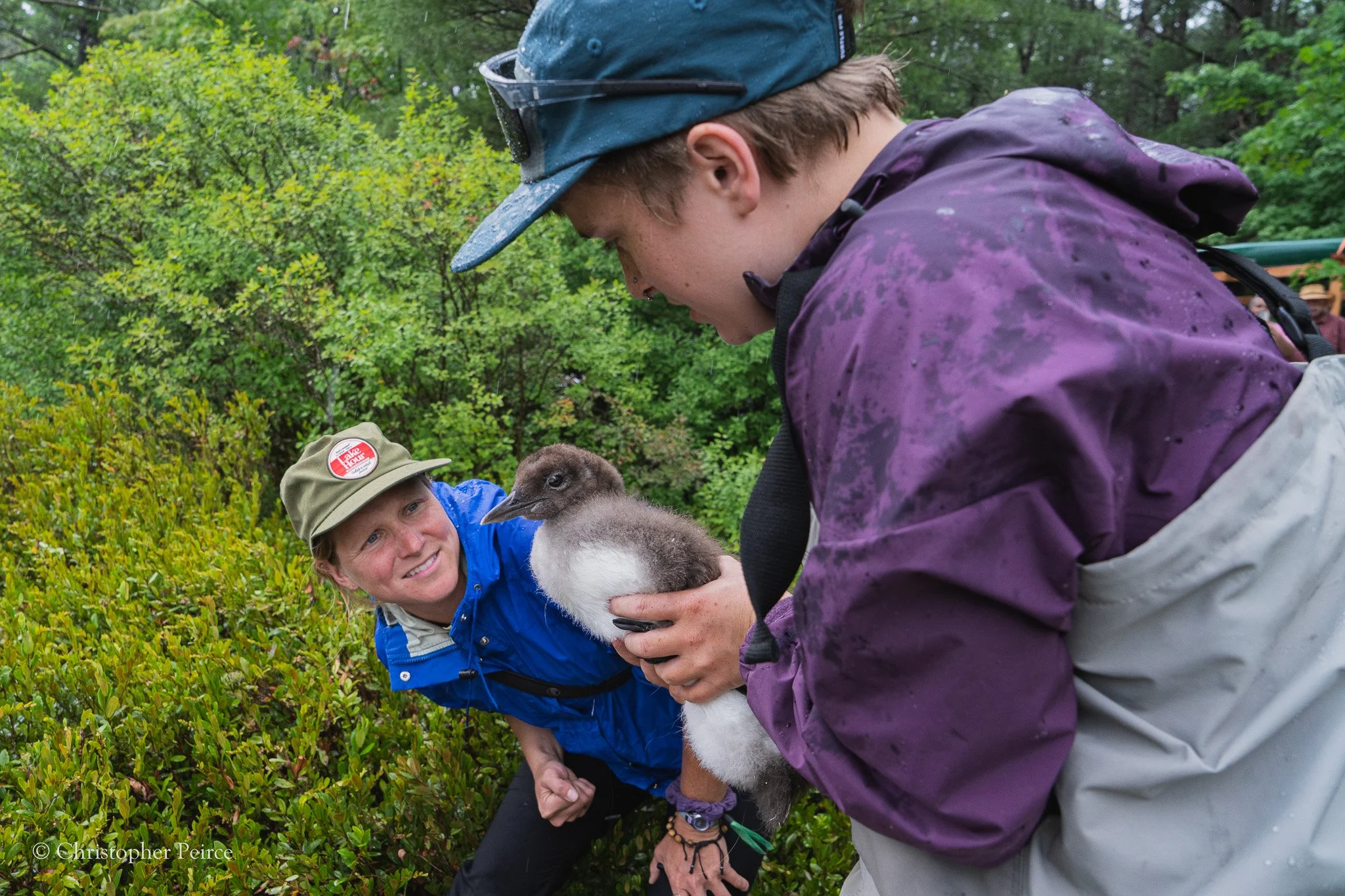
ACLC Wildlife Tech Eden Wondra checks out the loon chick before ACLC Field Biologist Izzie McGinley Myers releases it onto Duck Pond.
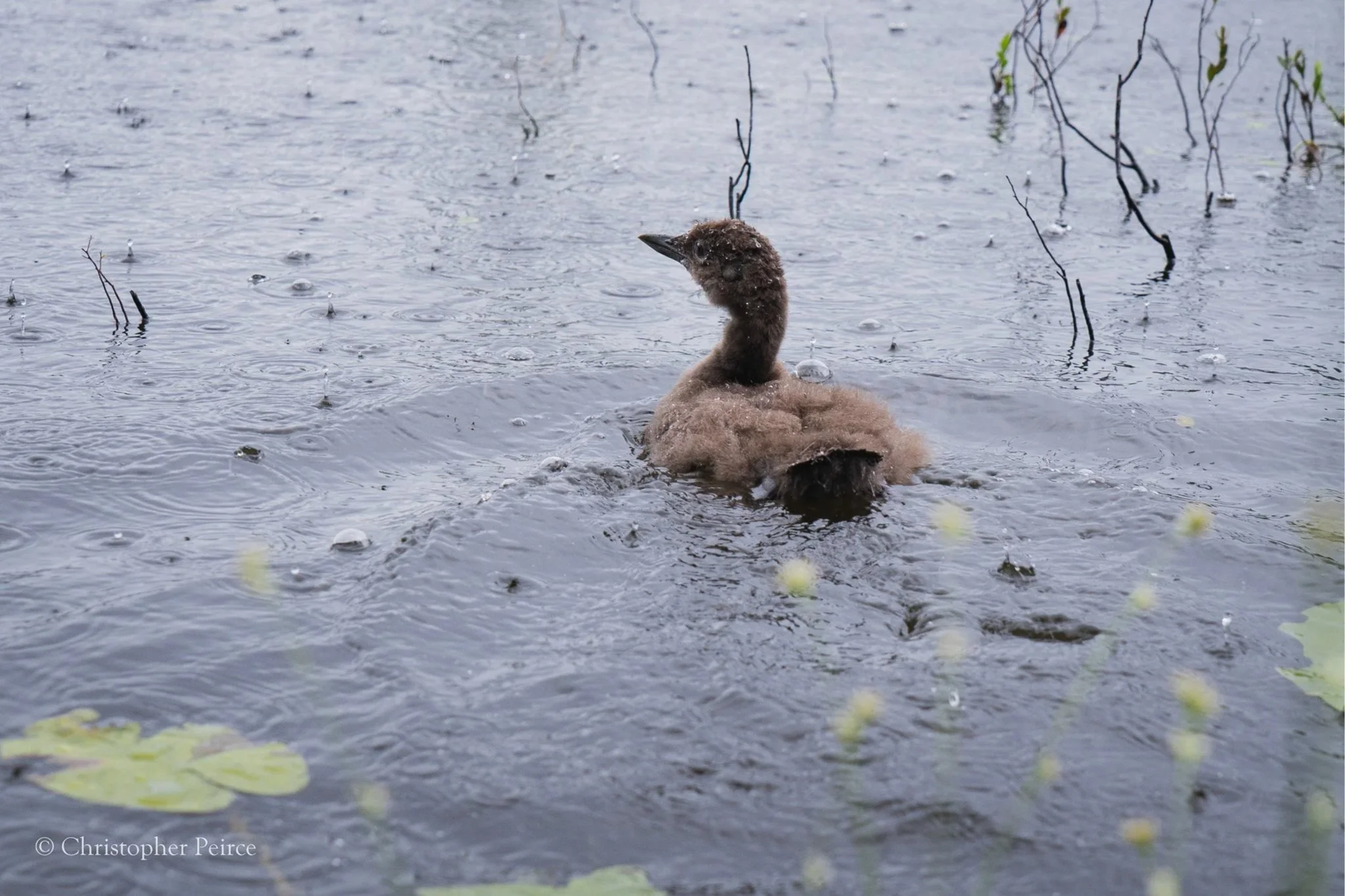
The loon chick swims vigorously away once released onto Duck Pond.
Because the chick was likely pushed out of the family by its sibling, ACLC staff were not quite content with the reunion until they saw how the other chick reacted. Due to a thunderstorm that had rolled in, staff were not able to paddle out on the water to follow the birds, so they eagerly watched through the trees on the shore for 30 minutes before the two chicks finally met. The chicks simply swam past each other, seemingly unphased, and the rescue mission could be called complete.
While ACLC staff hope that a second chance for this chick will allow it to grow with its family, there is a chance nothing will change. The parents may be focused on the larger chick for a reason that is best for that chick’s own success and survival, and this rescued chick could be pushed out and on its own once more.
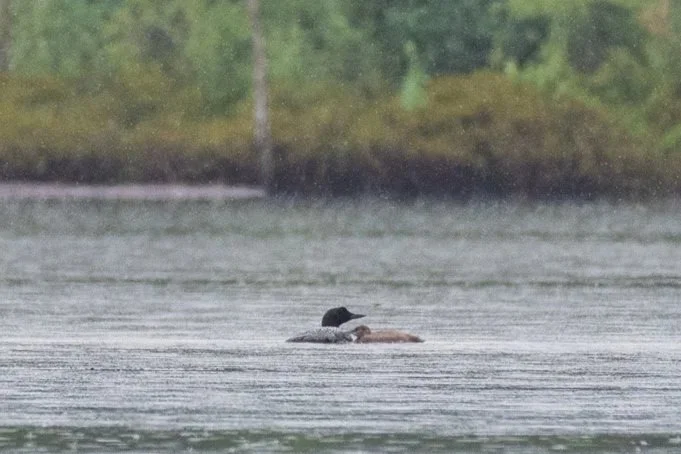
The loon chick seems to be accepted back into the family by its parent.
ACLC staff did revisit the pond to check on the chick days later, but did not locate it. Local residents did report seeing it over the weekend, however. At the very least, it was given a second chance at survival.
ACLC thanks all involved with reporting this loon chick and assisting in the rescue. Please remember to never interfere with natural animal behavior, including predation by a loon’s natural predators, but please do contact ACLC at 518-354-8636 or at rescue@adkloon.org if you see a loon in distress from fishing line entanglement or grounding, or a loon that appears listless and severely ill. ACLC staff will ask for your name and phone number, the location of the loon in question, and any photographs or video you can provide to help biologists assess the situation.