
The Loon Man: Griffin Archambault
Words & Images by Chris Peirce, ACLC Environmental Storytelling Intern

Research biologist Griffin Archambault can’t imagine doing anything else professionally.
"They abandoned and then the eggs got predated ... the question is, did they get predated just outright or did they flush off the nest because of people?" Adirondack Center for Loon Conservation (ACLC) research biologist Griffin Archambault combed through a few broken eggshells as he tried to piece together the cause of a failed loon nest on Cranberry Lake. Even though it was well-hidden, the nest was in a vulnerable location situated near the water line on a small island. Because loons are unable to walk on land, this kind of nest placement is the norm. According to Griffin, Cranberry has been a tough lake for loons historically. It is shallow despite its large surface area; there are a fair number of houses, and lots of recreational boat traffic. So far this year, two nests have already failed.
Griffin monitors Cranberry once each week, usually over the course of two days. He makes notes on loon population, nesting outcomes, leg band color, and overall behavior. These observations add to the decades of meticulous data that allow ACLC to track the health of the park's loons.
Griffin pushed off the small island and climbs back into the 12-foot aluminum boat, borrowed from residents Halsey Bagg and Deb Roberts, that he uses to cover the nearly 7000-acre lake. Grasping the oars, he propelled the boat slowly out into open water before lowering the motor and traveling south into the next loon territory. It was still early morning but the clouds were quickly burning off as the temperature rose. Even with a motorboat it still takes two days, eight to 10 hours each, to survey Cranberry properly. Much of that time is spent baking in the sun, intently watching loons through binoculars and making detailed notes.
This was was no different. The loon pair from the failed island nest was moving south down the lake shore, diving and peering. "That one's got a fish!" Griffin exclaimed. The male of the pair had resurfaced and struggled to swallow a large pumpkinseed sunfish. For most people, observing the same animals for such a length of time would be tedious at best. For Griffin, there aren't many other places in the world he'd rather be.
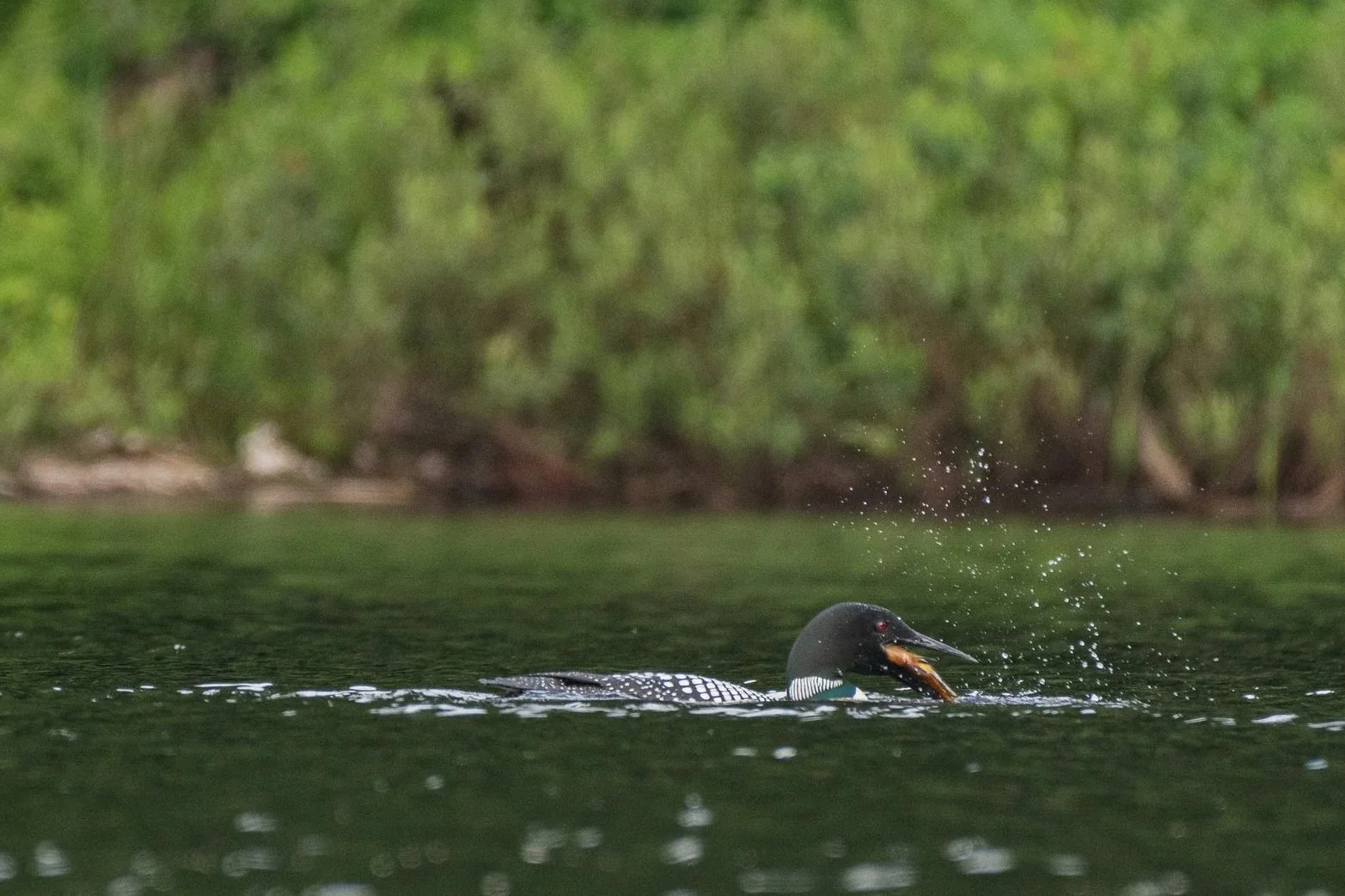
A loon swallows a pumpkinseed sunfish.
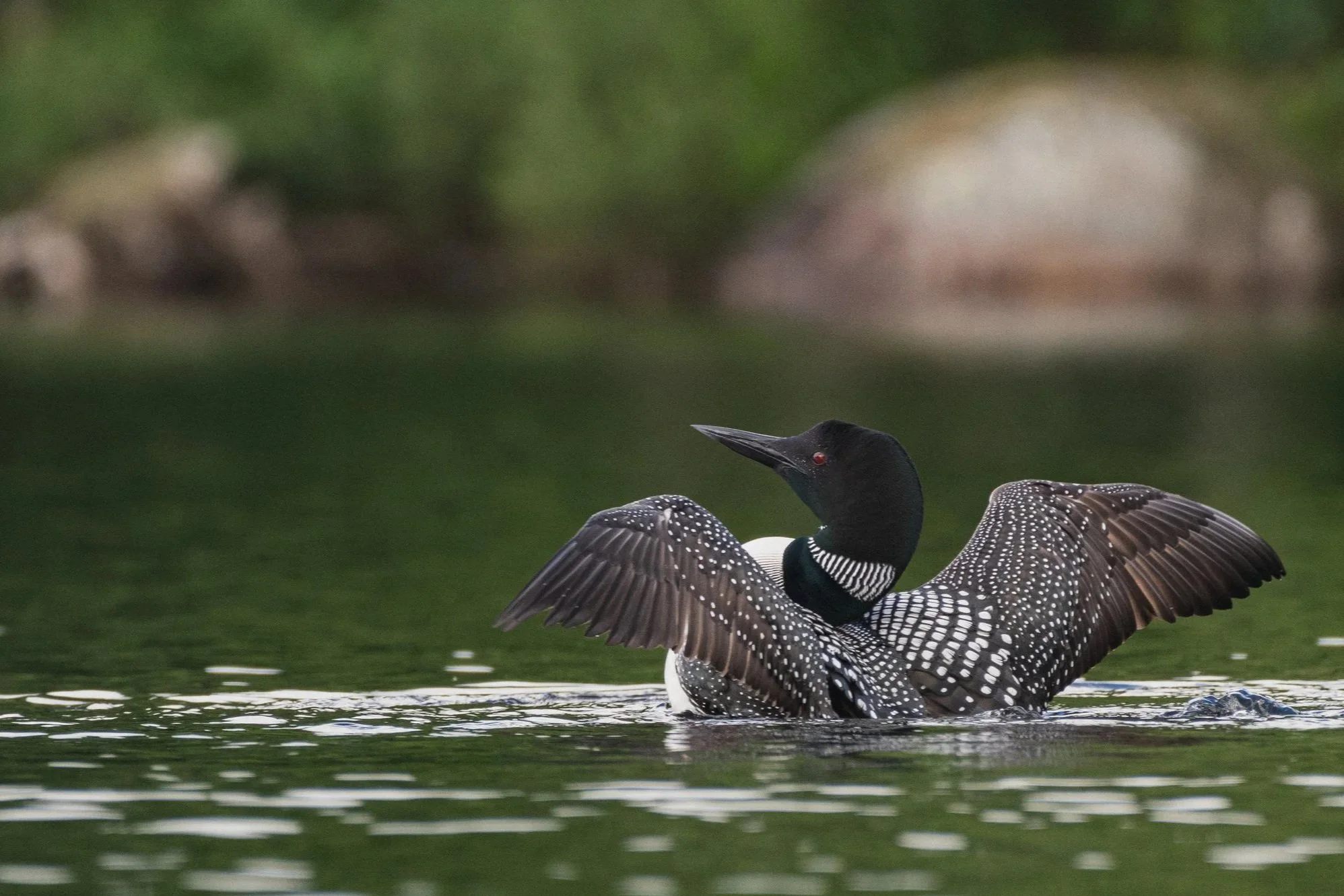
A loon stretches its wings.
Loons became Griffin’s passion during his first post-undergrad field job. As a field biologist for New Hampshire's Loon Preservation Committee, he spent the summer in a primitive cabin with no running water or electricity. During the day he watched the loons on his various study lakes. "That was the summer of 2020, which was Covid summer," said Griffin. "I just kind of was in my own little world, and loons are such an amazing species to spend time with that it just kind of romanticized the species for me."
When he's not monitoring on Cranberry, Griffin performs a plethora of duties as ACLC's research biologist. He trains volunteers for loon rescues, analyzes and presents data, manages the nest raft program, collaborates on organizing the annual loon census, as well as a dozen other tasks. According to him, one of his most important roles is working alongside members of the ACLC team to manage the summer field work season.
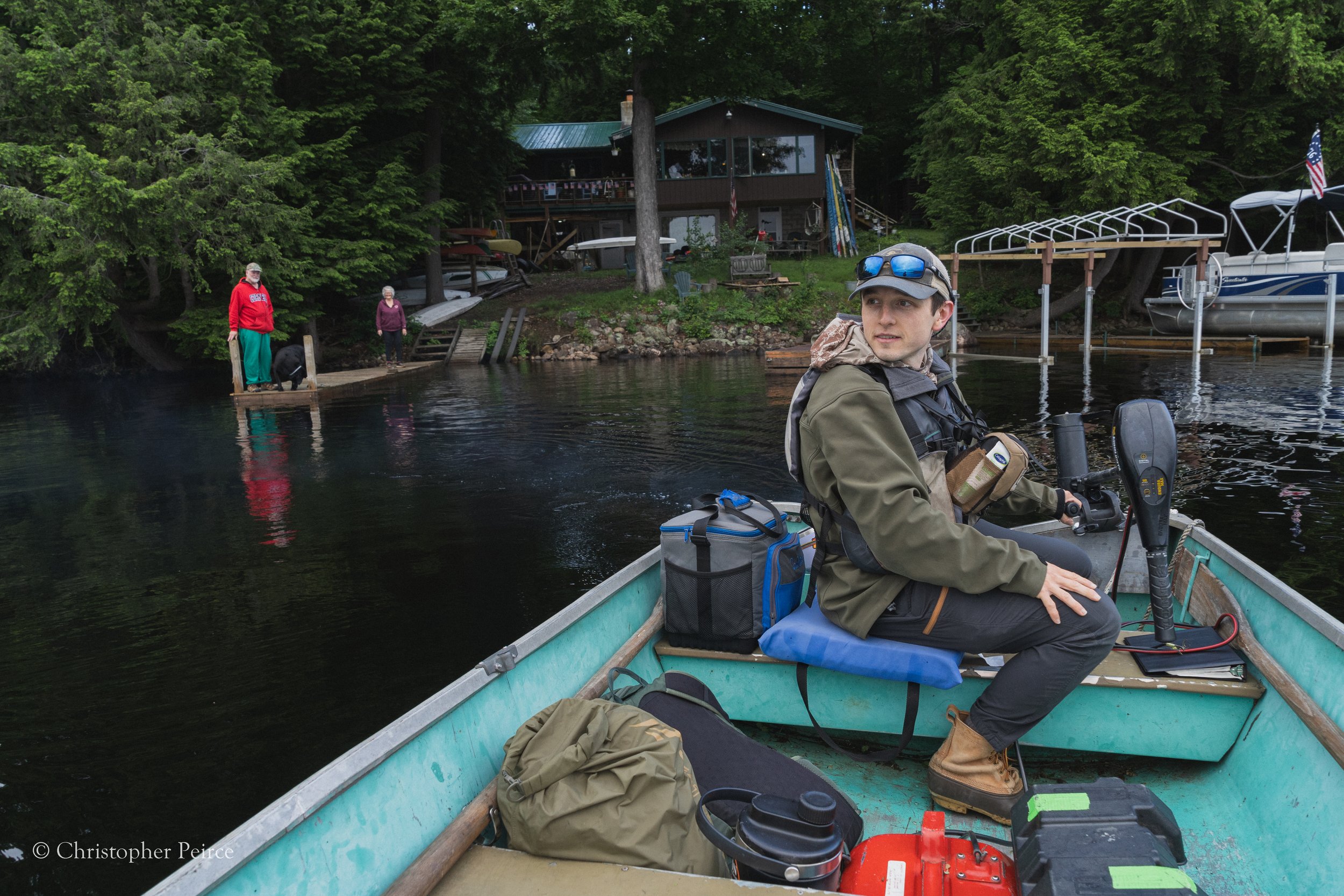
Griffin Archambault uses a boat borrowed from Cranberry Lake residents Halsey Bagg and Deb Roberts, who participate in ACLC programs and support loon research by lending their boat.
"We have a crew of 30-plus field staff, so paid field monitors, volunteers, interns, and then also regular ACLC staff. I train people on how to watch loons, how to record the data, and how to submit it," Griffin said. Small organizations like ACLC rely heavily on community involvement. Many hands are needed each year for field programs succeed, and ensuring they're all pulling in the same direction is a vital task.
After the field season ends, Griffin spends countless hours organizing the year's data which is submitted to various state agencies and presented at the Northeast Loon Study Working Group (NELSWG) conference. "All the different groups from the northeast present on what they're seeing in terms of trends and reproductive success so we can compare between regions," he explained. Analysis of this data helps provide more accurate direction for future conservation efforts. Information like where loons are nesting, whether they're using an artificial nest raft, how many eggs hatch, and whether chicks survive to the end of the season helps to evaluate the success of conservation efforts.
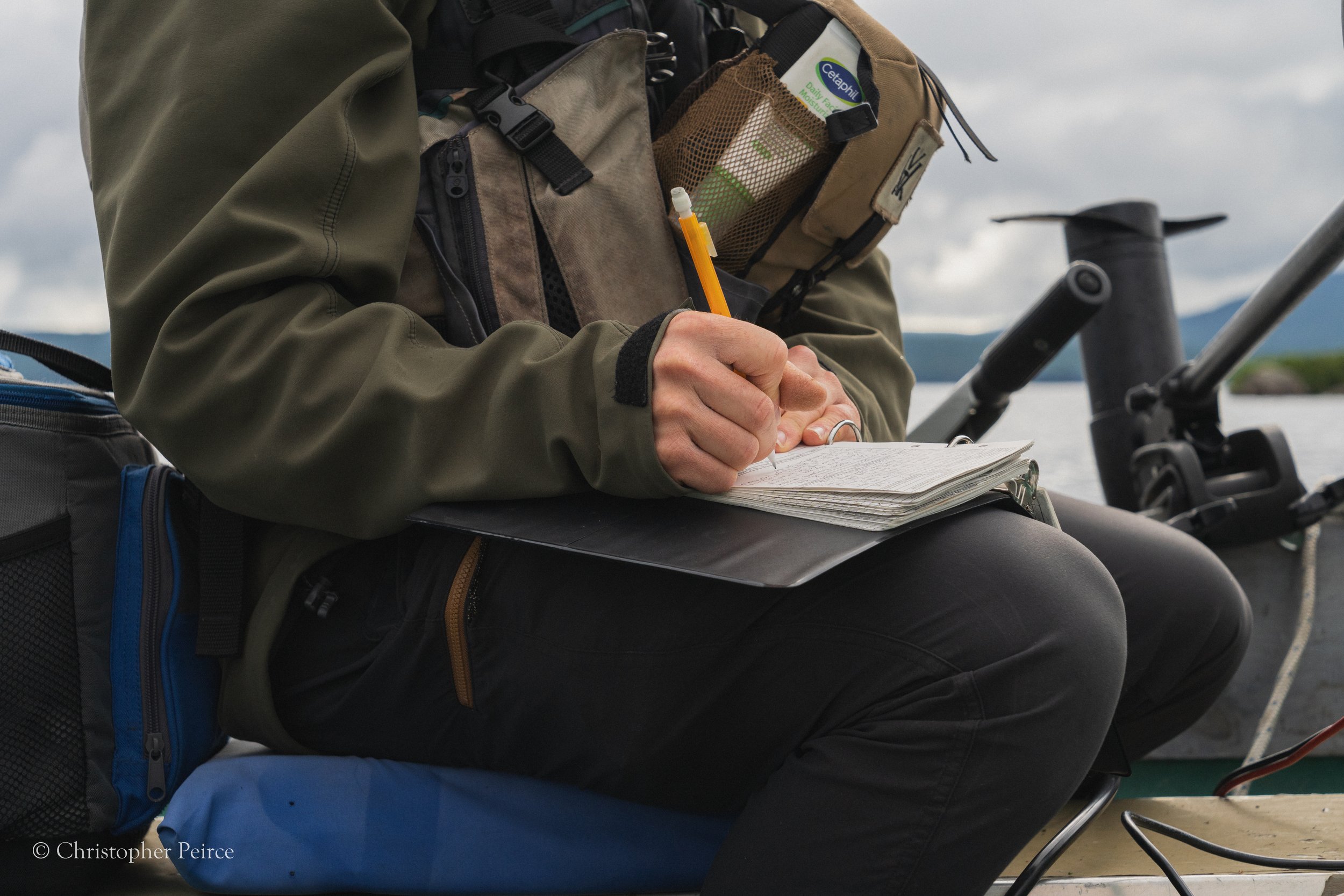
Griffin Archambault makes meticulous notes on loon location and behavior.
On top of his work at the loon center, Griffin is currently enrolled at SUNY Plattsburgh to complete his graduate degree. Once he gets it though, he's probably not going anywhere. "I kind of have done this backwards where I just got lucky enough to be hired, and now I'm here in my dream job that I thought was a few decades away," he said.
For Griffin, pursuing his graduate degree is an important process for becoming a better biologist. Through his work at ACLC, he's chosen to focus much of that energy on broadening his study of loons. His thesis on nest and chick survival in the Adirondacks in relation to climate change exemplifies this ambition. "We know that climate change is affecting loon survival because we get more rain events,” he said. “Those cause lake levels to rise, which floods loon nests, which decreases nest survival over time." Although more study is needed, he believes it's likely that rainier summers with higher heat will mean lower nest survival.
According to Griffin, studying these types of changes in loons is important for understanding which variables are having an impact on the wider ecosystem. "They're such a great bioindicator species," he said. Healthier loons mean healthier lakes. Moreover, loons successfully breeding on a lake, especially year after year, indicates that the lake ecosystem is strong. "It probably has a pretty healthy food web" said Griffin. "It probably doesn't have extreme water level fluctuations. It probably has pretty good water clarity." Accordingly, studying loon success and failure is important, not just to understand and conserve a charismatic sentinel species, but also because it informs more broadly about the impact of human disturbances and environmental change on freshwater ecosystems.
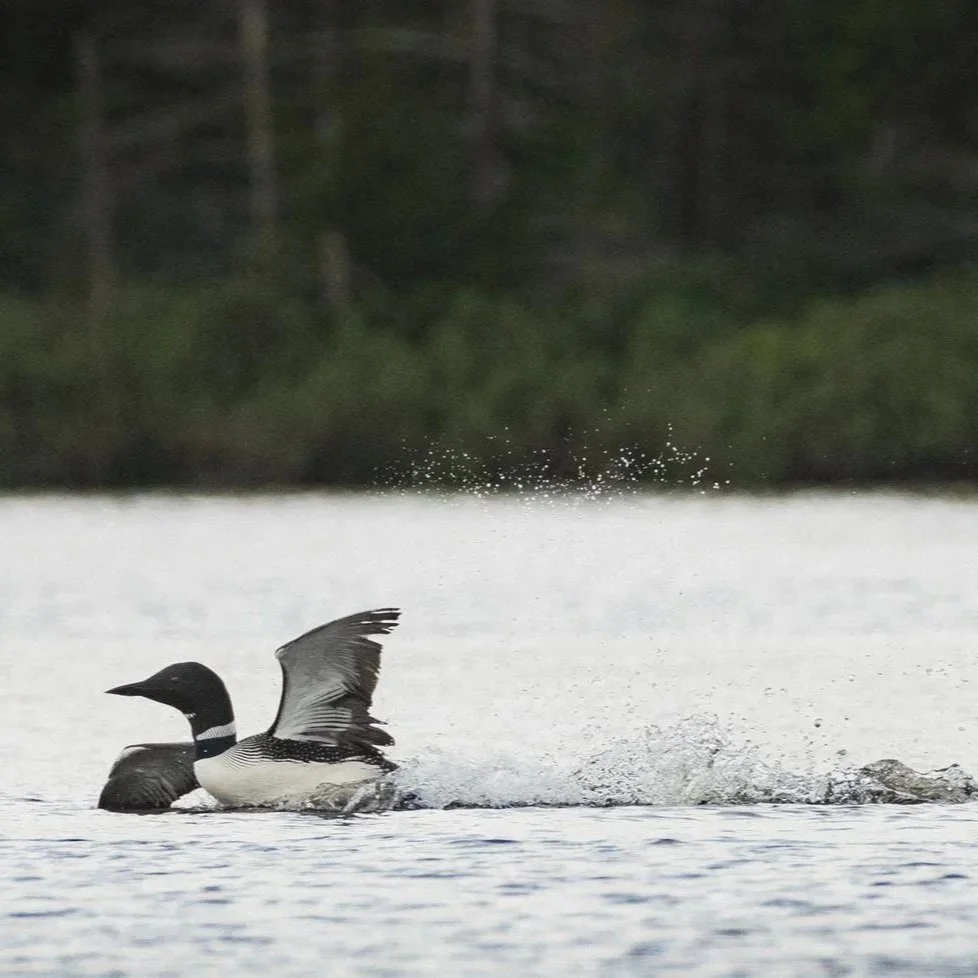
A loon engages in territorial wing rowing on Cranberry Lake.
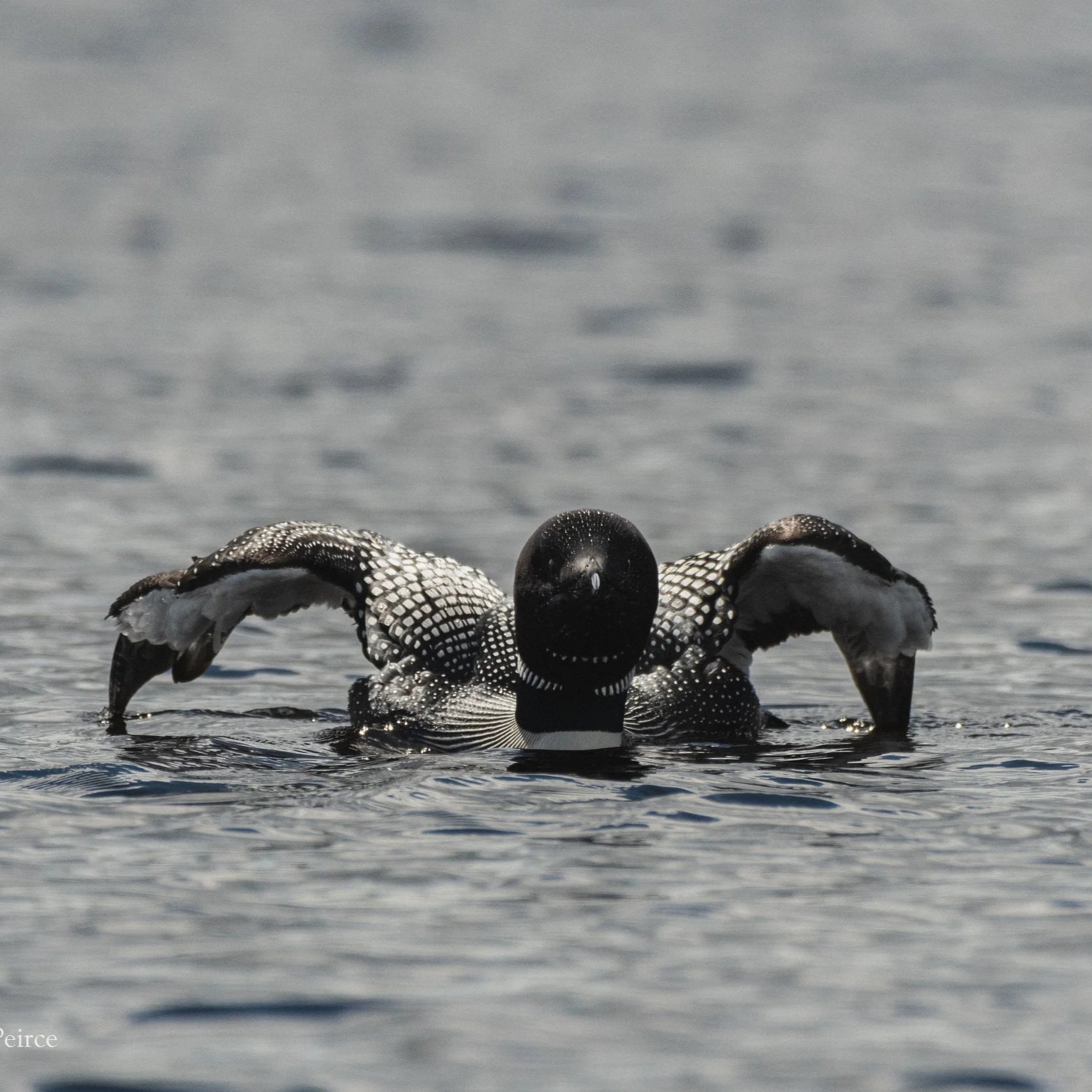
A loon on Cranberry Lake settles back into the water after wing rowing.
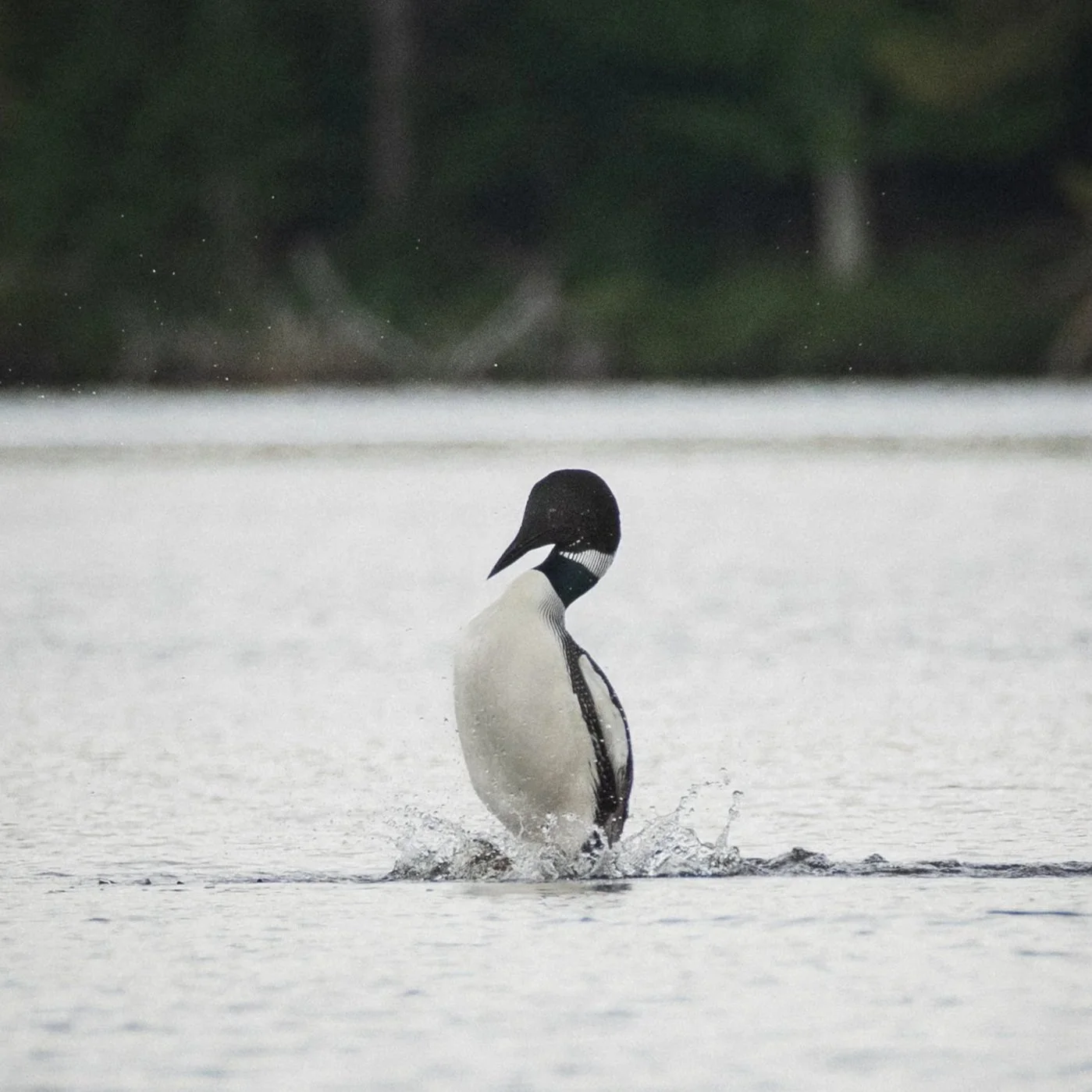
A loon performs a territorial penguin dance on Cranberry Lake.
There's no hiding from the midday June sun on Cranberry, but Griffin’s enthusiasm as he observed the two loons was undiminished. As the boat drifted further south in the gentle wind, he animatedly pointed out each new behavior, remarking on the significance of synchronized bill-dipping, fishing, and preening. When a new loon pair entered the area, he watched the interactions closely as the loons circle each other. "This is not a cooperative feeding event. They're acting a bit more hostile towards each other,” he said, and before he can finish, the scene erupts into action. The loud yodel calls, wing rowing, and explosive penguin dancing go on for minutes.
Eventually, the loons separated. The invading pair headed back north. Griffin watched for a few more moments as the pairs continued to call back and forth as if warning each other to keep their distance. "I don't know when I'm going to get caught up watching loons like this where you just can't stop for hours on end," he said, seemingly unable to pull himself away. "If you're a wildlife biologist, you're going to spend an insane amount of hours staring at the same species. It's kind of like choosing a romantic partner. You want to choose somebody that you actually enjoy spending an insane amount of time with because that's what you're going to be doing." After making a few final notes, he started the engine and pointed the little boat south to check on another potential nest-site.
Of all the places in the world, Griffin Archambault is exactly where he's supposed to be.