
Kids’ Program Tackles Lead Danger to Loons
Words & Images by Denise Silfee, ACLC Director of Programs and Communications
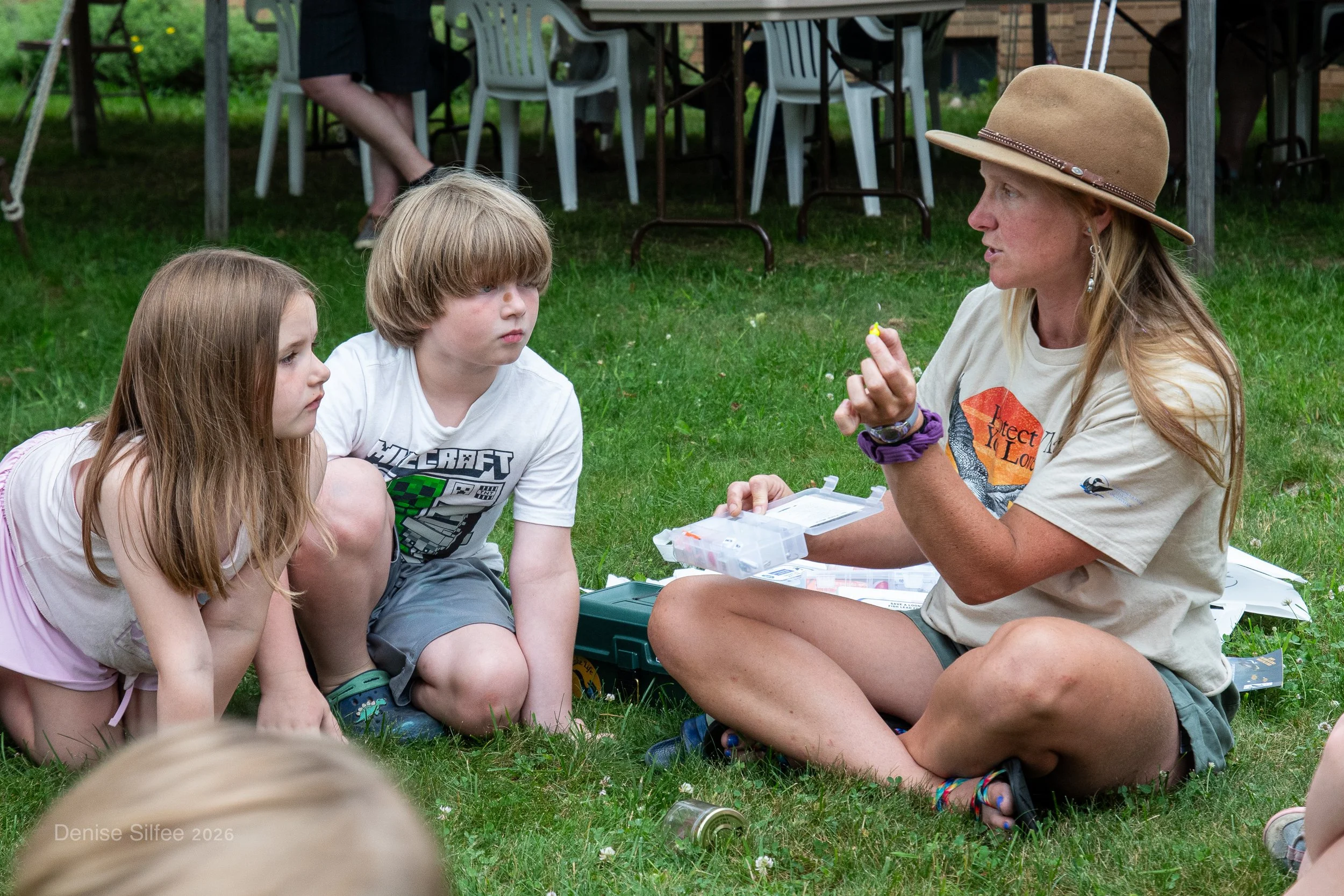
ACLC Wildlife Tech and Lead Programs Coordinator Eden Wondra teaches kids about lead fishing tackle and its impact on loons and other wildlife at an event in Old Forge in July.
This summer, the Adirondack Center for Loon Conservation (ACLC) rolled out a new program to help children ages five through 12 learn about the impacts of lead poisoning from lead fishing tackle on loons and other wildlife. The program includes a short lesson about loons and lead poisoning and an interactive game to help young people understand how lead fishing tackle ends up inside of a loon. At the end of the program, all participants receive a free Kids’ Lead-Free Tackle Box.
On July 8, ACLC staff member Eden Wondra facilitated the program for 10 kids at the Old Forge Library sponsored by Maintain the Chain. She began the program seated in a circle on the grass and engaging participants in a conversation about how loons live and behave, using a picture book she designed. Asking questions and letting the children tell her what they are already know about loons, wildlife and life cycles, Eden helped everyone understand that the number one way that loons ingest lead fishing tackle is by swallowing fish that still have lead tackle attached to them. This can happen when loons take fish off of an angler’s line, or by catching fish that have broken the line and still have lead attached or have swallowed lead tackle.
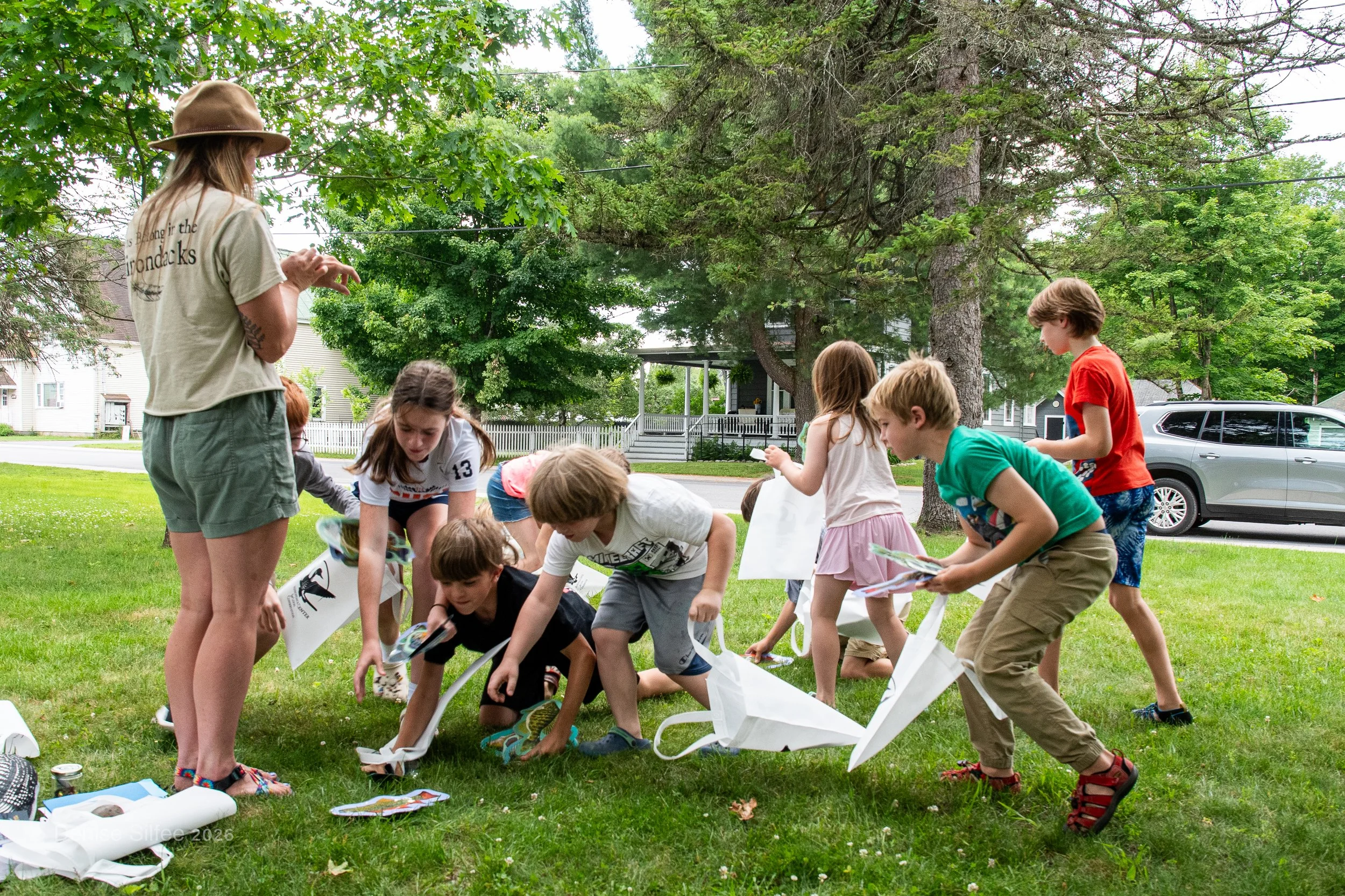
ACLC staff member Eden Wondra supervises kids who scramble to gather fish as they pretend to be “hungry loons.”
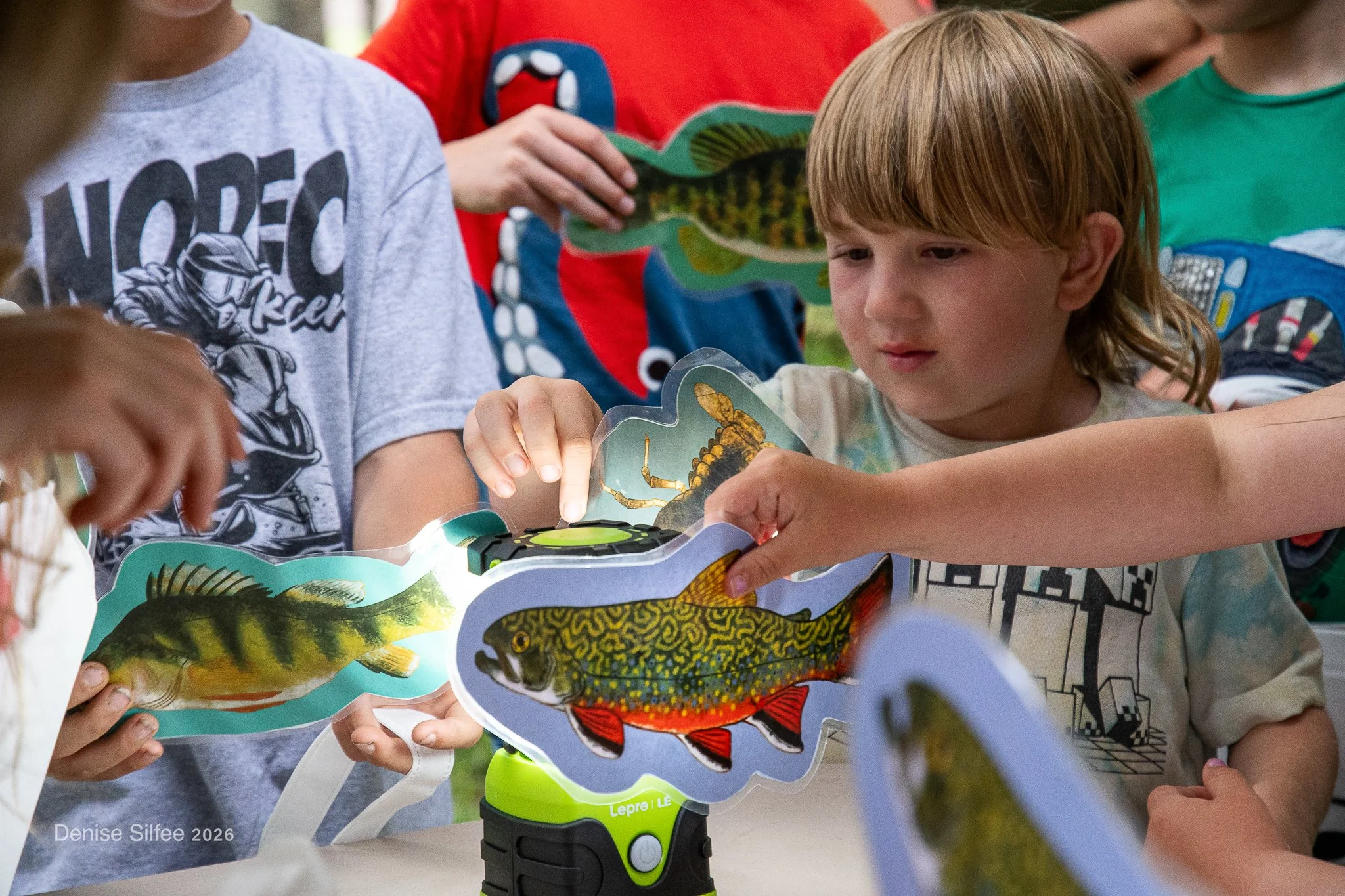
Kids look for hidden “tackle” inside paper fish.
Next, Eden presented participants with a game where they pretended to be hungry loons that had to scramble around the lawn to grab fish to “eat.” Then they used flashlights as “microscopes” to see what was inside each fish they caught. Some fish had nothing in their bellies, while others had lead fishing tackle (made of paper), which is only visible when you hold them up the to “microscope.”
“Loons can’t tell which fish might be dangerous, can they?” Eden asked the participants.
After a couple rounds of the game, each child was presented with an educational magazine and a free tackle box kit containing the basics for fishing, including only lead-free and wildlife-safe tackle sourced from companies that donated the supplies or offered them at discounts, including Glasswater Angling, a company dedicated to producing only lead-free tackle.
As the kids dug through their tackle boxes, Eden engaged in more conversations about the importance of keeping toxic materials out of lake ecosystems for the safety of both loons and other wildlife species, including how to pass along the message to others and to lead by example.
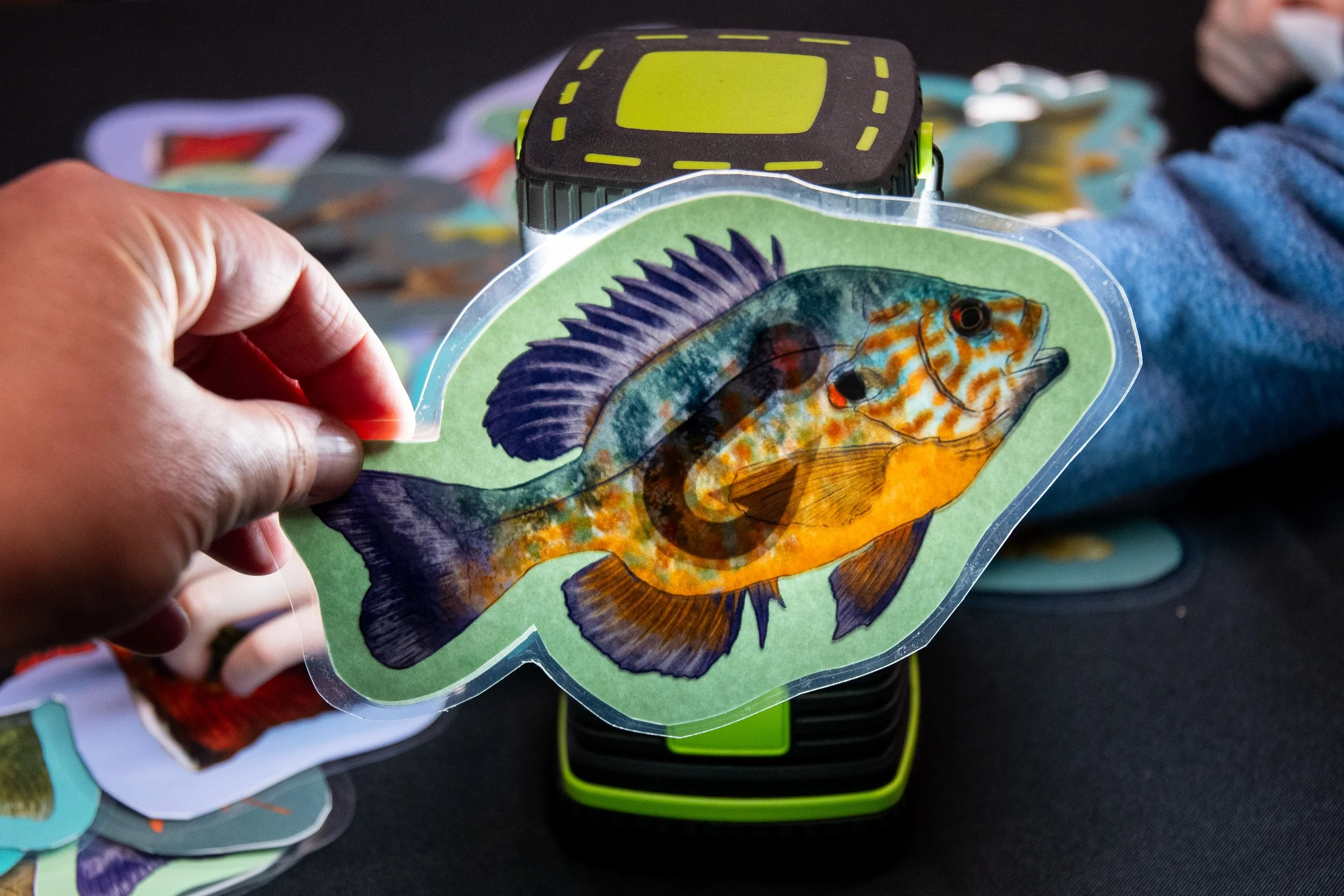
A game designed to teach young people how loons ingest lead fishing tackle uses flashlights as “microscopes” to see what’s inside of paper fish.
Lead is toxic to all living things, and is the cause of death of many species each year who inadvertently ingest tackle that is lost or discarded in the environment or in fish that break the line and retain the tackle. Lead poisoning is a leading cause of human-caused death to common loons throughout North America, and loons in the Adirondacks are no exception.
The Kids’ Lead Free Tackle boxes were created based on a prototype shared by Minnesota Get the Lead Out, and they were sponsored by Maintain the Chain, an organization based in Old Forge. Maintain the Chain promotes conservation through everyday actions, from picking up litter to planting native flowers.
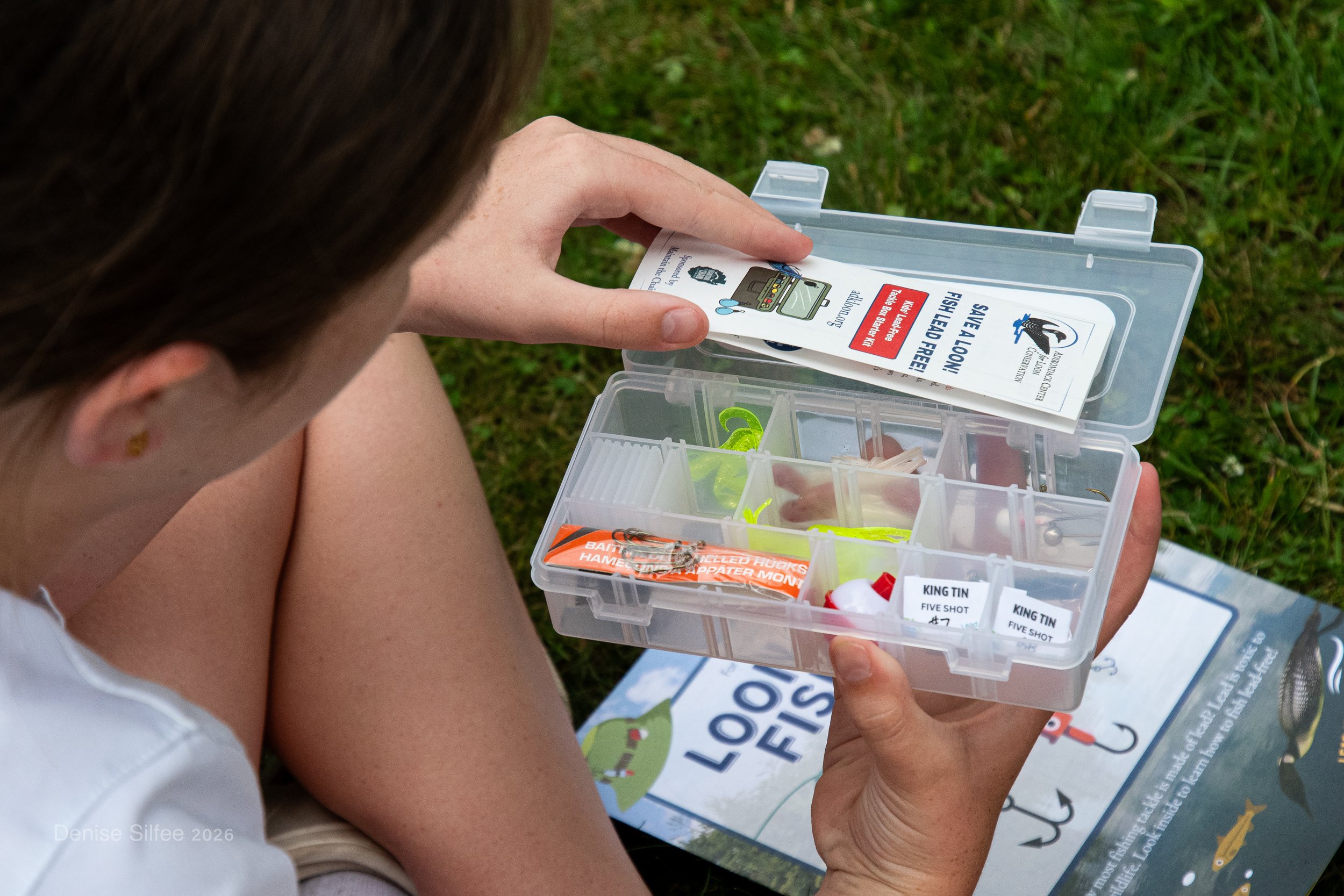
At the end of the program, each youth participant received a lead-free kids’ tackle box.
“The Kids’ Lead-Free Tackle Box program is especially effective because it combines education with action,” said Carin Gonsalves, co-founder and president of Maintain the Chain. “Instead of simply telling children about the importance of lead-free tackle, it gives them the tools to immediately put those lessons into practice every time they go fishing.”
Making the switch to lead-free tackle is a priority initiative of ACLC and expanding programs for youth is a priority. Paired with intentional programming, ACLC is excited about the impact these programs can have in inspiring young people to think about the choices they make that can impact loons and other wildlife.
Eden is a temporary employee who has two roles at ACLC: she works as a Wildlife Tech for half of the week and as the Lead Programs Coordinator supervised by the Director of Programs and Communications the other half of the week. ACLC hopes to acquire the support to hire a full-time Stewardship Coordinator who can work full-time on stewardship related goals of the organization, with a strong emphasis on lead programs and outreach for both adults and youth.
If you would like to learn more about how lead fishing tackle affects loons, check out https://www.adkloon.org/lead-free. If you would like to schedule a kids’ program, email leadfree@adkloon.org.