
Boat Impacts Study
What is the Boat Impacts Study
The Boat Impacts Study is a pilot study developed in response to questions and concerns from Adirondack community members about potential impacts of wake boats on water bodies in New York. Wake boats are specialized boats designed to create standing waves for wake sports. Operating at slow speeds to maintain a constant plane through the water, wake boats operating in wake mode operate at angles that raise concerns about the health of the lake bottom, and create waves that could impact nesting shore birds and the safety of people in kayaks and canoes low in the water.
This study is simply aimed at gathering more information about what kinds of boats are most prevalent on Adirondack water bodies, and to see if there is any correlation between boat use and wave size and water clarity.
There is currently no wake boat-specific research about lakes and water bodies in the Adirondacks. This study, designed with accessible data collection methods in mind, is a first step to understanding the potential impacts of different types of boats on water quality and lake health.
Community scientists who volunteer to help collect data will conduct boat surveys and categorize observed boats into four categories.They will also note wave height during the set time boat surveys, and after the surveys, they will take a water clarity reading. Scroll to learn more about how to volunteer and what supplies are needed.
This study was developed by ACLC’s 2025 research interns, Brigitte Walla and Emilia Ciesla in partnership with SUNY ESF in Newcomb. Read more about their experience developing the study on our blog.
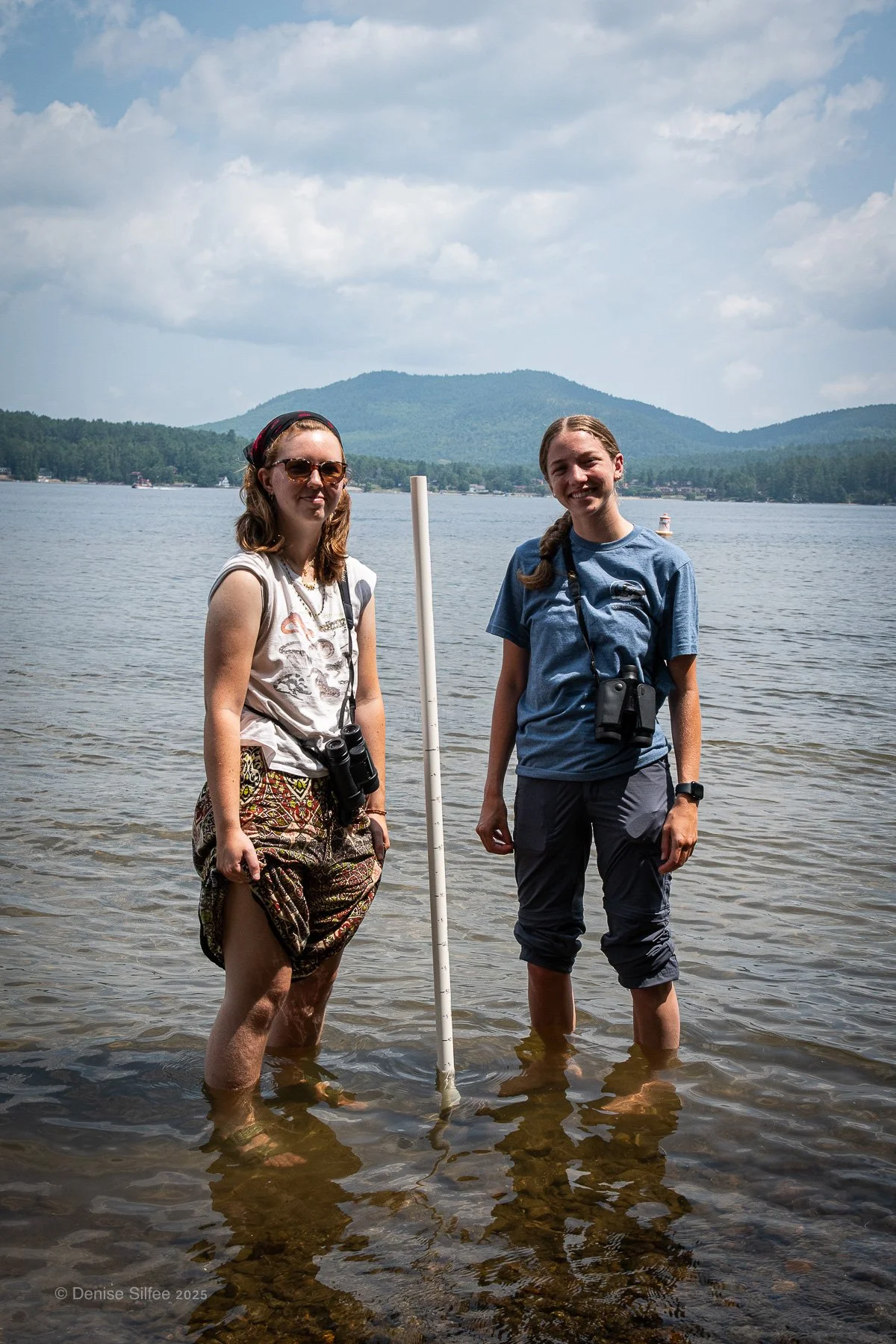
Research interns Brigitte Walla and Emilia Ciesla designed the Boat Impacts Study as part of their 2025 summer internship, in partnership with SUNY ESF in Newcomb.
Frequently Asked Questions
Who Can Participate: Anyone!
What Water Bodies Qualify? Any! Of particular interest are medium to large lakes with motorized boats.
Time Commitment: ~20 minutes to ~1 hour per day, for 5 days between Memorial Day and Labor Day. You are welcome to submit more data than this!
What Supplies Do I Need? Minimal supplies - some can be made at home for less than $10. Scroll to see a detailed supplies list.
When Will Results of the Study Be Available? ACLC’s goal is to receive 400 boat surveys to have a sample size large enough to see identify trends or patterns. This could be by the end of the summer of 2026, or could carry over to the summer of 2027.
How to Participate
There are three steps to collecting data for the Boat Impacts Study:
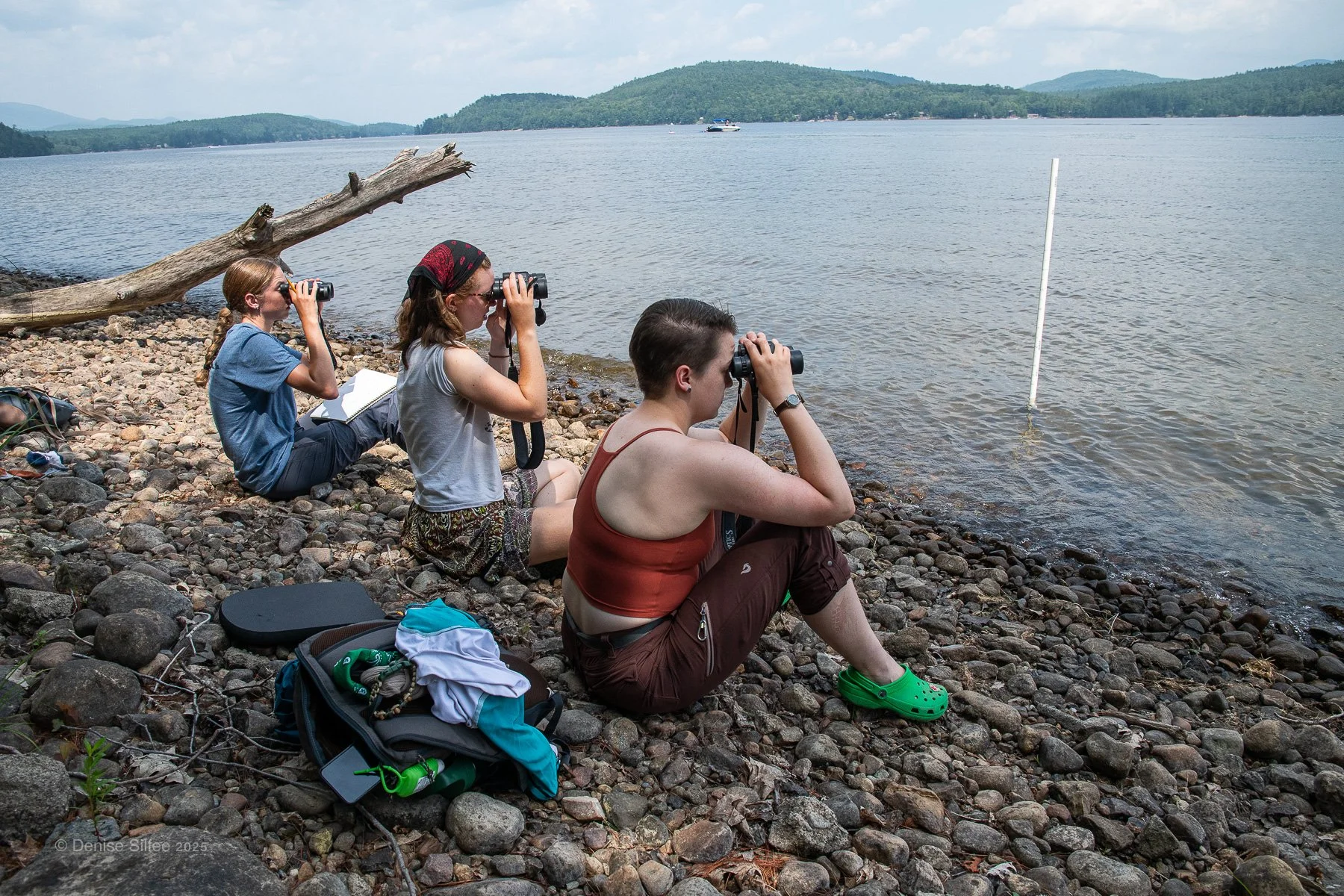
1. Conduct boat surveys in 15-minute intervals. Choose a spot along the shore. Identify a sight-line - use something on the opposite shore as an anchor point for your sight-line. Set a timer for 15 minutes and count how many boats and what kinds of boats cross your sight line in those 15 minutes. You can perform up to three boat surveys in one sitting.
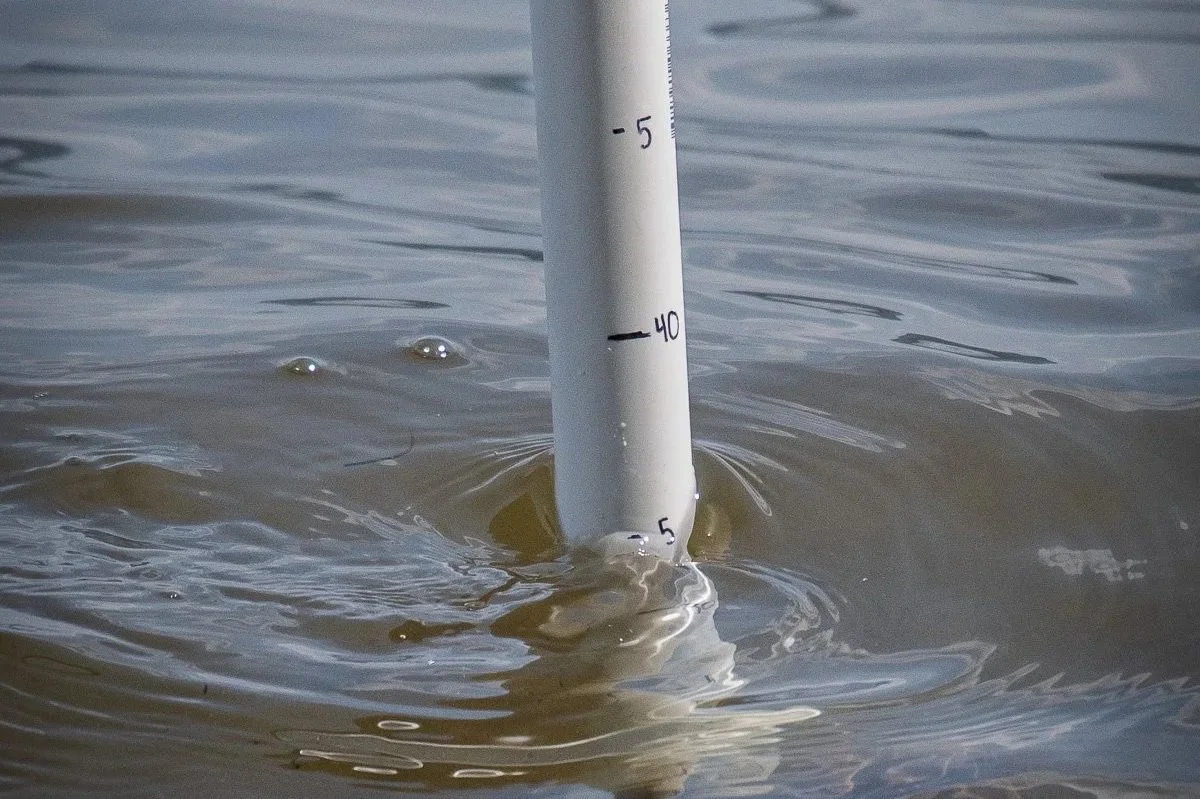
2. Measure wave height. When boats cross your sight-line, look for how high the water rises using a measuring stick. Find the difference between the water height when calm and the highest wave.
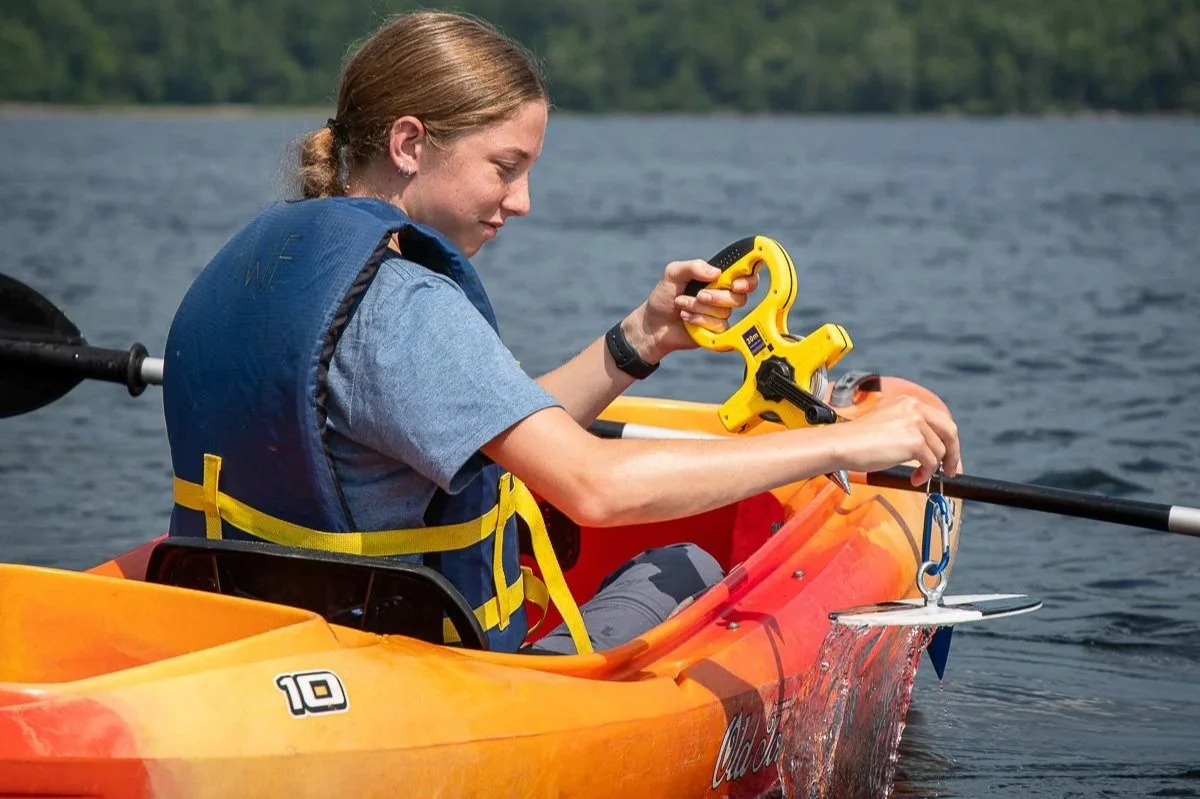
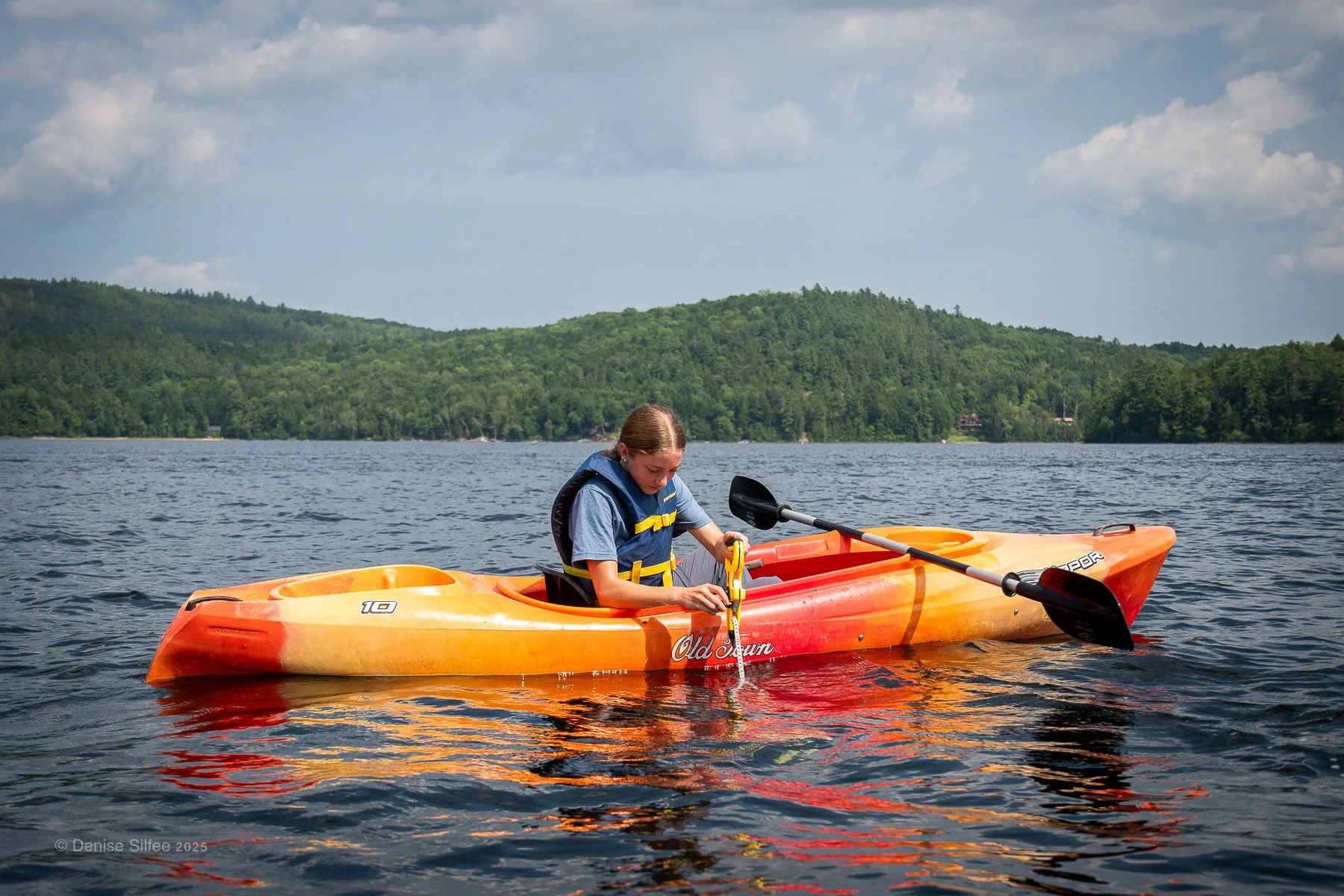
3. Take a water clarity reading with a do-it-yourself secchi disk. After performing boat surveys, take a water clarity reading off shore from your observation point (or nearby). This involves using a boat (motorized or paddle) to travel to a deeper part of the lake. You do not need to take a secchi disk measurement after each boat survey - just one on the same day you conduct boat surveys will be enough.
Submit all data through an online survey form on your phone (no need to download any app!).
Scan to view and save the data submission survey to your phone.
Supplies Needed
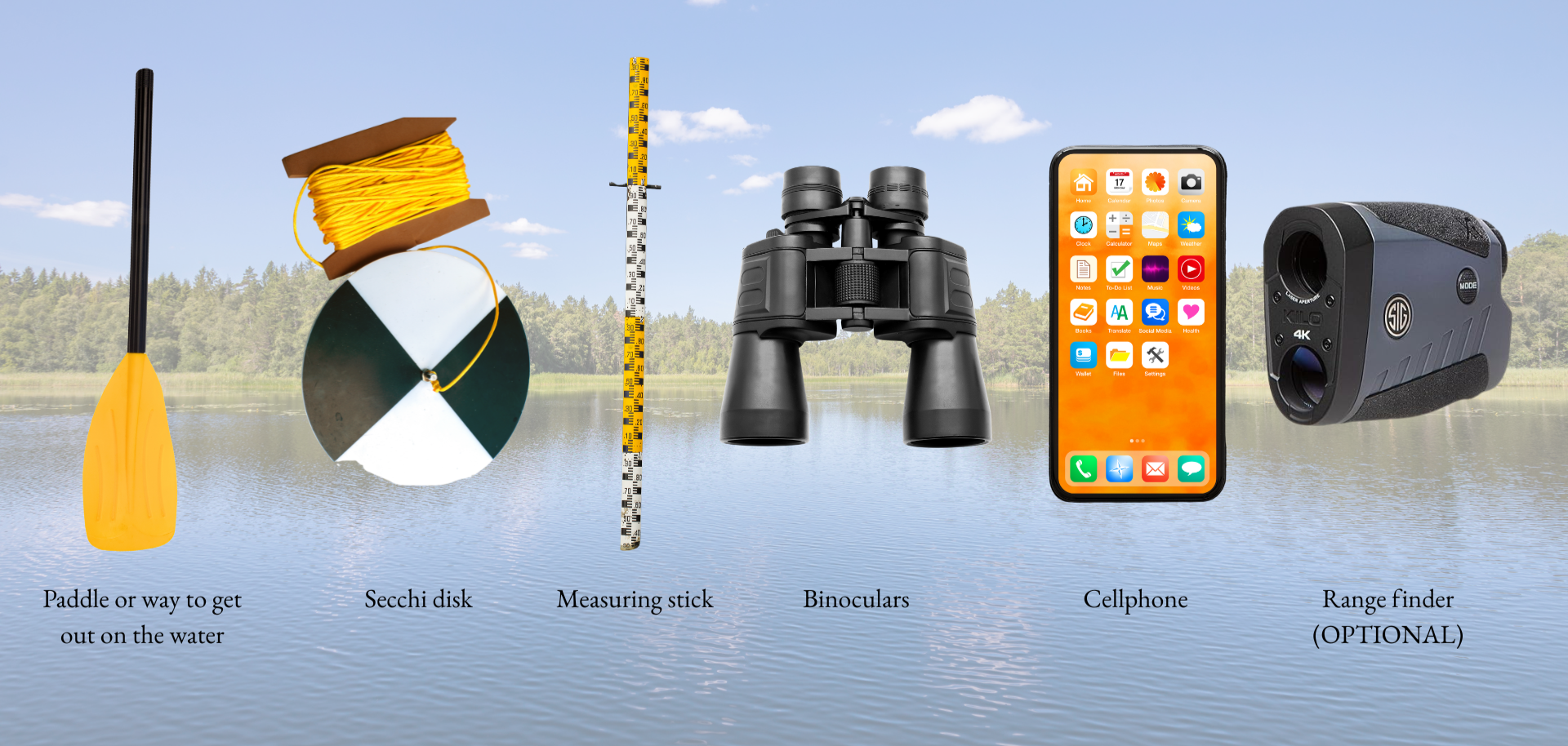
The supplies needed for this project are minimal, and many can be made at home for less than $10.
How you will use each supply:
Paddle: You will need a way to get out into the waterbody to take a water clarity reading. This can be a canoe or kayak or a motorized boat.
Secchi disk: This is how you will measure water clarity. See below for how to make a secchi disk with easy to purchase materials, and how to use a secchi disk.
Measuring stick: Use this to measure wave height. Height must be recorded in metric measurements, so a measuring stick with centimeters will work, or you can make your own with a five-foot PVC pipe and measurements added with a permanent marker.
Binoculars: To accurately see boats so you can categorize them.
Cellphone: To enter your data using the Survey 123 form.
Range finder: OPTIONAL - If you have a range finder, you can use it to measure how far from shore motorized boats are being operated.
How to Make Your Own Secchi Disk
How to Use a Secchi Disk
This page is a work in process! Missing some information or a resource you would like to see? Let us know!