
Photographing Loons with Glenn Smith
Words by Melanie Hirsch, ACLC Volunteer
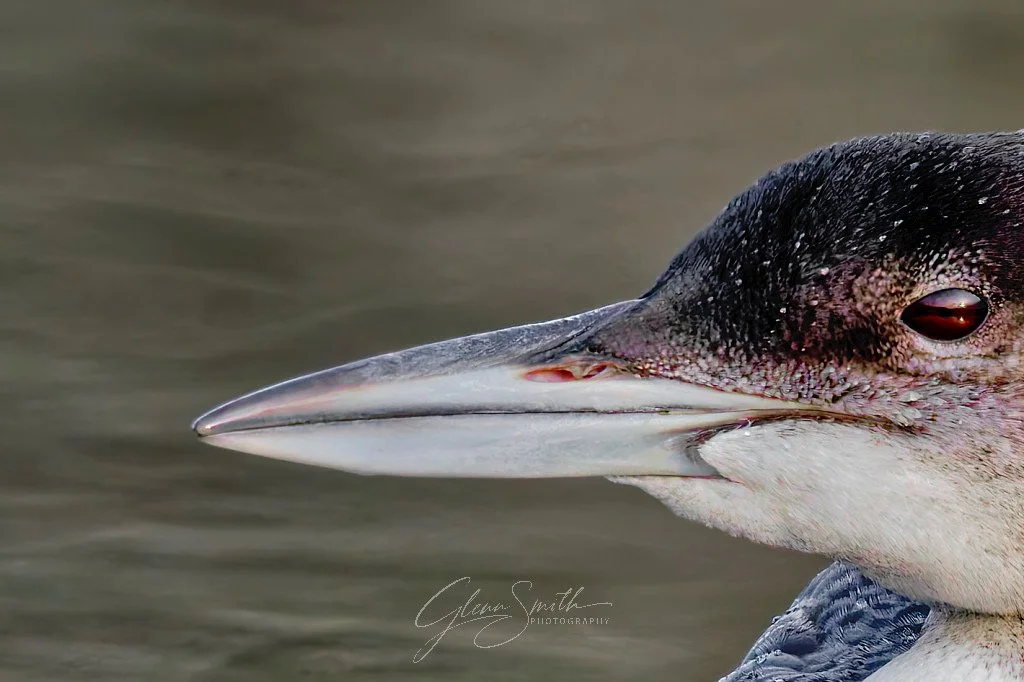
A close-up of a juvenile loon by photographer Glenn Smith.
To say that wildlife photographer Glenn Smith is uncommonly dedicated to his art is like saying loons pursuing fish in Adirondack lakes are skillful divers. Glenn and “his” loons are both persistent, they’re both perfectionists, and they are both determined as all get out.
Perhaps that’s why Glenn and the loons he photographs with such precision co-exist with such grace and good will on a small pond in the Northern Adirondacks, respecting each other’s space as each pursues the perfection of their own art.
Glenn, of Owl’s Head in Franklin County, recently captured the attention of local loon lovers because he spent a whopping ten months driving from his home to the same nearby pond to follow a bonded pair as they raised a feathered family.
Rain, sleet, snow, wind, clouds, sunshine, Glenn paddled or hiked through it all, photographing almost every day to capture images that ranged from the parents’ nest building to eagles circling around nearly full-grown juveniles.
Then, when he got home, he would spend hours editing the detailed shots he’d braved all kinds of weather — and insects — to capture.
By his own estimate, Glenn took thousands of images of the male and female that raised their young —and the two adorable chicks that hatched from the carefully guarded eggs.
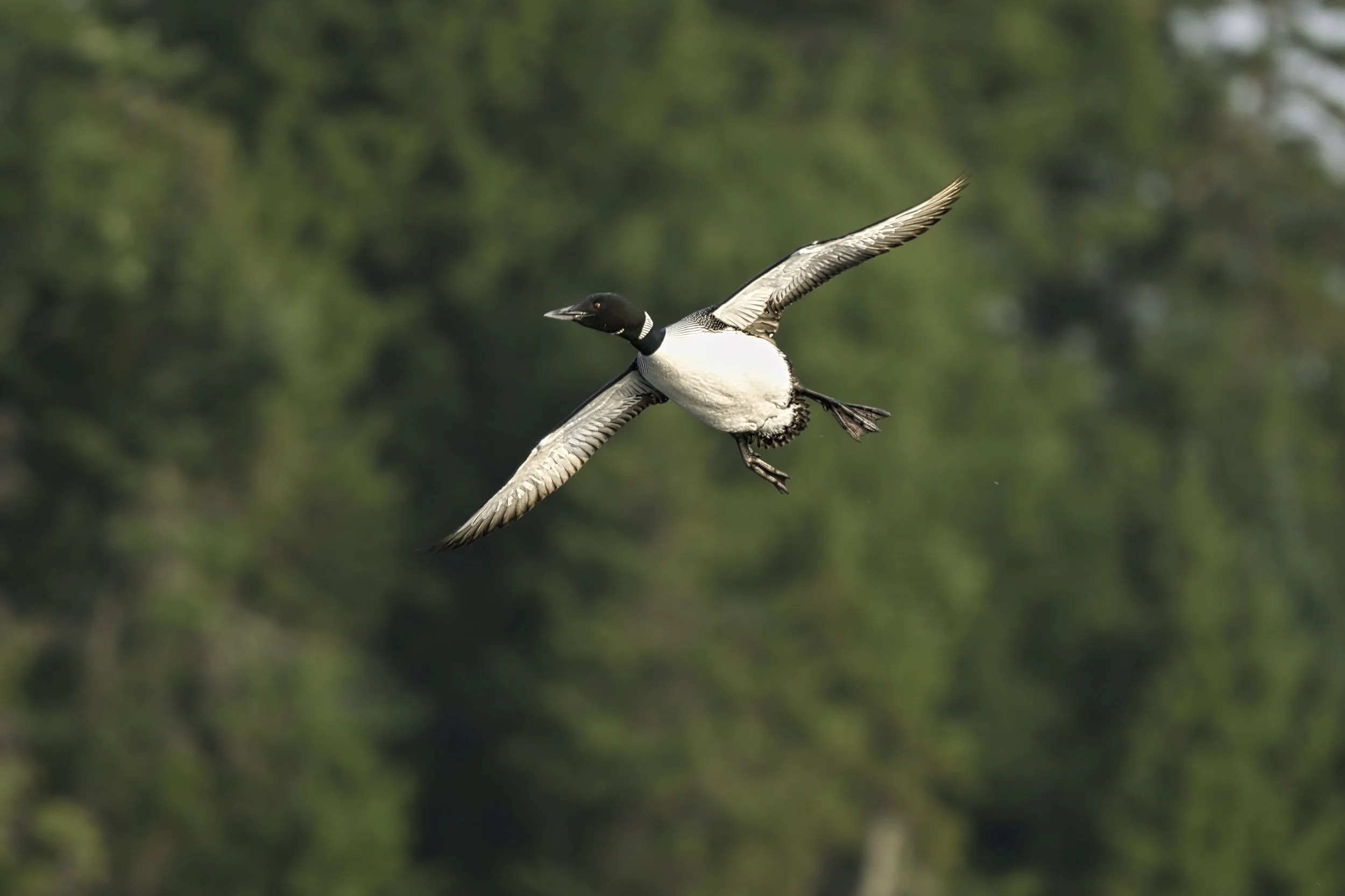
A loon in flight, captured by photographer Glenn Smith.
While many loon-loving people watch these breathtakingly beautiful birds from their docks, “Glenn kind of went above and beyond, packing up his kayak, carrying all his camera equipment in’’ and just showing up to observe and photograph the bonded pair so often, said Griffin Archambault, research biologist with the Saranac Lake-based Adirondack Center for Loon Conservation (ACLC).
“It’s amazing, his dedication to it,” Griffin said. "That’s very unusual.”
Glenn’s skill as a lensman is as evident as his dedication, a fellow photographer said.
“His work is terrific, excellent. I love it,’’ said Wes Steinberg of Jay, a longtime commercial photographer whose corporate clients include household name brands.
“One of the main things is, his layouts are very good; the design of the shot,” said Wes. “And all the shots are very sharp, very clear. I like his cropping. And his color is also very good.”
Wes is hopeful Glenn will compile his images into a coffee table book, and Glenn is open to the idea.
To see his professional-level photographs, one would think Glenn studied photography. Yet, he’s completely self taught, having gleaned techniques and tips over the past five to six years from hundreds of YouTube videos and lots of trial and error.
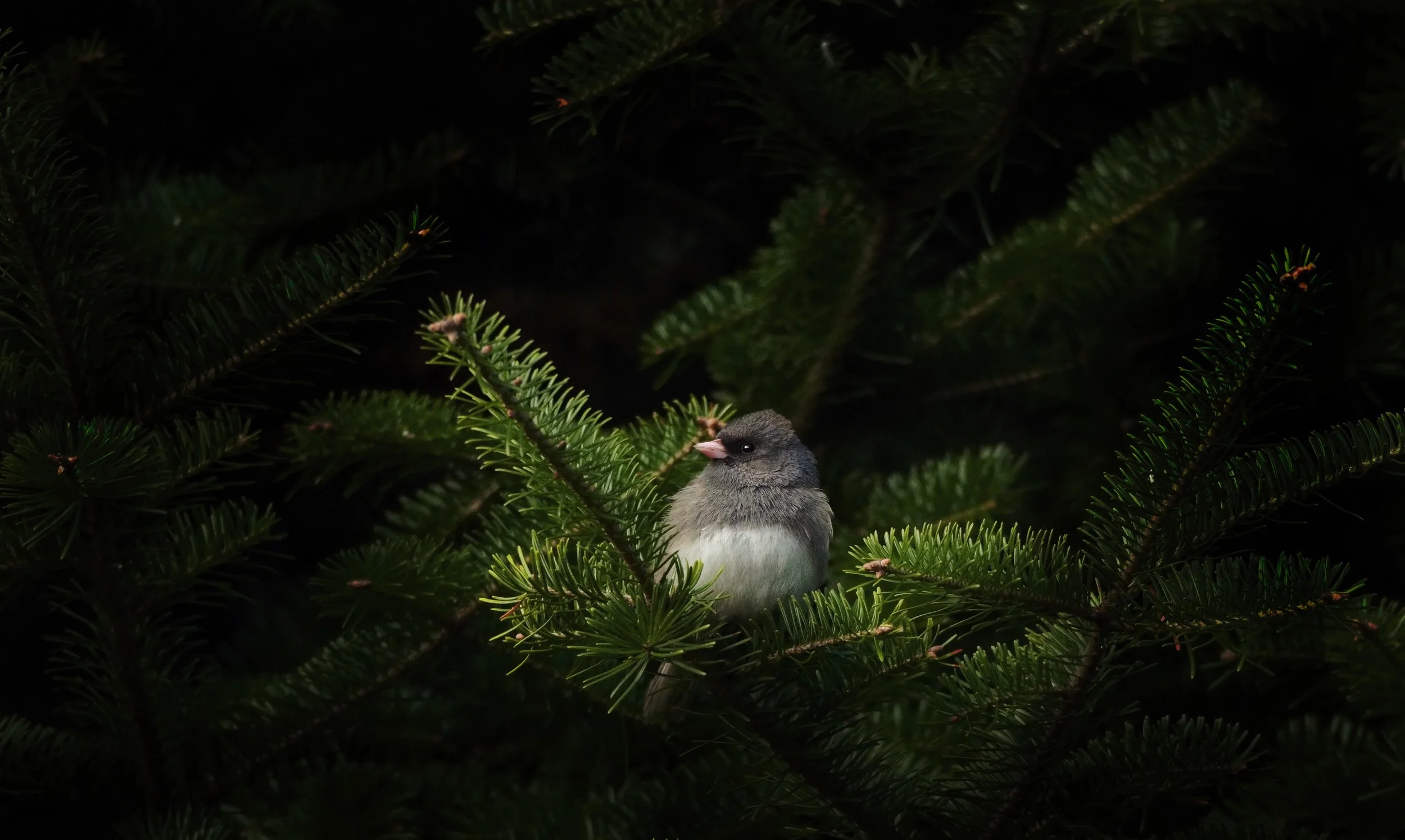
Glenn Smith started out photographing birds in his backyard as a hobby.
“Photography was just something different to do, especially with all the pretty pictures” in our region, said Glenn, a retired fire department lieutenant who divides his time between the Adirondacks and Florida. A businessman, Glenn also runs a company called Ten8 Video Productions Inc., which was a stepping stone to his passion for still photography.
Before graduating to loons, Glenn photographed birds in his back yard, including a ruffed grouse and other species.
“I never really shot seriously up here until the loons,’’ Glenn said of his work in the Adirondacks. “The birds in the backyard were practice, really.”
Last March, Glenn’s odyssey began, and he launched it with an uncommon cache of patience and quiet observation, much like the main character in EB White’s famous children’s fiction book, “The Trumpet of the Swan’’ about a boy who earns the trust of trumpeter swans with patience, restraint and kindness.
“The ice had been clear only two or three days when the first (adult) loon showed up’’ after migrating north from his winter home, Glenn said. “Less than a week later, the second one arrived.”
Three to four hours at a time, generally every morning around sunrise, Glenn shot photographs from his kayak as the bonded male and female loon settled on a nest on a small, hard-to-find island.
Safety of the eggs and future chicks, it seems, is the paramount concern.
Predators are everywhere, is a sign of a healthy ecosystem, even if it can be hard to watch nature unfolding in front of you. Raccoons, otters, mink, eagles, ravens and gulls dine on common loon eggs. Even bears have been documented eating them, Griffin said.
Once the chicks hatch, they are still vulnerable, Griffin added. Eagles and intruder loons trying to steal a pair’s territory will also kill chicks in an effort to start a new family with the female.
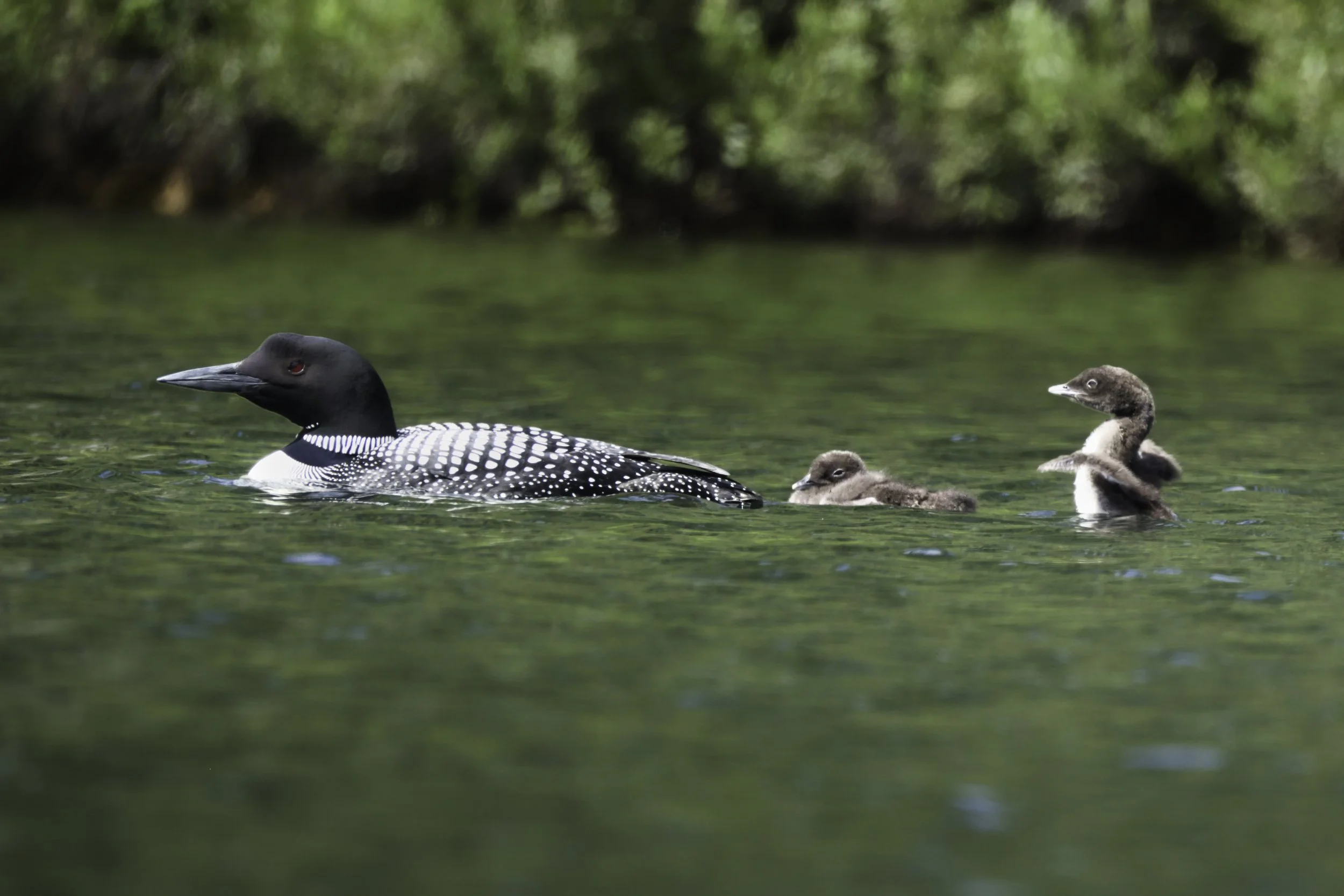
Photographer Glenn Smith followed and photographed a single loon family on a pond near his home for a whole summer.
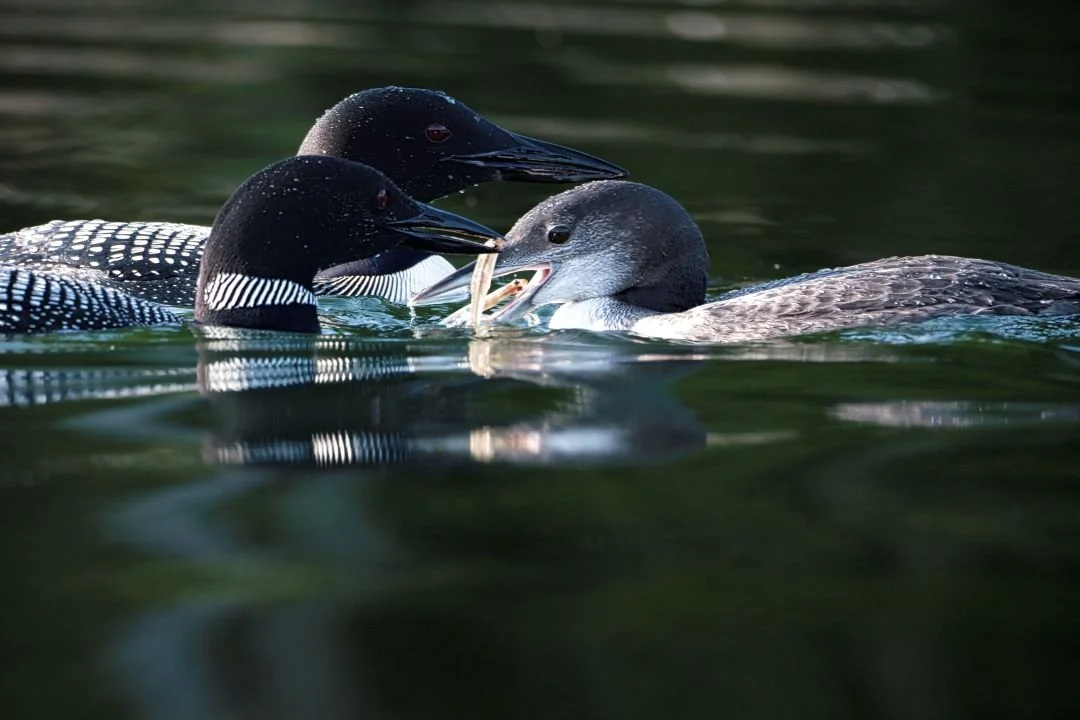
Photographer Glenn Smith captured delicate moments of loon parents protecting, feeding and caring for their young.
Large fish like bass, often not thought of as a predator of chicks, will sometimes leap up and snatch one of the tiny fuzzy chicks that draw oohs and ahh from anyone lucky enough to spy one.
On average, Griffin said, a bonded loon pair raise only one chick to a stage biologists call “fledging” — flying off to its winter home — every two years.
Glenn watched and waited for his pair’s eggs to hatch almost like an expectant human father waiting for his partner’s water to break. “It was exciting to see the newly hatched chicks,’’ he said with typical understatement. “I’d never seen one-day-old loons, and even at that young age they had no trouble swimming.”
Griffin said he was impressed not only by the images Glenn captured but also by the quiet patience he showed when observing the loon family.
“I could tell… that he was fascinated by the loons,” Griffin said. “It’s very obvious when you talk to him that he cared deeply about it and got a lot out of it.”
The male and female tending eggs on the nest. Down-covered chicks riding on a parent’s back or eating fish parents caught. Flying lessons. Even what a friend playfully called “keggers,” when loons from other lakes flew in to spend a few hours socializing and hanging out in the mornings or late afternoons. Glenn was there day after day to catch it all.
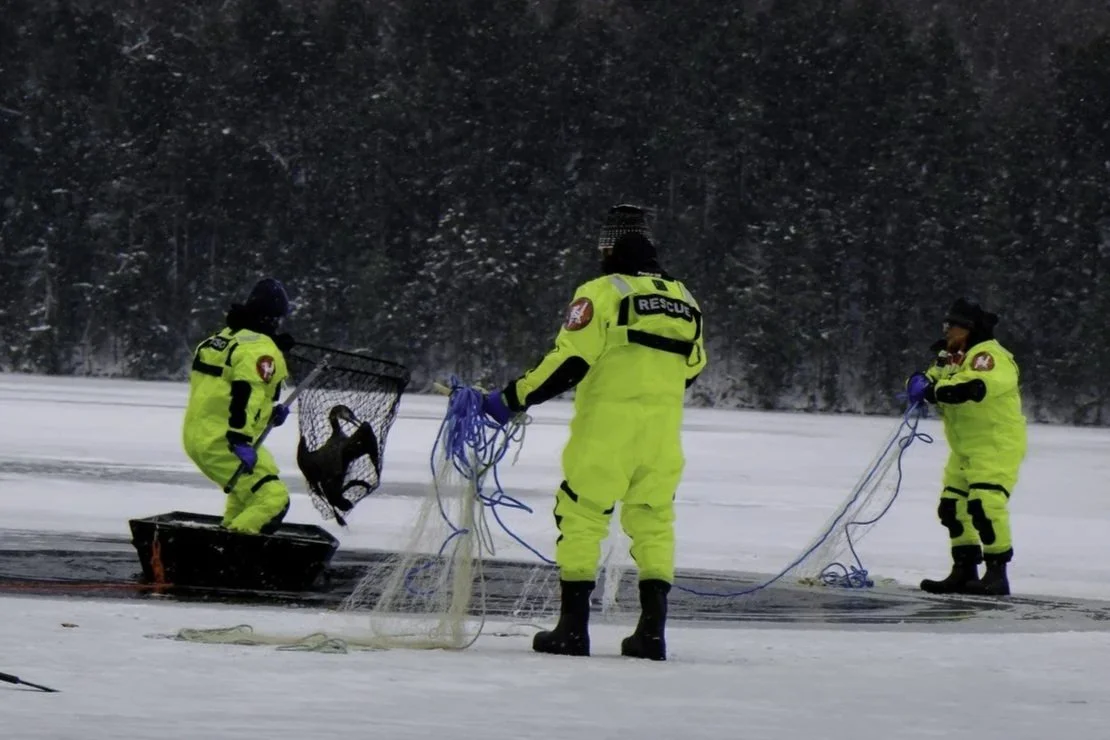
One of the juvenile loons Glenn Smith observed all summer was trapped in the ice come winter. While ACLC biologists and volunteers successfully rescued the bird, Glenn photographed the efforts.
Then, in early December, disaster struck. The catastrophe came some weeks after mom and dad flew away to winter in warmer waters, most likely on the Atlantic Ocean, leaving the juveniles to fly south on their own.
The youngsters got trapped in ice as the pond froze. They were literally hemmed in by frozen water, stuck there because they were still learning to gauge the proper time to migrate, a common challenge among adolescent loons.
One day an eagle circled above the two siblings as they swam in the small circle of open water remaining. Glenn watched, helpless. “At least he didn’t mess with them,’’ he added philosophically.
He returned daily, and was heartened one morning to find that one of the siblings had managed to fly away, out of danger.
Glenn - an emergency medical technician who’d rescued humans his entire career — had trained under Griffin to do summer loon rescues, but not winter ones.
So after a few days of calm observation, on Dec. 6 he sent photos of the remaining adolescent to Griffin, who determined an ice rescue was necessary. Griffin and ACLC Wildlife Tech Leah Boget called up three trained volunteers to rescue the loon in a dramatic win, and took it to a local wildlife vet for banding and a physical exam.
There is a photo of Glenn holding the loon he’d observed for months. His face reveals serenity, pride, and perhaps a touch of awe.
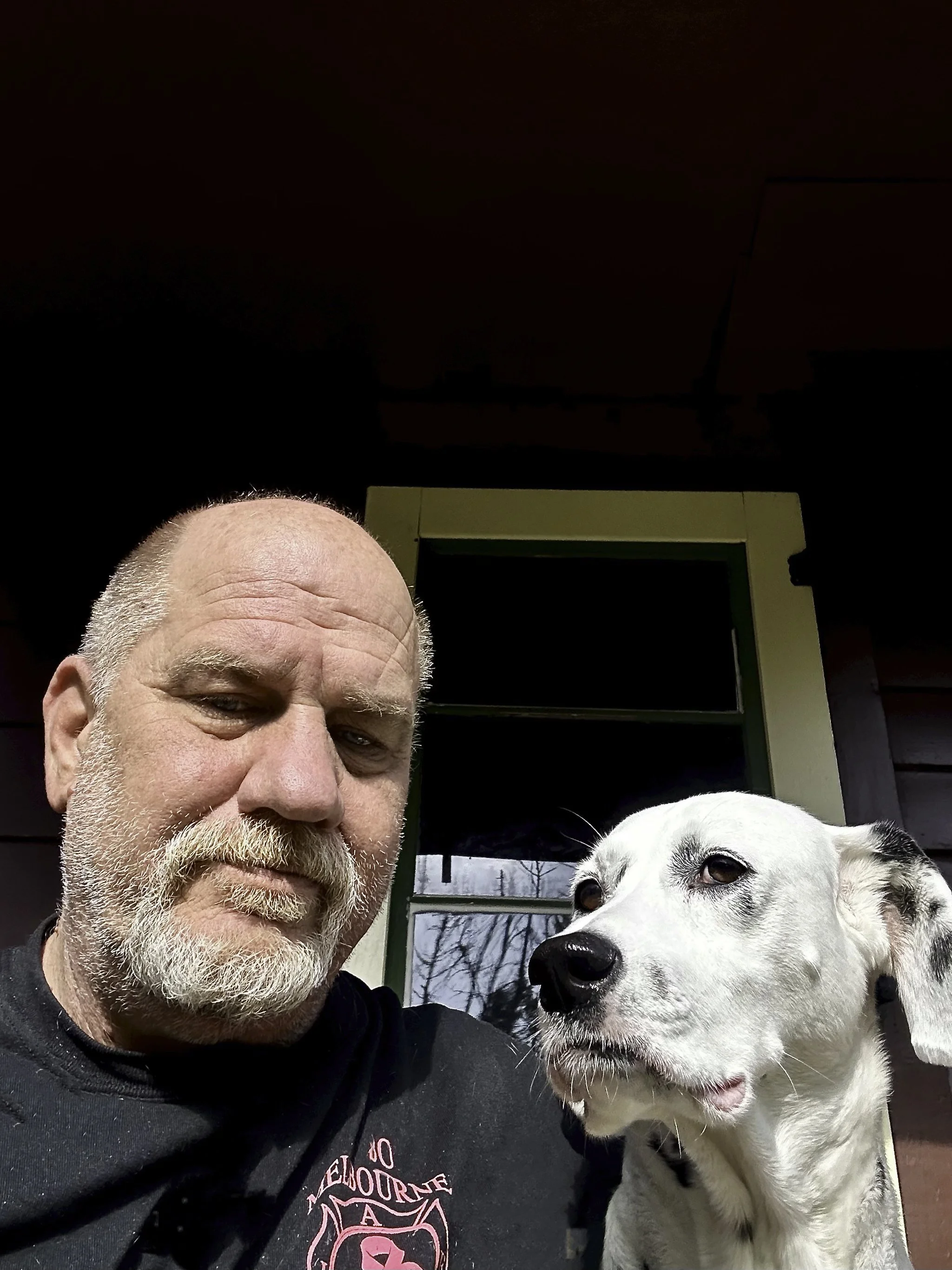
A self-portrait of photographer Glenn Smith.
He remembers with reverence how soft the male juvenile’s feathers felt in his hands, how he kept the loon’s head tucked under his arm to keep it calm as a compassionate and equally patient vet examined it.
Soon, when Glenn, Griffin and some of the others released the loon into the relative safety of Lake Champlain - hopeful the loon could use wide swaths of open water to take off for the South - Glenn’s odyssey would end.
Well, at least for a few months.
As he edits his images for a coffee table book he hopes to compile, the wildlife photographer is toying with returning to the pond this spring to see if the same pair attempt to raise another family.
He is, as always, placid, unhurried.
What lessons did his loon family teach him?
He laughs, a wry smile forming. “Patience,’’ he says with typical understatement. “Definitely patience.”