
Guide to Common Loon Behaviors
Words by Denise Silfee, ACLC Director of Education and Communications
Watching loons is a core experience of visiting or living in the Adirondacks. If you spend enough time quietly floating in the vicinity of loons, you’re likely to witness all kinds of behavior, from feeding to defending territory to caring for chicks.
Understanding the common behaviors of common loons can give you greater insight into their biology, and help you understand when the behaviors you are seeing are normal or signs of distress.
Common Loon Behaviors
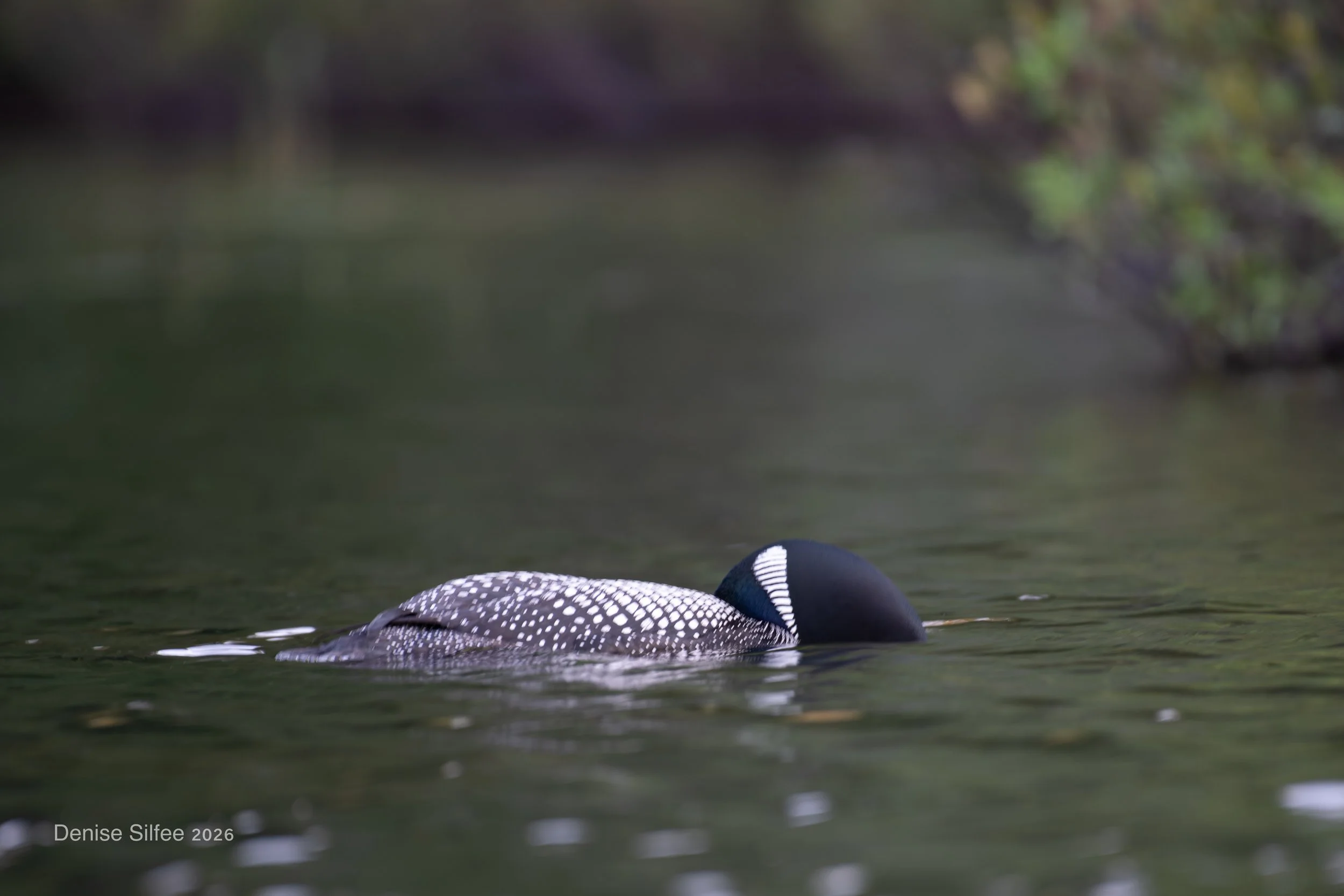
Peering
Loons “peer” underwater to look for fish or to see what other loons are doing under the surface. When loons “peer,” they dip their bill and eyes under the surface, kind of like a snorkeler looking for fish in a coral reef. Chicks will also “peer” under the surface to watch their parents when they are learning how to hunt.
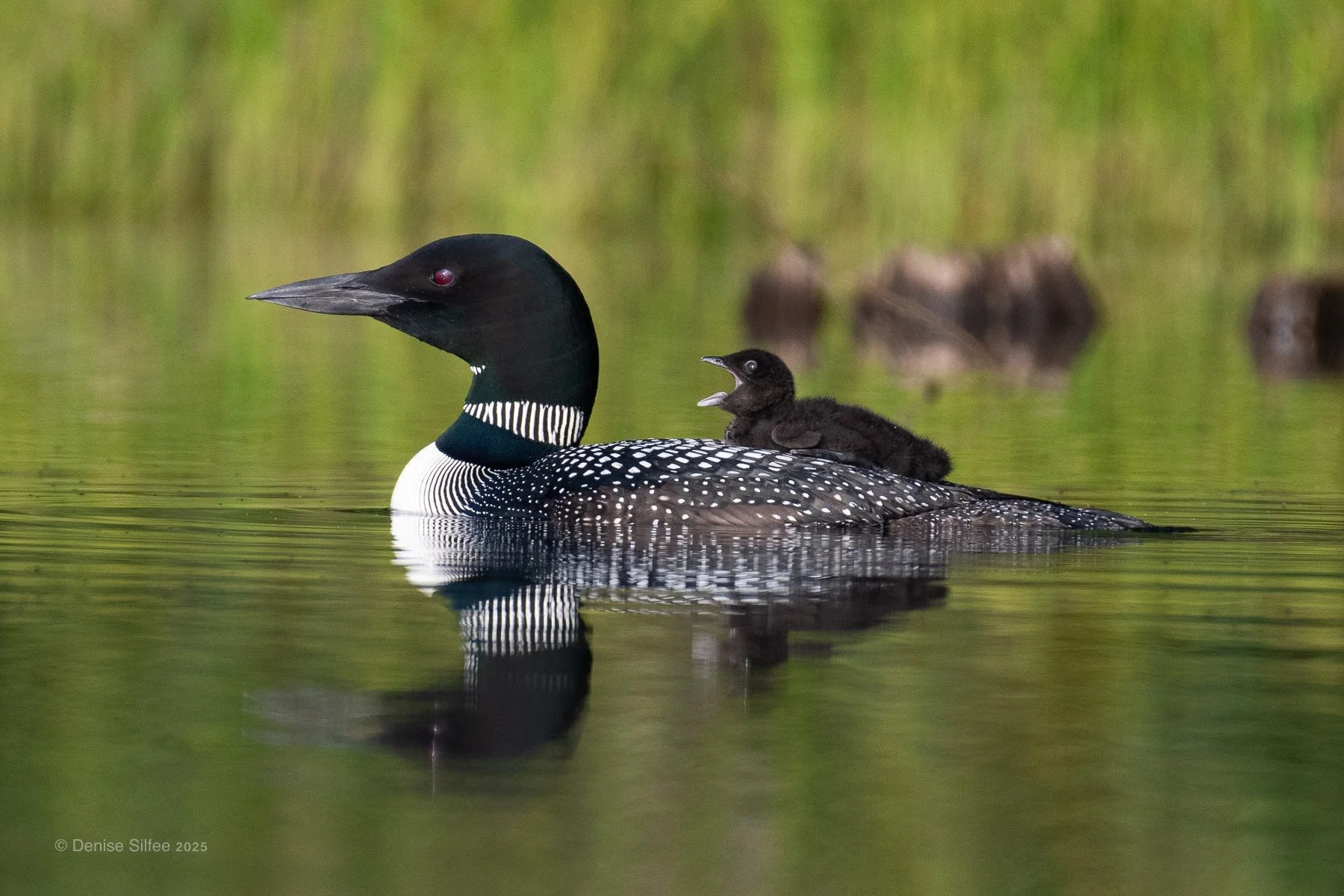
Back-Riding
In the first couple weeks of their lives, you might see a chick on its parents’ back, snuggled into their wings, and taking a nap. Riding on their parents’ backs helps keeps chicks warm and safe from predators.
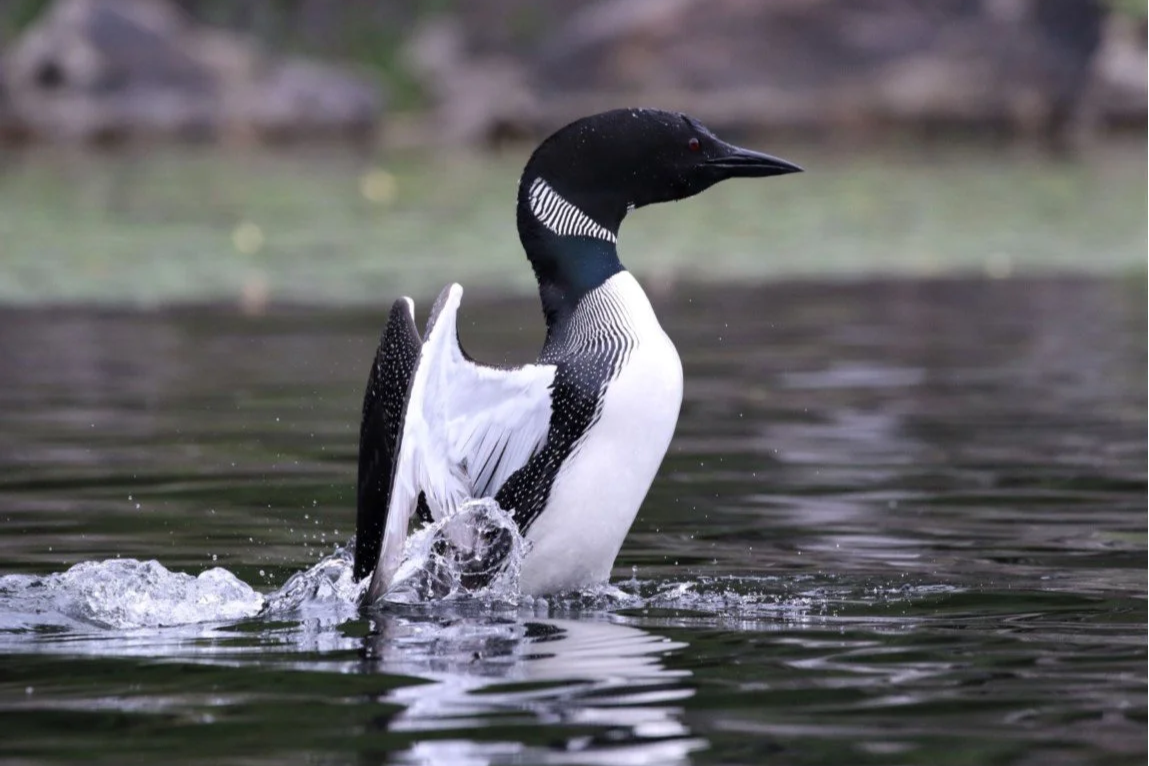
Photo by E. George
Penguin Dancing
The penguin dance is an aggressive display usually done by males to defend territory or chicks from another loon, predators or boats. It is a sign of distress that is energy intensive. Male loons will often yodel while penguin dancing, another sign of distress.
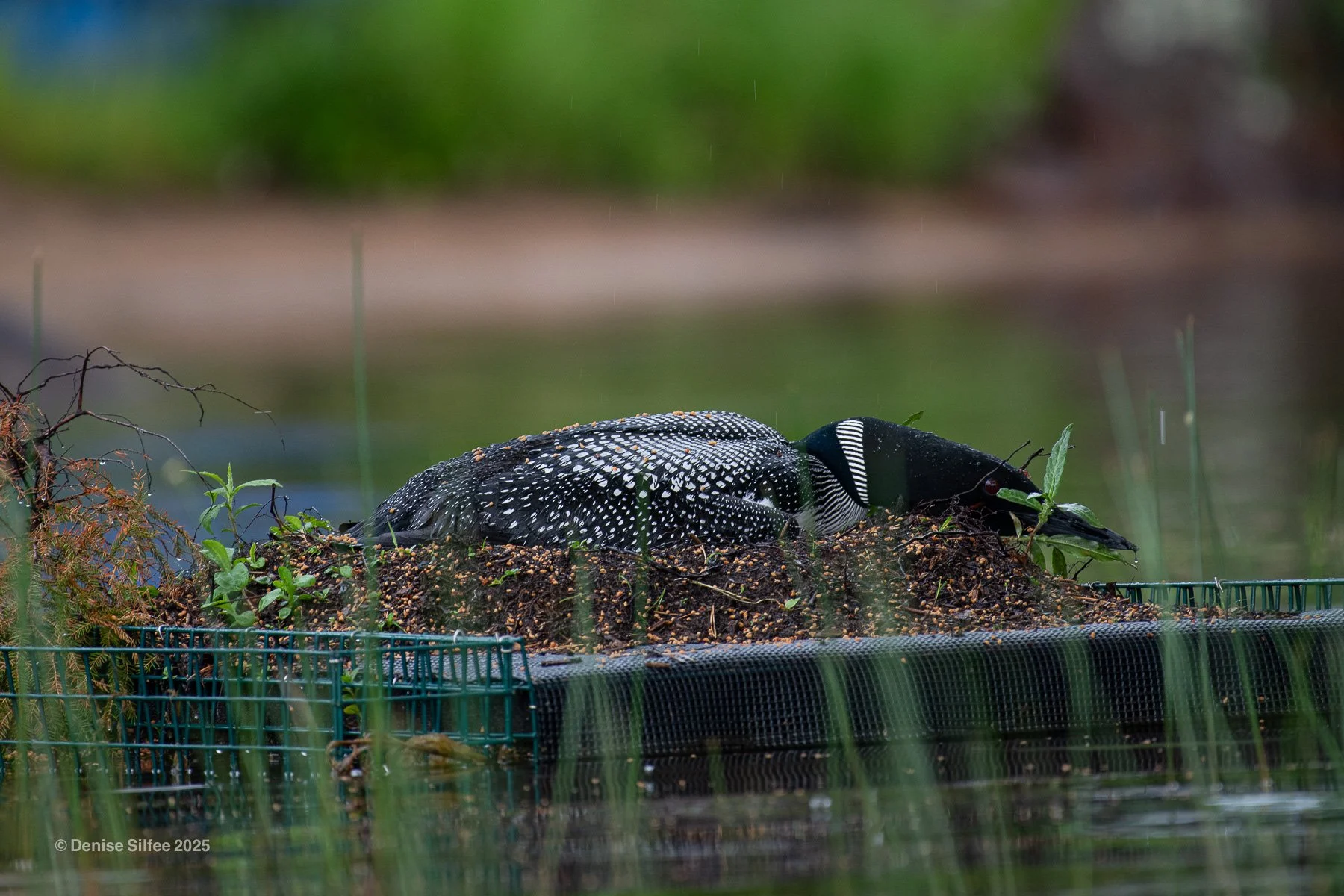
Hangover Position
If an adult loon on a nest feels threatened, it will lower its head and hang it over the edge of the nest towards the water. This is a sign of distress - the loon is preparing to slide quickly off the nest and into the safety of the water. If loons are compelled to flee their nests too frequently, they might abandon the nest permanently. Fleeing often can also interrupt the incubation of eggs until they are no longer viable.
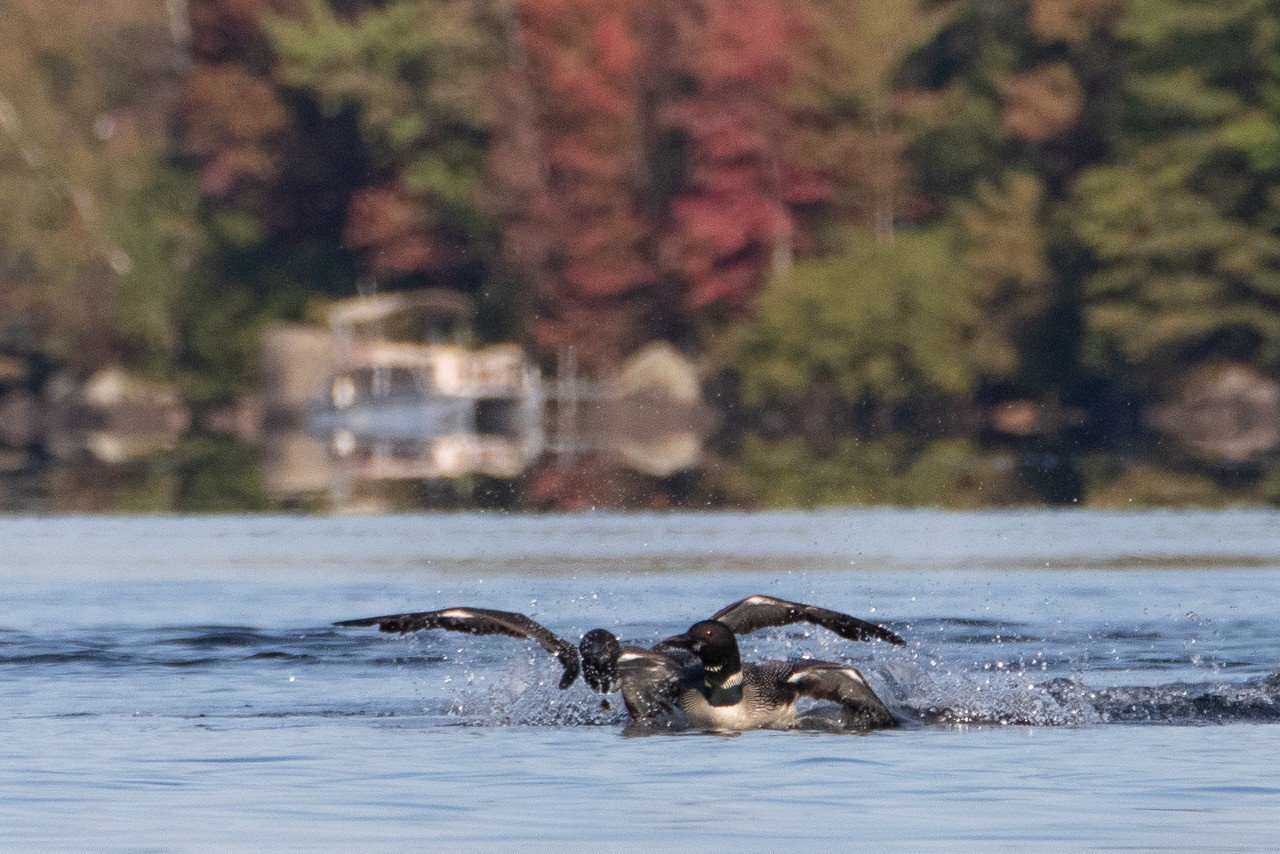
Photo by R.B. Cook
Wing-Rowing
Loons will use their wings and powerful legs to propel themselves across lakes. Sometimes they wing-row when fighting over territory or to escape a territorial dispute. Wing-rowing can sometimes be mistaken for an injury that is preventing the loon from taking flight, but it is actually a normal way to move quickly across large distances.
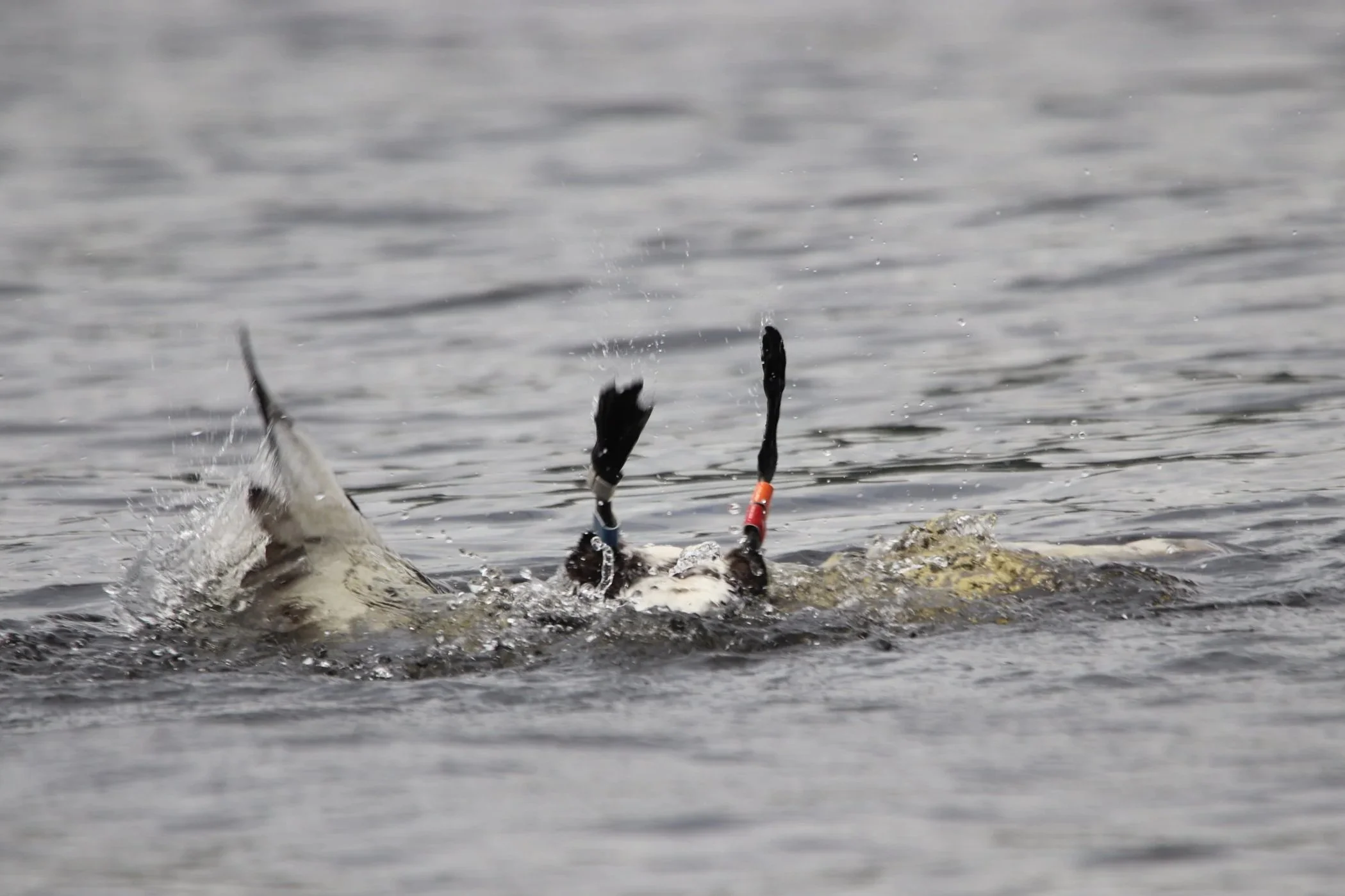
Photo by J. Kroeger
Bathing and Preening
Loons bathe and preen regularly to keep their feathers clean and waterproof. While bathing, loons roll, splash and wing-flap repeatedly. Their actions can easily be mistaken for a bird in distress. Baths can take up 30 minutes, and then they will begin to preen. Loons have a small gland called the uropygial gland near their tails that produces oil that they will rub into the surface of their feathers to keep them waterproof. While trying to access hard-to-reach places, loons will crane and bend their necks in odd directions.
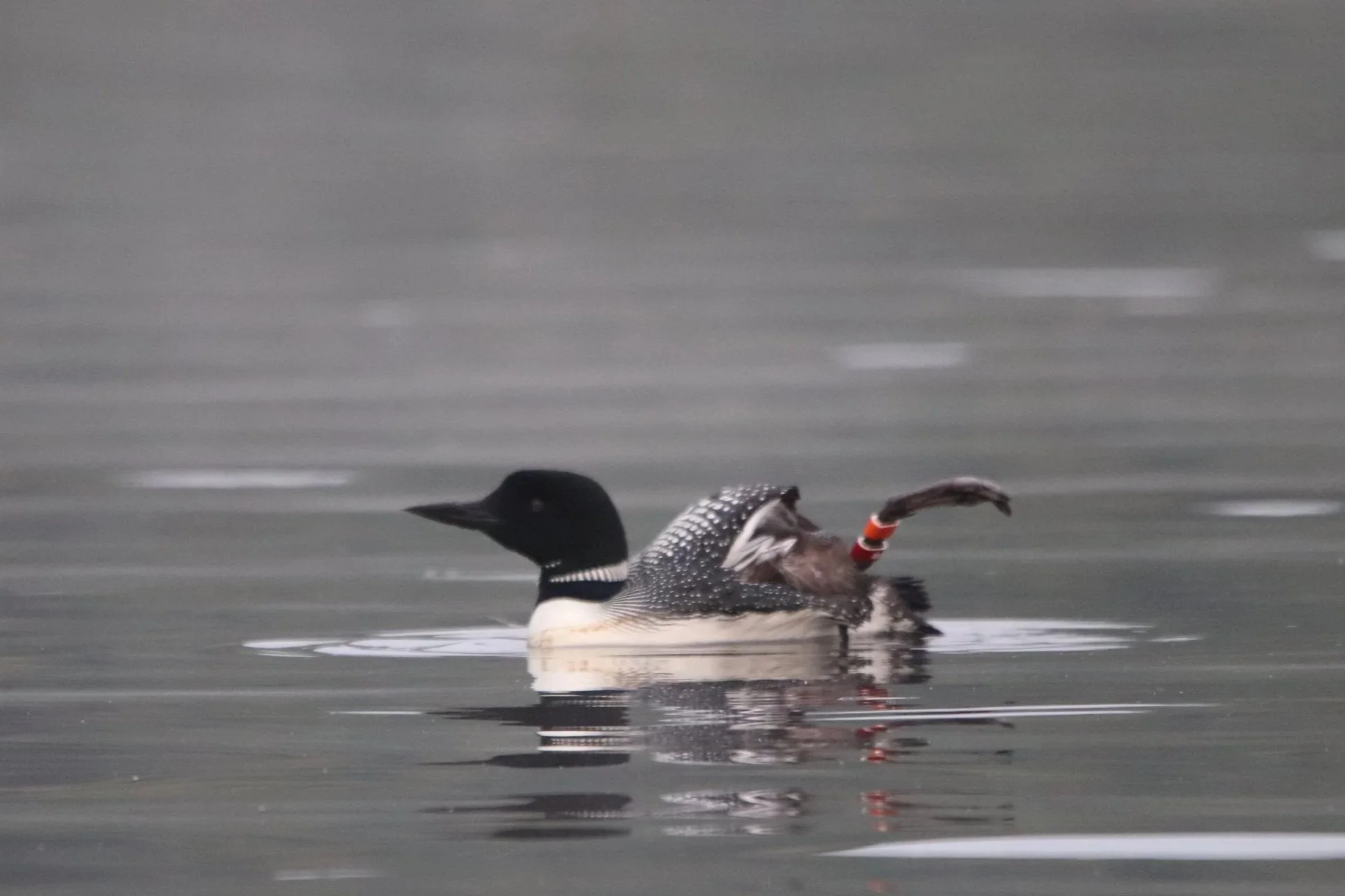
Photo by J. Kroeger
Foot Wagging
Loons sometimes raise one of their legs out of the water to stretch, regulate their body temperature or to simply hold it there for a while. Foot wags are not signs of an injured loon, but rather a relaxed loon.
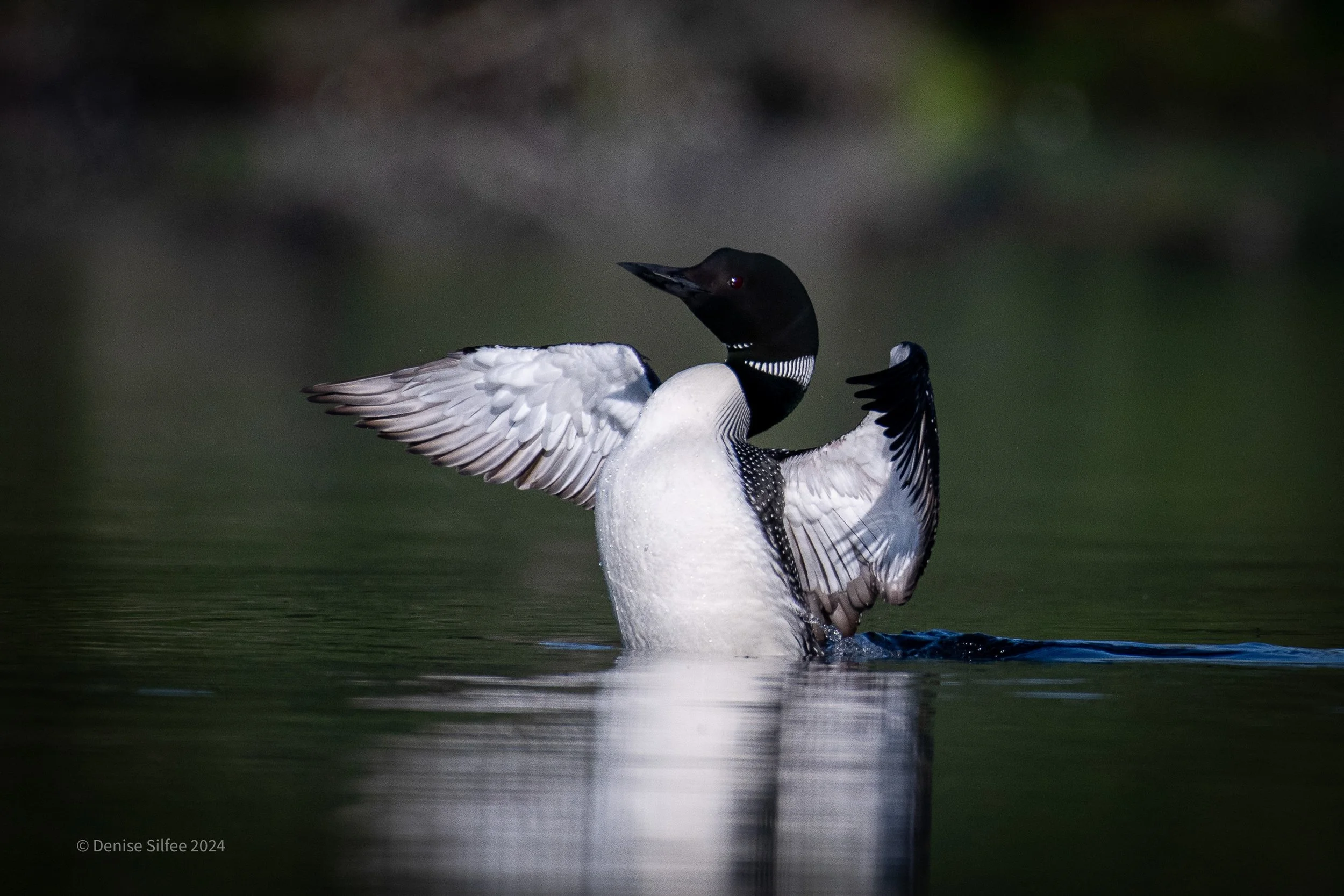
Wing Stretching
Loons often stretch their wings, which means they are generally relaxed. It can look similar to a penguin dance, but the loon will generally rise up out of the water, flap its wings then settle right back down onto the surface of the water, without the aggressive energy of a penguin dance.
What to do if you see a loon in distress
If you see a loon on land far from a lake shore, that is a loon distress. Because loons cannot walk on dry land, if they land on a roadway or other area far from water, they will be stranded and likely die of predation, starvation or exposure. We don’t always know why loons end up on roadways, but it may be because they are already weakened from an illness or injury, or because they mistake wet pavement for open water.
Loons – and other wildlife – can easily get tangled in discarded or broken fishing line. Fishing line entanglement can prevent loons from moving freely or feeding themselves or chicks, and they often will die of starvation or lead poisoning if the fishing line had lead fishing tackle attached to it. If you see a loon with fishing line wrapped around any part of its body, please give us a call.
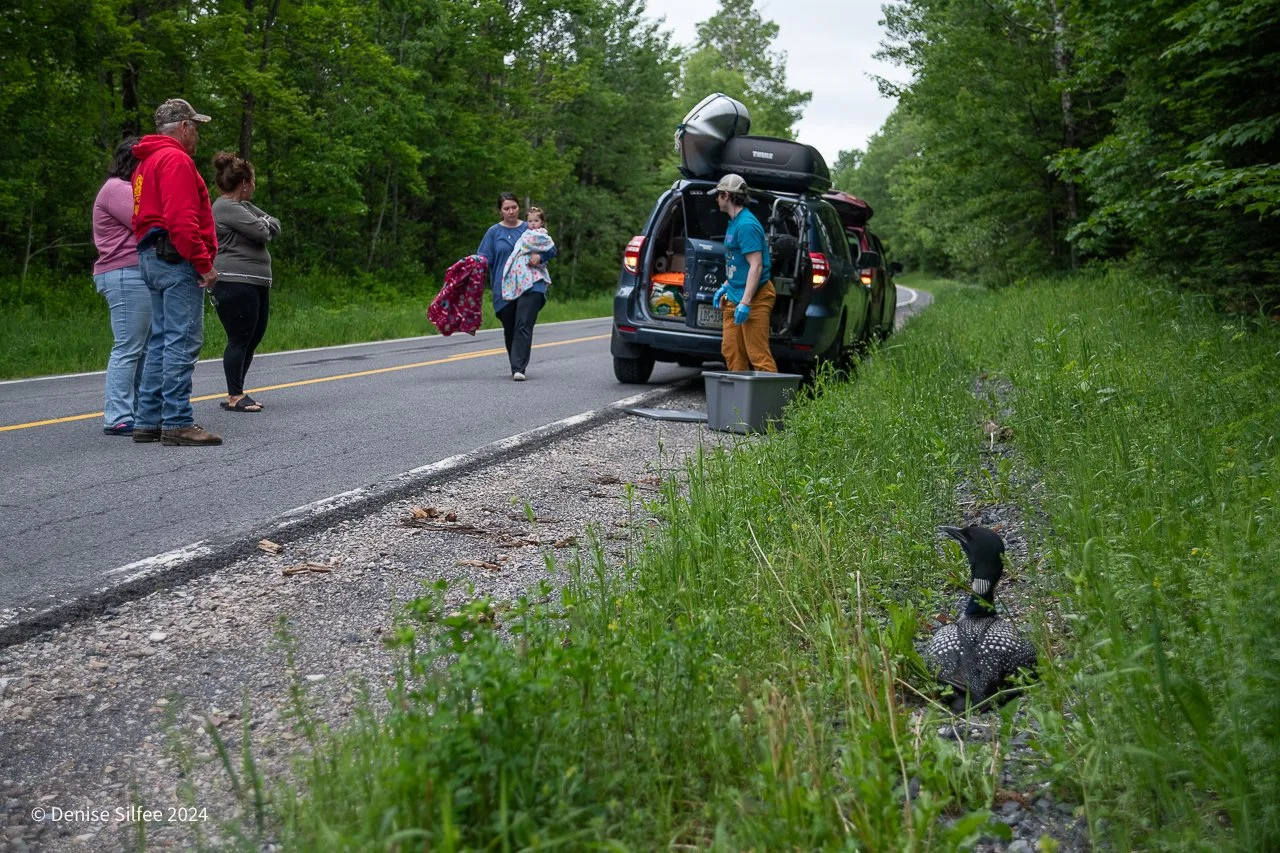
A grounded loon is a loon in distress - loons cannot walk, so if they get stuck on land, they are stranded. Photo by Denise Silfee
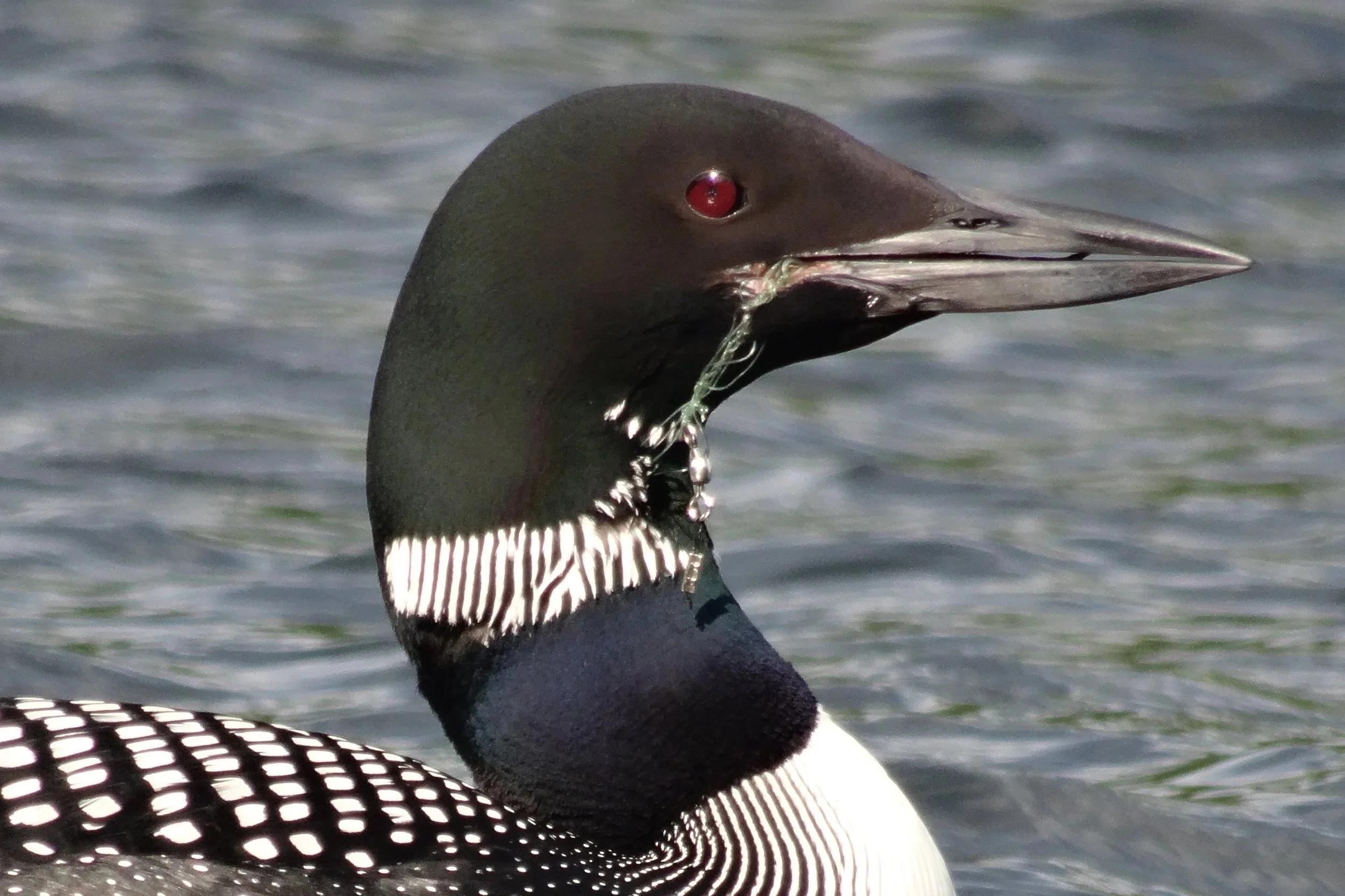
Fishing line entanglement is a life-threatening situation for a loon. Photo by E. Griesme
If you encounter a loon that appears to be in distress or is visibly injured or tangled in fishing line, you can call our office at 518-354-8636. You can also email us at rescue@adkloon.org. Please be prepared to share your name, contact information, location and to describe what you see. If you are able to take a video or photograph, this can help us better assess the situation. We will give you instructions over the phone and arrange for someone to assist.
If it is after-hours or someone at the Loon Center does not answer, you can contact North Country Wild Care at 518-964-6740 or the NY State Department of Environmental Conservation (DEC) at 1-844-332-3267.
Help us recover deceased loons
If you discover a dead loon, please contact us or DEC to turn over the body for examination at the DEC Wildlife Health Unit. Deceased loons can teach us a lot about the spread of disease or the impacts of lead poisoning deaths on the loon populations in the Adirondacks. If you are comfortable collecting a dead loon, we advise to always wear gloves and a mask and to double bag the body in scent-proof trash bags. We will advise you on how to deliver the carcass to a DEC office, or arrange to pick it up from you.